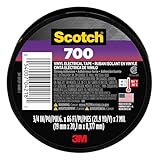
I remember the first time I faced a leaky faucet. Of course, I’d seen my dad wrap that white tape around pipe threads. But in my toolbox, all I had was a roll of black electrical tape, bright and shiny. “It’s tape, right?” I thought, stupidly. So, I gave it a good few wraps. It looked okay, I guess. Then, BAM. Water everywhere. That’s when I learned the hard way that you can’t just grab any old tape when you’re dealing with plumbing. So, can electrical tape be used instead of plumbers tape? Let me save you some soaked socks and frustration: the answer is a resounding no.
It’s a common enough question, especially when you’re in a pinch and that shiny roll of black tape is staring you down, practically begging to be used. You’ve got a slow drip under the sink, or maybe a garden hose connection that’s decided to start weeping. You want a quick fix, and electrical tape seems like it should do the job. It sticks, it’s waterproof-ish, and it’s cheap. But plumbing is a different beast entirely.
Why Electrical Tape Is a Dumb Choice for Plumbing
Look, electrical tape is fantastic for what it’s designed for: insulating wires, bundling cables, and generally keeping the juice where it’s supposed to be. It’s made of vinyl, which is a good insulator and reasonably stretchy. It’s got a nice tacky adhesive that sticks well to itself and most smooth surfaces.
And yeah, it can handle some moisture. I’ve used it to temporarily patch a hole in a garden hose in a real pinch, and it held up for a bit. But that’s where the similarities end, and the problems begin when you try to substitute it for plumbers tape on threaded pipe fittings.
The fundamental difference is in how they’re designed to work and the pressures they’re expected to withstand. Plumbers tape, or PTFE tape, is designed to compress and fill the microscopic gaps between the threads of a pipe fitting. When you tighten a threaded connection, the PTFE tape gets squished, creating a seal that prevents leaks.
It’s thin, it’s slick, and it doesn’t really add much bulk, which is key because pipe threads are machined to fit together precisely. Electrical tape, on the other hand, is thicker and much less compressible. It’s got a sticky adhesive that, while good for electrical work, can actually interfere with the seal on a pipe thread.
Instead of compressing smoothly, it can bunch up, creating voids or weak spots in the seal. It’s also not designed to withstand the constant water pressure found in household plumbing systems. That same tackiness that makes it great for wires means it can degrade or become gummy when exposed to water, especially hot water, over time.
I once tried to use it on a shower head connection, thinking I was being clever. It held for about a day. Then, a slow, steady stream started. I ended up having to take the whole thing apart again, deal with the sticky residue, and finally go buy the right stuff.
It cost me an extra trip and a lot of wasted time, not to mention the water bill shock.
What Plumbers Tape Actually Does (and Why It Matters)
So, if electrical tape is a no-go, what makes plumbers tape (also known as PTFE tape or thread seal tape) the real deal for pipe connections? It’s all about the material and its properties. PTFE, or polytetrafluoroethylene, is a non-stick, chemically inert plastic.
When it’s manufactured into tape for plumbing, it’s made incredibly thin and flexible. This thinness is absolutely vital. When you wrap it around the male threads of a pipe, you’re basically creating a gasket. As you tighten the fitting, the tape compresses.
Because it’s so thin and slick, it doesn’t just get in the way; it actually helps the threads seat properly while filling all those tiny spaces where water could escape. Think of it like this: pipe threads are designed to mesh together. Adding too much bulk or a sticky, incompressible material will prevent them from mating correctly, leading to leaks.
Plumbers tape adds just enough material to fill the gaps without creating pressure points that could cause the fitting to crack or fail. It’s also designed to be resistant to a wide range of chemicals, temperatures, and pressures that you’ll find in a typical plumbing system, from cold water lines to hot water heaters. It doesn’t degrade, get gummy, or lose its sealing properties over time in the way that electrical tape will. (See Also: Can I Use Electrical Tape To Connect Wires )
The adhesive on electrical tape is designed to hold insulation in place and resist abrasion; it’s not meant to be a primary sealing agent under pressure. One of the key things to remember is that plumbers tape is applied in a specific way: typically clockwise around the male threads, usually 3 to 6 wraps depending on the thickness of the tape and the nature of the fitting. This layering builds up the necessary compression seal.
Trying to achieve that with electrical tape is like trying to build a waterproof dam with cling film – it just doesn’t have the structural integrity or the right properties for the job. I’ve seen DIYers get frustrated because their pipe seals leak, and nine times out of ten, it’s because they’ve used the wrong tape or applied it incorrectly.
The Case Against Using Electrical Tape: My Own Dumb Mistake
Let’s talk about mistakes. We all make them, especially when we’re trying to save a buck or avoid a trip to the hardware store.
I’ve made plenty. One that sticks with me was trying to fix a leaky garden spigot connection. It was summer, I was watering the lawn, and I noticed a slow drip where the hose screwed onto the spigot.
Annoyed, I rummaged through my shed. Bingo. A roll of black electrical tape. I figured, “It’s plastic, it’s sticky, it’s waterproof-ish.
It’ll hold.” I meticulously wrapped a few layers around the male threads of the spigot, making sure it looked neat and tight. I screwed the hose on, turned the water on, and… success! No drip.
I felt like a genius, a DIY wizard. I went about my day, feeling smug. Fast forward about three hours. I was back outside, and the drip was back.
Not just a drip, though. It was a steady stream, spraying water everywhere.
The electrical tape had softened and started to peel away from the threads, its adhesive giving up the ghost under the constant water pressure. Worse, the sticky residue was now all over the threads, making it harder to clean off and re-tape properly. I ended up having to buy a new roll of actual plumbers tape, and it took me a good 15 minutes of scraping and wiping to get all the sticky electrical tape gunk off the spigot.
That little “fix” cost me time, frustration, and the embarrassment of having to admit to myself that I should have just used the right tool for the job from the start. It’s a lesson I learned the hard way: when it comes to plumbing, don’t mess around with substitutes that aren’t designed for the specific stresses and conditions of water systems. The cost of a small roll of plumbers tape is minuscule compared to the potential water damage or the sheer annoyance of having to redo the job.
What to Look for in Plumbers Tape (it’s Not All the Same!)
Okay, so you’ve decided to do it right and grab some actual plumbers tape. Great choice. But here’s a curveball: not all plumbers tape is created equal. While they’re all generally made of PTFE, there are different thicknesses, densities, and even colors, and these differences matter depending on what you’re sealing.
The most common type you’ll find is a white tape, usually around 0.003 to 0.004 inches thick. This is your everyday, go-to tape for most household plumbing applications – sinks, toilets, basic pipe fittings. (See Also: Can Electrica Tape Catch On Fire )
It’s flexible enough to compress well and provides a good seal for moderate pressures. Then there’s a denser, thicker white tape, sometimes called high-density PTFE tape, which is typically 0.005 to 0.008 inches thick.
This stuff is tougher and provides a more solid seal, making it ideal for higher-pressure applications or for fittings that might be taken apart and reassembled more often. You might also see pink or yellow tapes.
The pink tape is usually a thicker, high-density version specifically formulated for gas lines. It’s important to use the right tape for gas, as leaks there are obviously far more dangerous.
Yellow tape is often a medium-density tape, also suitable for gas lines and sometimes for applications involving natural gas or propane. For general water plumbing, the standard white tape is usually perfectly fine.
When you’re at the store, feel the tape. Does it feel flimsy and likely to tear, or does it have a bit of substance to it?
Look at the packaging; it will usually specify the intended use (water, gas, etc.) and sometimes the density or thickness. My rule of thumb: if in doubt for water, go with the standard white tape.
If you’re dealing with gas, absolutely use the pink or yellow tape designated for that purpose. Trying to use standard white tape on a gas line is just asking for trouble. I once had a buddy who insisted the white tape was “universal.” He learned his lesson the hard way when a joint on his gas grill started leaking. Thankfully, it was a small leak and he caught it quickly, but it was a stark reminder that following the manufacturer’s recommendations for specific types of tape is a must.
Common Mistakes and How to Avoid Them
Beyond the obvious mistake of grabbing electrical tape, there are other pitfalls when using actual plumbers tape that can lead to leaky connections. One of the biggest is applying too much tape. Everyone thinks more is better, right?
Wrong. If you overdo it, especially with thicker tapes, you can actually prevent the threads from mating properly.
Instead of compressing to create a seal, the excess tape can act as a wedge, creating stress on the fitting or leaving gaps. Generally, 3 to 6 wraps is plenty for most standard pipe threads. Another common error is applying the tape in the wrong direction.
You must wrap the tape clockwise around the male threads. Why? Because when you screw the fitting together, the turning motion will naturally tighten the tape, helping it seal.
If you wrap it counter-clockwise, the act of screwing the fitting on will tend to unravel the tape, defeating the whole purpose and guaranteeing a leak. I’ve seen people wrap it loosely, too. The tape needs to be snug against the threads as you wrap it. (See Also: Can I Substitute Duct Tape For Electrical Tape )
It shouldn’t be baggy or wrinkly. Each wrap should slightly overlap the previous one, creating a continuous seal. If the tape tears or bunches up, stop, remove it, and start again. Don’t try to patch a torn piece.
Finally, and this is something people often overlook, make sure the threads themselves are clean. Any dirt, debris, or old thread sealant on the threads can prevent the tape from making a good seal.
Give them a quick wipe down with a clean rag before you start taping. I learned this when I was trying to fix a leaky radiator valve. I’d wrapped the tape perfectly, tightened it, and it still leaked. Turns out there was some old gunk on the threads that I hadn’t noticed.
A quick clean-up and re-tape fixed it right up. Remember, the goal is a smooth, compressed seal, not a bulky, crinkled mess.
Practical Tips for a Reliable Seal
Using plumbers tape effectively isn’t rocket science, but a few simple tricks can make a huge difference in getting a leak-free connection. First off, always start your tape wrap from the end of the male threads, leaving about one or two threads bare at the very tip. This prevents excess tape from squeezing out into the pipe when you connect it, which can then break off and potentially clog downstream fixtures. Think of those first couple of threads as a guide for the tape.
Second, maintain consistent tension as you wrap. You want the tape to hug the threads without stretching so much that it becomes translucent or tears. A light, firm pull is all you need. If the tape starts to wrinkle or bunch up, ease off slightly and adjust your angle.
Third, for important connections or when dealing with older, potentially corroded threads, consider using a pipe dope (thread sealant) in conjunction with the tape. Some plumbers swear by it, applying a thin layer of pipe dope over the taped threads. The dope fills in any microscopic imperfections the tape might miss, and the tape helps prevent the dope from squeezing out too much. However, be careful not to overdo the pipe dope, as too much can also interfere with the seal.
For most standard residential plumbing, good quality tape applied correctly is usually sufficient on its own. Fourth, don’t be afraid to give the fitting a good snug tighten. Once you’ve got the tape on correctly, tighten the fitting until it feels secure, but don’t go crazy with brute force.
Overtightening can damage the fitting or the threads. You’re looking for a firm, solid connection that doesn’t wiggle. I learned this lesson on a shower valve replacement. I was so worried about over-tightening that I didn’t tighten it enough, and sure enough, I had a slow drip.
A quarter turn more, and it was perfect. It’s a balance between secure and destructive. The common advice is to tighten until snug, then give it another quarter to half turn. This generally works well for most threaded connections.
If you’re unsure, it’s always better to err on the side of slightly snug and then check for leaks, rather than risking damage with excessive force. The key is patience and a gentle touch.
Final Verdict
So, to bring it all back home: can electrical tape be used instead of plumbers tape? Absolutely not. It’s the wrong tool for the job, plain and simple. You’ll end up with leaks, sticky messes, and wasted time, which is exactly what I went through. Plumbers tape is cheap, readily available, and specifically designed to create a reliable seal on pipe threads under pressure. Don’t let a roll of black tape tempt you into a plumbing disaster. Just grab the right stuff – the PTFE tape – and use it correctly. It’ll save you headaches, water damage, and the distinct smell of damp drywall.
The next time you’re faced with a leaky pipe, resist the urge to improvise with electrical tape. Invest in a small roll of proper PTFE thread seal tape. It’ll cost you maybe a couple of dollars, and it’s worth its weight in gold when it comes to preventing future leaks and the subsequent repairs. You’ll thank yourself later.