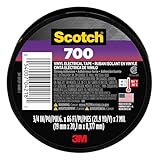
I’ve been wrestling with wires and cables for longer than I care to admit. Enough times, I’ve stared at a rat’s nest of connections and thought, ‘Could I just wrap this whole mess up with some good old electrical tape and call it a day?’ It’s the question that pops into your head when you’re in a pinch, staring down a roll of that ubiquitous black vinyl. So, can electrical tape be used as shrink wrap? Let’s cut the corporate fluff and get down to brass tacks. I’ve wasted my fair share of cash on fancy solutions that promised the moon and delivered dust, so I’m here to tell you what actually works, and what’s just snake oil.
When You Absolutely Cannot Find Actual Heat Shrink
Look, we’ve all been there. You’re elbow-deep in a project, maybe fixing an old appliance or wiring up some aftermarket lights on a project vehicle. You get to the point where you need to protect a splice, insulate some bare wires, or just tidy up a bundle, and you realize with a sinking feeling: you’re out of heat shrink tubing.
Or maybe you never even bought any because, hey, you’ve got electrical tape, right? It’s black, it stretches a bit, it sticks. How different can it be?
Well, my friend, the difference can be… significant. My first few attempts at using electrical tape as a stand-in for heat shrink were… let’s just say ‘educational’. I remember trying to seal up a connection on my old motorcycle’s headlight wiring harness. I figured a few tight wraps of good quality electrical tape would do the trick, keeping the moisture out and the wires secure.
The result? Within about six months, the tape had started to peel, the adhesive got gummy and attracted every bit of dirt and road grime, and I ended up with a worse mess than I started with. It looked like a cheap Band-Aid on an open wound.
That experience taught me a hard lesson: while electrical tape can offer a temporary fix or a very basic level of insulation, it’s not a true replacement for shrink wrap, especially when you need durability and a proper seal.
The fundamental difference lies in how they function. Heat shrink tubing is designed to shrink down tightly around whatever it’s placed over when heated.
This creates a snug, protective barrier that’s resistant to moisture, abrasion, and sometimes even chemicals. Electrical tape, on the other hand, is primarily an insulator. It’s made of vinyl or rubberized fabric, designed to prevent electrical current from escaping.
It stretches, yes, but it doesn’t ‘shrink’ in the same way. It relies on its adhesive to hold it in place. This adhesive is often solvent-based and can degrade over time, especially when exposed to heat, cold, or UV rays. So, while it might seem like a quick hack, relying on electrical tape when you really need shrink wrap is often a recipe for future headaches and possibly more expensive repairs down the line.
The common advice you’ll find online is usually along the lines of ‘use heat shrink for proper insulation and protection’. And for the most part, they’re right.
However, if you’re just looking to bundle some low-voltage wires together temporarily, or you absolutely need to cover a joint in a pinch and have no other options, electrical tape can technically do the job of covering it up. But let’s be clear: it’s a compromise. You’re trading long-term reliability and a professional finish for immediate availability.
I’ve seen guys use it to temporarily secure a frayed wire loom on a dashboard, or to wrap around a connector that just needed to be kept from shorting out until they could get to the auto parts store. These are situations where the stakes are relatively low, and the exposure to the elements is minimal. It’s a stop-gap measure, not a permanent solution.
What You’re Actually Getting with Electrical Tape
When you grab a roll of electrical tape, what are you really buying? You’re buying a flexible, adhesive-backed insulator. Most commonly, it’s a vinyl tape, sometimes with a rubber adhesive. The vinyl provides the electrical insulation, while the adhesive holds it in place. The ‘stretching’ capability is key here – you can pull it taut around corners and curves, which is why it’s so versatile for wrapping irregular shapes. However, this stretchiness is also where it falls short compared to shrink wrap. Electrical tape doesn’t contract uniformly when it cools or dries; it just stays where you stretched it. This means it can potentially loosen over time, especially if it’s subjected to temperature fluctuations or mechanical stress.
The adhesive itself is another major point of contention. Good quality electrical tape has a decent adhesive, but it’s not designed for the kind of permanent, heat-activated bond that shrink wrap provides. Over time, especially in hot environments or under direct sunlight, the adhesive can become tacky, ooze, or even completely lose its grip.
This is what happened on my motorcycle project – the heat from the engine bay and the summer sun turned the adhesive into a sticky mess. Conversely, a well-applied heat shrink tube, once shrunk, forms a solid, unified jacket. (See Also: Can I Use Electrical Tape To Connect Wires )
There’s no separate adhesive layer to fail; the material itself forms the protective sheath. This is why, for anything important or exposed, electrical tape is a poor substitute for its heat-shrink counterpart. You might get away with it for a week, a month, or maybe even a year, but eventually, the limitations of the material and its adhesive will show themselves.
I remember a friend who insisted on using electrical tape to insulate the exposed ends of some speaker wire in his outdoor setup. He argued it was practically the same thing. A year later, during a particularly heavy rainstorm, the tape had absorbed moisture, the adhesive had failed, and the speaker connections had corroded to hell.
He ended up having to replace the entire cable run. That’s a pretty stark example of how using the wrong material, even if it seems similar, can lead to much bigger problems. Electrical tape is great for its intended purpose: insulating electrical connections that aren’t going to be subjected to extreme conditions or require a super-tough, waterproof seal. For anything more, you’re asking for trouble.
It’s like using a garden hose to fill a swimming pool; it’ll eventually get some water in, but it’s going to take forever and likely spring leaks.
The Honest Comparison: Electrical Tape vs. Heat Shrink
Let’s lay it out. When we talk about protecting wires and connections, both electrical tape and heat shrink tubing have their place, but their effectiveness and suitability vary wildly. Electrical tape is the quick-and-dirty solution, often found in toolboxes everywhere because it’s cheap, readily available, and easy to apply in a pinch. Heat shrink, on the other hand, is the more professional, durable option, designed for a specific purpose: creating a solid, sealed barrier when heated. I’ve compiled a little something to show you the key differences, with my own two cents thrown in.
| Feature | Electrical Tape | Heat Shrink Tubing | My Verdict |
|---|---|---|---|
| Ease of Application | Very Easy (just wrap) | Easy (cut, slide on, heat) | Tape is quicker for a rough job. Heat shrink is neater. |
| Durability | Moderate (adhesive can fail) | High (forms a solid jacket) | Heat shrink wins, hands down. No contest. |
| Environmental Resistance (Heat, Cold, UV) | Poor to Moderate | Good to Excellent (depending on type) | Electrical tape breaks down. Heat shrink holds up. |
| Water/Moisture Resistance | Poor (can absorb, adhesive fails) | Excellent (creates a seal) | If water is a concern, use heat shrink. Period. |
| Electrical Insulation | Good (for its intended use) | Excellent | Both insulate, but heat shrink offers a more secure, complete covering. |
| Aesthetics | Messy, can look amateurish | Neat, professional finish | Heat shrink looks like you know what you’re doing. Tape looks like a quick fix. |
| Cost | Very Low | Low to Moderate (bulk buys are cheap) | Electrical tape is cheaper per roll, but you might replace it more often. |
The biggest argument against electrical tape as a shrink wrap substitute is its adhesive. It’s not designed to be a permanent, weather-sealed bond. It’s a temporary, sticky hold.
When you’re comparing, think about what you’re protecting. If it’s an indoor, low-stress application where occasional inspection is easy, electrical tape might suffice. But if it’s an outdoor environment, a moving part, or something you just want to ‘set and forget’ for years, heat shrink is the only sensible choice.
I’ve seen too many ‘cheap’ fixes turn into expensive failures because someone opted for tape when they should have used proper tubing. My own experience has hammered this home: always use the right tool for the job, especially when it comes to electrical work.
When Electrical Tape might Be Okay (with Big Caveats)
Alright, let’s talk about the scenarios where you might consider using electrical tape as a stand-in for shrink wrap, but with a hefty dose of caution. These are situations where the stakes are low, the environment is forgiving, and you’re absolutely forced to make do. The primary use case I can think of is bundling wires together.
If you have a few low-voltage wires in an accessible location, like inside a car dashboard that’s being reassembled, or in a cable management situation behind a desk where they won’t be disturbed or exposed to much, electrical tape can work to keep them neat and tidy. You can wrap it tightly, and it’ll hold them together. It’s not providing much in the way of environmental protection, but it’s serving the purpose of organization.
Another situation might be a very temporary repair on something that’s not important. Imagine a garden hose with a tiny pinhole leak that you need to stop up for an hour until you can get a new hose. Wrapping it tightly with electrical tape might buy you that hour. Or, perhaps a frayed wire on a low-power device where the insulation is just starting to break down, and you need to prevent it from making contact with anything else.
You can wrap it a few times to keep it insulated. But here’s the kicker: I wouldn’t trust this for anything that carries significant current, anything exposed to the elements (rain, sun, extreme temperatures), or anything that’s in a vibration-prone environment like a vehicle or machinery. My friend who used it on his outdoor speakers is a perfect example of why not. It looked fine for a while, but the elements won, and the failure was costly.
So, if you’re going to use it, be brutally honest with yourself about the conditions and the risks.
I once had to make a quick fix on a power cord for a small desk lamp that had a minor abrasion on the outer jacket. It wasn’t near the actual conductors, just the outer rubber. (See Also: Can Electrica Tape Catch On Fire )
I had electrical tape handy and no heat shrink. I wrapped it up good and tight, several layers. It held for a good couple of years until I finally got around to replacing the whole cord.
That was a low-risk scenario: indoor, static, low power. But even then, I was constantly aware that it wasn’t ideal. It’s a bit like using duct tape to fix a leaky roof. It might hold for a while, but you know deep down it’s a temporary measure and you need to get it done properly eventually.
When someone asks ‘can electrical tape be used as shrink wrap?’, the answer is a very qualified ‘yes, but you probably shouldn’t unless you have absolutely no other choice and understand the risks’.
Common Mistakes and How to Avoid Them
The biggest mistake people make when trying to use electrical tape as a substitute for shrink wrap is believing it’s a direct, equivalent replacement. They wrap it on loosely, thinking it’ll just “stick,” or they don’t use enough layers, expecting it to perform like a solid sheath. This leads to poor adhesion, potential gaps, and ultimately, failure.
The key to making electrical tape work even in these limited scenarios is tension and overlap. You need to stretch the tape as you wrap it, making sure each layer adheres tightly to the one beneath and the surface it’s covering.
Overlap each wrap by at least half the tape’s width. This creates a stronger, more cohesive barrier. Don’t just wrap it around once and expect it to hold. Think of it like wrapping a gift – you want smooth, even coverage with no loose ends.
Another common pitfall is underestimating environmental factors. Electrical tape’s adhesive is its Achilles’ heel. It degrades when exposed to heat, sunlight (UV radiation), and certain chemicals.
If you’re using it outdoors, in an engine bay, or near anything that gets warm, the tape will likely become gummy, peel, or lose its sticking power much faster than you’d expect. This is why it’s so important to only consider this hack for indoor, low-stress, and non-important applications. I’ve seen connections fail because the tape adhesive softened and let moisture seep in, or because the tape itself became brittle from UV exposure and cracked open. Always consider the environment where the repair will be.
If there’s any doubt, err on the side of caution and find actual heat shrink.
The third big mistake is not using enough layers. While heat shrink is a single layer that shrinks down, electrical tape relies on multiple wraps to build up its insulating and protective properties. A single thin wrap isn’t going to cut it for anything remotely demanding.
You might need several layers to achieve even a fraction of the protection that a single piece of properly sized heat shrink would offer. I’d recommend at least three to five full wraps, making sure good overlap and tension with each one. Think of it as building a protective wall. One brick isn’t much, but a wall of bricks is substantial.
I learned this the hard way on a project where I only used two layers, and it started to fray within months because the outer layer was exposed to minor abrasion. More layers mean more protection, up to a point. But remember, even with many layers, you’re still dealing with the inherent limitations of the tape’s adhesive and material over time.
People Also Ask: Can Electrical Tape Be Used as Shrink Wrap?
While electrical tape can technically cover exposed wires and provide some level of insulation, it cannot be used as a true substitute for shrink wrap. Shrink wrap forms a tight, heat-activated seal that offers superior protection against moisture, abrasion, and environmental factors. Electrical tape relies on a weaker adhesive that can degrade over time, especially when exposed to heat or UV light, and it doesn’t provide the same level of solid, permanent sealing.
Is Electrical Tape Waterproof?
Standard vinyl electrical tape is generally water-resistant, meaning it can repel light splashes or brief exposure to moisture. However, it is not truly waterproof. The adhesive can break down when consistently exposed to water, and the tape itself can absorb moisture over time, compromising its insulating properties. For truly waterproof applications, specialized waterproof tapes or heat shrink tubing are necessary. (See Also: Can I Substitute Duct Tape For Electrical Tape )
Can You Use Electrical Tape for Wire Bundles?
Yes, electrical tape can be used for bundling wire bundles, especially in low-voltage or indoor applications where aesthetics and long-term durability are not most important. It’s effective for keeping wires organized and preventing them from tangling. However, it’s important to wrap it tightly with good overlap to make sure it stays put. For bundles exposed to significant movement, heat, or outdoor conditions, actual wire loom or zip ties might be a better choice.
Practical Tips for When You must Use Tape
If you find yourself in a bind and electrical tape is your only option for something that might resemble a shrink wrap application, here are a few things that will make the job less of a disaster. First, start with clean, dry surfaces. Any dirt, oil, or moisture will compromise the adhesion, and you’ll be fighting a losing battle from the start. Wipe down the wires or connectors you’re working with thoroughly.
Second, choose a high-quality electrical tape. Not all electrical tapes are created equal. Invest in a reputable brand known for good adhesion and flexibility.
Cheaper tapes are often brittle, have weak adhesives, and will fail much sooner. I’ve found that brands like 3M Super 35 or Scotch Super 88 are usually worth the extra few bucks for their reliability.
Don’t skimp here if you’re going to attempt this hack.
Third, apply it with tension and overlap. As I’ve stressed, this is key.
Stretch the tape as you wrap it around the wire or connection. This not only makes it conform better but also engages the adhesive more effectively. Each subsequent wrap should overlap the previous one by at least 50% of the tape’s width.
This builds up a stronger, more cohesive barrier. For added security, you can even wrap in opposing directions for the final layers.
Finally, consider using a heat gun or even a hairdryer on a low setting briefly and from a distance after wrapping. While it won’t shrink like heat shrink, a little gentle heat can sometimes help the adhesive activate and conform a bit better to the shape. Be careful not to overheat it, as that can damage the tape or the wires. This is a last resort, but I’ve found it can sometimes give a slightly more secure bond than just wrapping alone.
It’s a subtle difference, but when you’re relying on tape, every little bit helps.
Lastly, label it. If you’re using electrical tape as a temporary fix for something that would normally use heat shrink, make a note of it.
Put a little tag on it, write it in your project log, or tell someone who might need to work on it later. This isn’t a permanent solution, and acknowledging that fact is the most important practical tip. It’s a band-aid. You wouldn’t rely on a band-aid for a serious wound, and you shouldn’t rely on electrical tape for a important electrical connection needing solid protection.
It’s about managing expectations and being prepared to replace it with the proper material when the opportunity arises. It’s a hack, and like most hacks, it has its limits, and knowing those limits is half the battle.
Conclusion
So, can electrical tape be used as shrink wrap? The short, blunt answer is: not really, if you want a proper, lasting job. It can serve as a temporary cover or a basic insulator in very low-risk situations, but it lacks the durability, sealing capability, and environmental resistance of actual heat shrink tubing. The adhesive is its weak point, and it doesn’t provide the same secure, unified protection.
My advice? Unless you’re in a genuine emergency and have absolutely no other choice for a non-important, temporary fix, use heat shrink. It’s inexpensive, readily available in various sizes, and designed for the job. Wasting time and money on temporary fixes that inevitably fail will cost you more in the long run. For any electrical project where reliability and longevity matter, stick to the materials designed for the task.
If you’re tempted to reach for that roll of electrical tape because it’s handy, take a moment to consider the environment and the stakes. Is this a connection that could cause a fire? Is it exposed to the elements? Will it be subjected to vibration or heat? If the answer to any of those is yes, then you know electrical tape isn’t the right answer. My own history is littered with ‘quick fixes’ that came back to bite me. Learn from my mistakes and use the proper materials. It’s a small investment for peace of mind and a job done right.