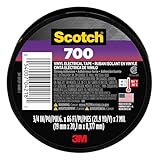
I remember staring at a frayed cord on my old shop vacuum, sparks spitting like angry little gnats. My brain immediately went to electrical tape. It’s the go-to for quick fixes, right? But then the voltage question hit me: can electrical tape handle 240 volts? It’s a question a lot of DIYers grapple with, especially when you’re dealing with anything more than a standard wall socket.
Most people grab the cheapest roll they can find without a second thought. I’ve been there. I’ve seen countless online tutorials gloss over the specifics. But when you’re dealing with that much juice, a flimsy fix can turn into a serious hazard. Let’s cut through the noise and get down to what actually works and what’s just wishful thinking.
Does Electrical Tape Actually Work for High Voltage?
Look, the short answer is: it’s complicated, and mostly, no, not for permanent or important applications. The whole idea behind electrical tape is that it’s designed to insulate. It’s usually made from PVC, which is a decent insulator, but the magic is in its elasticity and adhesive. When you wrap it tightly, it molds to the wire, covering gaps and preventing accidental contact. This works fine for low-voltage stuff – think speaker wire, phone chargers, or those little LED fairy lights that run on AA batteries. I’ve used it to temporarily fix a broken headphone cable more times than I care to admit, and it held up.
But 240 volts? That’s a whole different ballgame. Your standard home outlets are usually 120V, but anything with a bigger motor – like a bigger shop vac, a welder, a clothes dryer, or even some older air conditioners – often pulls 240V.
This means significantly more potential difference, and therefore, a higher risk if your insulation fails. I learned this the hard way once while trying to repair an extension cord for my table saw. I thought a few layers of good ol’ black electrical tape would do the trick.
I wrapped it up, feeling pretty smug about my DIY skills. Within an hour, I went to unplug the saw, and the tape was warm, almost hot, to the touch. A quick visual inspection showed it had started to melt and peel away.
That was a wake-up call. It taught me that just because it can cover a wire, doesn’t mean it should handle that kind of power.
The real issue is dielectric strength – how much voltage a material can withstand before it breaks down and conducts electricity. Standard electrical tape is generally rated for about 600 volts, which sounds promising, right?
But that rating is under ideal laboratory conditions, with clean, dry, and perfectly applied tape on a smooth surface. In the real world, especially in a workshop or garage environment, tape gets nicked, it gets dirty, it might not be applied perfectly uniformly, and it’s subjected to temperature fluctuations and physical stress. These factors drastically reduce its effective dielectric strength. So, while the material might have a high rating on paper, its practical performance under real-world conditions, especially with 240V, is far less reliable than what you need for safety.
What You should Be Looking for (not Just Tape)
If electrical tape isn’t the hero for 240V, what is? This is where you need to stop thinking about tape and start thinking about proper insulation and splice protection. For any permanent or semi-permanent repair on wires carrying 240V, you need something designed for the job. Heat shrink tubing is a fantastic option. You slide it over the wire before making the splice, then use a heat gun to shrink it down. It creates a solid, waterproof, and electrically insulating seal that’s far more durable than tape. I’ve used it on everything from appliance power cords to outdoor lighting circuits, and it’s never let me down. (See Also: Can I Use Electrical Tape To Connect Wires )
Another excellent choice is specialized splicing connectors. These come in various forms, like wire nuts rated for higher voltages and temperatures, or crimp connectors. For 240V, you’ll often see butt connectors or ring terminals that you crimp onto the wires and then protect with heat shrink tubing. This is the professional standard for a reason.
It creates a mechanically strong and electrically sound connection that can handle vibration and temperature changes without failing. I remember when I first started doing more serious electrical work, I was skeptical of crimp connectors.
I thought wire nuts were the only way to go. But after seeing how much more secure and weather-resistant a properly crimped and heat-shrunk splice is, I made the switch. It takes a little more effort and the right tools (a good crimper isn’t cheap, but it’s worth it), but the peace of mind is invaluable.
For temporary fixes that still need to be safe, there are high-voltage rated tapes, but they’re not your average hardware store find. These are often silicone-based or rubber-based tapes that are self-fusing. When you stretch and wrap them, they bond to themselves, creating a solid, smooth insulating layer.
They can handle much higher voltages and temperatures than standard PVC tape. I keep a roll of self-fusing silicone tape in my toolbox specifically for situations where I can’t make a permanent repair immediately but need something that’s reasonably safe and durable until I can.
It feels more substantial, almost like a rubber coating, and it’s designed to withstand more abuse. However, even with these, for 240V, it’s still a temporary solution, and a permanent, proper repair is always the goal.
Common Mistakes People Make (and How to Avoid Them)
The biggest mistake, hands down, is using standard electrical tape for anything beyond very low-voltage, temporary fixes. It’s like using a band-aid to stop a bullet – it might cover the hole, but it’s not going to do anything to stop the real problem. People see it as a quick, cheap fix, and they don’t consider the potential consequences. Another common error is not applying enough layers. Even if the tape could handle the voltage, a single thin layer offers minimal protection. You need multiple wraps, overlapping significantly, to build up any real insulating thickness. But as I found out, even multiple layers of regular tape can fail under stress.
Applying tape over damaged insulation without properly cleaning the wire or repairing the underlying issue is another huge no-no. If the wire itself is nicked or corroded, tape won’t magically fix it. It just covers the problem. You need to assess the damage and either repair or replace the affected section. I’ve seen people wrap tape over exposed copper that’s already starting to corrode. That’s just asking for trouble. The corrosion will continue underneath the tape, weakening the connection and potentially spreading.
One of the most dangerous mistakes is assuming that if the tape looks okay, it is okay. Electrical tape can degrade over time due to UV exposure, heat, and chemical contact. It might appear intact, but its insulating properties could be severely compromised. (See Also: Can Electrica Tape Catch On Fire )
This is especially true if the tape was applied in a hot or dirty environment. Always inspect any taped electrical connection, especially on higher voltage circuits, before you touch it. If it looks brittle, cracked, discolored, or feels gummy, it’s time to replace it with a proper repair.
Remember my table saw cord incident? The tape looked okay from a distance, but it was failing under load. It’s a stark reminder that visual inspection isn’t always enough for tape.
For 240V, you need more than just a visual check; you need solid, tested insulation.
Real-World Use Cases: When Tape might Be Okay (and When It’s Not)
So, where can you reasonably use standard electrical tape with confidence? Think about non-important, low-voltage applications where a short circuit won’t cause a fire or electrocution. Examples include: bundling loose wires together for neatness (not insulation), marking wires with different colors, or temporary insulation on something like a broken antenna lead on a small radio. I’ve used it to secure a loose wire on a garden gnome’s LED lights that only run on a couple of watch batteries. That’s the kind of low-stakes stuff where tape is perfectly fine.
However, when you’re dealing with 240 volts, the list of “okay” scenarios shrinks to almost zero. Here’s a simple table to illustrate the general idea:
| Application | Voltage | Electrical Tape Verdict (Standard PVC) | Reason |
|---|---|---|---|
| Headphone Cord Repair (temporary) | Very Low (< 5V) | Okay for temporary fix | Low voltage, minimal risk of shock or fire. |
| Bundling Lamp Wires (for neatness) | 120V | Not Recommended (use zip ties/velcro) | Tape adhesive can fail, not for insulation. |
| Appliance Power Cord Repair (e.g., toaster) | 120V | Not Recommended | Higher current, risk of heat and insulation failure. |
| Shop Vac/Table Saw Extension Cord Repair | 240V | Absolutely Not Recommended | High voltage, significant fire and shock hazard. |
| Permanent Wiring Splice | 120V or 240V | Never | Requires proper connectors and insulation (heat shrink, rated connectors). |
The key takeaway is that for anything carrying significant power or posing a safety risk, electrical tape is not a substitute for proper insulation and connectors. The cost savings are negligible compared to the potential damage or injury. I’ve seen appliances catch fire from a faulty cord repair that looked fine on the surface. It’s just not worth the gamble.
Practical Tips for Safe Electrical Repairs
First and foremost, always disconnect power before you touch any wires or attempt any repair. This sounds obvious, but in the heat of the moment, it’s easy to forget. Find the breaker or unplug the device. Test with a non-contact voltage tester to be absolutely sure the power is off. I keep one of those little pen-style testers in my pocket all the time. It’s a cheap piece of mind.
Second, identify the type of wire you’re working with. The insulation material and thickness matter. Look for markings on the wire jacket itself, which often indicate its voltage and temperature rating. If you’re unsure, err on the side of caution. For 240V circuits, you’re likely dealing with thicker gauge wires, which require more solid solutions than delicate, thin wires.
Third, when making splices, use the right connectors for the job. For 240V, this usually means crimp connectors (butt splices, ring terminals) specifically rated for the wire gauge and voltage. After crimping, always insulate the splice properly. Heat shrink tubing is the gold standard. Make sure you use a size that’s appropriate for the wire and connector combination, and shrink it evenly until it seals completely. If you don’t have a heat gun, a hairdryer on its highest setting might work for very small tubing, but a heat gun is much more effective and reliable. (See Also: Can I Substitute Duct Tape For Electrical Tape )
Fourth, if you’re unsure about any aspect of the repair, stop and get professional help. Electrical work can be dangerous, and the cost of an electrician is far less than the potential cost of an accident or fire. I’ve called in pros for jobs that were just beyond my comfort level, and I don’t regret it for a second. It’s better to be safe than sorry, especially when dealing with 240 volts.
Frequently Asked Questions About Electrical Tape and Voltage
Can Electrical Tape Be Used on 120v Circuits?
For very minor, temporary insulation needs on 120V circuits, standard electrical tape might suffice if the voltage is low and the risk of shock or fire is minimal. However, it’s generally not recommended for permanent repairs or for insulating areas that experience heat or physical stress. Proper insulated connectors and heat shrink tubing are always a safer and more reliable choice, even for 120V.
What Is the Dielectric Strength of Electrical Tape?
Standard PVC electrical tape typically has a dielectric strength rating of around 1,000 volts per mil (0.001 inches) of thickness. This means a 10-mil thick tape could theoretically withstand 10,000 volts under ideal laboratory conditions. However, this rating doesn’t account for real-world factors like contaminants, uneven application, temperature, and physical stress, which significantly reduce its effective voltage handling capability.
How Many Layers of Electrical Tape Are Needed for Safety?
There’s no single magic number of layers because it depends heavily on the tape quality, application, and voltage. For low-voltage applications where it’s used for minor insulation, 2-3 layers might be sufficient. However, for anything approaching higher voltages, even temporary fixes, relying on multiple layers of standard electrical tape is a gamble. Proper insulation methods like heat shrink tubing or rated connectors provide a much more reliable and safe solution.
What Is the Best Alternative to Electrical Tape for High Voltage?
The best alternatives to standard electrical tape for high voltage are heat shrink tubing and specialized, voltage-rated splicing connectors. Self-fusing silicone tape is also a good option for temporary, high-voltage applications. These methods provide superior insulation, mechanical strength, and environmental resistance compared to PVC electrical tape, making them suitable for 240V and above.
Can I Use Electrical Tape for a Permanent Fix on Any Wiring?
No, you should never use standard electrical tape for a permanent fix on any wiring, especially for circuits carrying significant voltage like 120V or 240V. Electrical tape degrades over time and is not designed to withstand the mechanical stresses, heat, and environmental factors encountered in typical wiring installations. Permanent repairs require approved connectors, junction boxes, and proper insulation techniques.
Verdict
So, can electrical tape handle 240 volts? In a word: no. Not reliably, not safely, and not for anything you actually care about not catching fire or shocking you. While it might feel like a quick fix, it’s really just kicking the can down the road until something goes wrong.
For 240V applications, whether it’s an appliance cord, an extension cord, or permanent wiring, you need to step up your game. Invest in proper heat shrink tubing, high-quality crimp connectors, or rated wire nuts. These aren’t just fancy alternatives; they’re the necessary tools for safe electrical work.
Don’t let the convenience of a roll of tape fool you into a dangerous situation. Always prioritize safety, use the right materials, and if you’re ever in doubt, call a qualified electrician. Your workshop, your home, and your well-being are worth more than a few dollars saved on substandard repairs.