I remember the first time I tried to hang a heavy mirror in my apartment. I was maybe 22, armed with nothing but a hammer, a screw, and a whole lot of misplaced confidence. The mirror, a chunky antique my grandma had given me, ended up on the floor, taking a chunk of drywall with it. That, my friends, was my introduction to the world of ‘maybe I should have used something else.’ So, let’s talk about whether are drywall anchors worth it, because I’ve definitely learned a thing or two the hard way.
It’s easy to think a simple screw directly into drywall is enough. For something light like a picture frame, maybe. But for anything with actual weight – shelves, heavy mirrors, even a decent-sized TV mount – you’re asking for trouble. That’s where these little guys come in, and honestly, they’re usually the unsung heroes of home improvement.
When a Screw Just Isn’t Enough: The Drywall Dilemma
Drywall, that ubiquitous wall material, is basically compressed gypsum plaster sandwiched between paper. Sounds sturdy, right? Wrong. Drywall itself has very little structural integrity.
When you drive a screw into it, you’re mostly relying on the paper facing and a tiny bit of the gypsum core to hold. This is fine for a lightweight picture or a poster. But try hanging a 20-pound mirror, or worse, a bookshelf loaded with books, and you’re setting yourself up for a spectacular failure. I learned this the hard way trying to hang a rather ornate, heavy clock in my living room.
I used what I thought were ‘heavy-duty’ screws, put them in what felt like solid spots, and admired my work. Two days later, the clock was on the floor, the screws were loose in their holes, and I had a nice, unsightly crater in my wall. That’s when I truly understood the importance of proper anchoring.
The common advice you’ll find everywhere is to locate a wall stud. And yes, if you can find a stud and your item can be positioned to align with it, that’s the absolute best-case scenario. A screw driven into a stud is secured by solid wood, which can easily support dozens, if not hundreds, of pounds. But here’s the catch: studs aren’t always where you need them.
What if the perfect spot for your new flatscreen TV is precisely between two studs? Or that ideal place for a floating shelf just happens to land in an open cavity? This is where drywall anchors step in. They’re designed to spread the load and create a secure fastening point where solid wood isn’t available.
Many people shy away from anchors, thinking they’re a sign of weakness or that they’re too complicated. I used to be in that camp. I thought if I just used a bigger screw, or two screws close together, I could get away without them. That’s usually a fool’s errand. The anchors, when used correctly, are specifically engineered to provide significant holding power in drywall. They work by expanding behind the drywall, creating a larger surface area that distributes the weight. Without them, you’re just relying on friction and the paper’s tear strength, which is a recipe for disaster.
Types of Anchors: Not All Heroes Wear Capes
Okay, so you’ve decided anchors are probably a good idea. Now you’re staring at a wall of plastic and metal at the hardware store, and it’s overwhelming. Let me break down the main players.
The most basic type you’ll see are the plastic expansion anchors. These are usually cone-shaped with fins, and you typically drill a hole, tap the anchor in, and then drive a screw into it. When the screw goes in, it pushes the anchor outwards, expanding it against the back of the drywall.
They’re cheap, readily available, and work for lighter to medium-duty items, like small shelves, towel racks, or lightweight wall decor. I’ve used these for years for basic stuff, and they’ve held up fine for things under, say, 10 pounds.
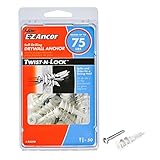
Next up are the self-drilling anchors, often made of plastic or metal. These are a bit more user-friendly because they screw directly into the drywall without needing a pilot hole. You just use a screwdriver or a drill to spin them in. They have threaded tips that bite into the drywall. Once they’re in, you can screw directly into them. These are great for quick jobs and lighter loads, similar to the basic expansion anchors but with less fuss. I found myself reaching for these a lot when I was just trying to get a few things up quickly without making a big deal out of drilling pilot holes.
Then you get into the more solid options: toggle bolts and molly bolts. Toggle bolts are my go-to for anything genuinely heavy. They consist of a spring-loaded wing or wings that fold to pass through a hole, then spring open flat against the back of the drywall. You pull the bolt tight, and the wings provide a huge surface area for support. (See Also: Can Concrete Anchors Be Used In Brick )
They require a larger hole, but the holding power is substantial. Molly bolts are similar, but they have a metal sleeve that expands as you tighten the screw.
They often have a flange that sits flush against the wall. These are fantastic for heavier items like cabinets, large mirrors, or wall-mounted TVs.
I once hung a heavy, framed antique map using molly bolts, and it’s been rock solid for three years now.
Here’s a little table I put together based on my own experiences:
| Anchor Type | Typical Load Capacity (per anchor, approximate) | Best For | Ease of Use | My Verdict |
|---|---|---|---|---|
| Plastic Expansion Anchor | 5-20 lbs | Light decor, small shelves, towel racks | Easy | Good for light stuff, but don’t trust for anything substantial. |
| Self-Drilling Anchor | 10-30 lbs | Similar to plastic expansion, but quicker install | Very Easy | Convenient, but holding power isn’t much better than basic plastic. |
| Toggle Bolt | 30-100+ lbs | Heavy shelves, mirrors, TV mounts, cabinets | Moderate (requires larger hole) | My go-to for serious weight. Reliable. |
| Molly Bolt | 30-75+ lbs | Similar to toggle, good for shallower drywall | Moderate | Solid option, especially if you don’t want a toggle hanging around. |
Note: These are general estimates. Always check the manufacturer’s rating and consider the thickness and condition of your drywall.
What to Look for: Avoiding the Cheapskate Trap
When you’re shopping for drywall anchors, it’s tempting to grab the cheapest box. I’ve done it. And I’ve regretted it. Not all anchors are created equal, and some of the bargain-bin options are frankly useless. The first thing I look at is the material. For anything beyond the absolute lightest duty, I avoid flimsy, brittle plastic. I prefer anchors made from slightly more solid plastic or, even better, metal. The self-drilling ones, especially, should have a good set of threads that feel like they’ll bite into the drywall securely, not just spin out.
The holding capacity is obviously key. Most reputable anchor packaging will state a maximum weight it can hold. This is usually given as a shear load (hanging straight down) and sometimes a pull-out load (pulling directly away from the wall). You need to be realistic. If you’re hanging a shelf that will hold 50 pounds of books, you don’t want an anchor rated for 10 pounds. I always recommend using anchors that are rated for at least twice the weight you intend to hang. This gives you a safety margin, accounts for potential movement or vibration, and makes sure the anchor isn’t stressed to its absolute limit. It’s better to over-anchor than under-anchor.
Pay attention to the size of the anchor and the screw it requires. Some anchors need a specific size drill bit for their pilot hole, and this is important. Using a bit that’s too small means you’ll struggle to get the anchor in, potentially damaging it. Too large, and the anchor won’t have enough drywall to grip. For toggle bolts and molly bolts, the size of the hole is important for the toggles to deploy correctly. Also, consider the length of the anchor and screw. If you have thick drywall or plaster and lath (an older wall type), you might need longer anchors or screws to get a good purchase on the back.
Finally, read reviews if you can. Sometimes, a product that looks good on paper just doesn’t perform in real-world conditions. I’ve found that brands that specialize in fasteners or hardware generally offer better quality than generic, unbranded options. It might cost a dollar or two more per box, but that’s a small price to pay to avoid another trip to the hardware store or, worse, a damaged wall and a broken item. I used to think all plastic anchors were the same, but after one too many failed attempts with super cheap ones, I started paying more attention to the brand and the material quality. It made a noticeable difference.
Common Mistakes and How to Avoid Them
My biggest mistake, as I’ve already confessed, was simply not using anchors when I should have. That’s mistake number one: the ‘I can wing it’ mentality. Drywall is not strong enough to hold much weight on its own. If your item is heavier than a framed poster, factor in an anchor. Mistake number two is using the wrong type of anchor for the job. Trying to hang a heavy TV mount with basic plastic anchors is a guarantee of failure. You need to match the anchor’s weight rating and type to the item you’re hanging and the wall material. A toggle bolt or a properly installed molly bolt is far superior for heavy loads.
Mistake number three is improper installation. This can manifest in several ways.
For plastic expansion anchors, not drilling the correct size pilot hole is a big one. If the hole is too big, the anchor won’t expand properly and will just spin. (See Also: Can Cords Be Used To Make Anchors Climbing )
If it’s too small, you can crack the anchor or the drywall when you try to force it in. For toggle and molly bolts, not making sure the toggles deploy correctly behind the wall, or not pulling the bolt snug against the wall before tightening, can lead to a weak connection. I’ve seen people overtighten screws, stripping the threads in the anchor or even damaging the drywall. The key is to get it snug and secure, not to crank it down with all your might.
Another common pitfall is placing anchors too close together. If you’re hanging a shelf with two anchor points, and you put them just a couple of inches apart, they’re not going to share the load effectively. They work best when spaced out to distribute the weight over a larger area of the wall. Think about how the forces will be applied. For shelves, the weight pulls downwards. For a wall-mounted TV, there’s a downward pull plus the use of the screen extending outwards. You want your anchors to be positioned to counteract these forces effectively.
Finally, and this is a big one, people often forget about the material of the wall itself. While we’re talking drywall, some older homes have plaster and lath walls.
These are much more brittle and can be trickier to anchor into. Standard drywall anchors might crumble the plaster or not hold well in the lath.
For plaster and lath, you often need specific anchors designed for them, or you might need to aim for the wood lath strips if you can find them. Even within drywall, thickness can vary. Always consider the actual wall you’re dealing with. I once had to hang a medicine cabinet in a bathroom that had an older, thicker drywall, and I had to use longer, more solid anchors than I normally would for a standard interior wall.
Real-World Use: My Go-to Anchors
So, after years of trial and error, what do I actually keep in my toolbox? For everyday, lighter-duty tasks – hanging small shelves for plants, mounting a lightweight mirror, or putting up a coat hook – I’ve settled on a good quality self-drilling anchor. Brands like Cobra or Hillman make decent ones that are easy to use and reliable for loads up to about 20-25 pounds. They’re fast, don’t require a separate drill bit (usually), and I haven’t had one fail on me for those lighter applications. I usually buy a mixed pack with different sizes to cover various needs.
When it comes to anything that needs serious holding power – like that antique map I mentioned, or the TV mount for my 55-inch television, or a set of shelves that will be loaded with books or other heavy items – it’s toggle bolts all the way for me. Specifically, the spring-loaded type.
They require a larger hole (often 1/2 inch), and you have to make sure the wings spring open correctly, but once they’re in, they are incredibly secure. I’ve hung things that I know weigh well over 50 pounds with just two toggle bolts.
The key is to get the bolt through the hole, let the toggles deploy fully, and then pull the bolt head back towards the wall before you tighten it. This makes sure the toggles are flat against the back of the drywall, distributing the weight properly. I learned this technique after one early toggle bolt installation felt a bit wobbly, and tightening it properly made all the difference.
For things that are medium-heavy and I might want to remove or reposition later without a huge hole, molly bolts are a good alternative to toggles. They have a neat metal sleeve that expands and they leave a flush finish.
They’re great for things like kitchen cabinets or heavier bathroom fixtures. I used them to mount a substantial antique headboard to the wall, and they’ve held up perfectly.
It’s worth noting that older homes with plaster and lath walls are a different beast entirely. For those, I usually try to find studs first. If I absolutely have to use an anchor, I’d opt for specific plaster anchors or, if possible, try to screw directly into the wooden lath behind the plaster. (See Also: Can Anchors In Your Shoulder Break )
I keep a small drill bit set handy for when I need to make pilot holes for the plastic anchors or the larger holes for toggles and mollies. A level is, of course, a must for anything you hang. And a stud finder? Absolutely. But I also know that studs aren’t always an option, and that’s precisely why good drywall anchors are worth their weight in gold. I’ve probably spent a cumulative $150 over the years on various anchors, screws, and the occasional wall repair kit, and it’s been money well spent to avoid the bigger headaches of falling objects.
Are Drywall Anchors Worth It? The Verdict
So, after all this, are drywall anchors worth it? For me, the answer is a resounding, no-question-asked YES. They are absolutely worth it. The cost of a box of anchors is minimal – usually a few dollars for a pack that will last you for numerous projects. Compare that to the potential cost of repairing a hole in your wall, replacing a damaged item, or, heaven forbid, an injury caused by a falling object. The peace of mind alone is worth the small investment. They are the unsung heroes that allow you to customize your living space, hang those cherished photos, and mount your electronics without worrying about your wall disintegrating.
They aren’t a magic bullet for every situation. If you’re hanging something incredibly heavy, like a solid wood wardrobe or a massive TV, you still need to find studs or use specialized mounting hardware designed for that specific purpose. Drywall anchors have their limits. But for the vast majority of common household items – shelves, mirrors, artwork, light cabinets, wall-mounted TVs, curtain rods – they are the difference between a secure installation and a disaster waiting to happen. They are the bridge between your desire to decorate and the structural limitations of your walls.
I used to be skeptical. I thought they were an unnecessary expense or a sign that I wasn’t strong enough to just use a regular screw. But experience has taught me otherwise. They are a simple, effective solution to a very common problem. They allow you to make your house a home, to display your personality, and to use your space efficiently. Don’t be afraid of them. Learn which type is best for your needs, install them correctly, and you’ll find they are one of the most useful tools in your DIY arsenal.
Frequently Asked Questions About Drywall Anchors
Can I Use a Drywall Anchor for a Heavy TV Mount?
For most TV mounts, especially for larger or heavier TVs, you absolutely should try to locate wall studs. Drywall anchors are generally not recommended as the sole means of support for a TV mount due to the significant weight and use involved. If studs are not an option and you must use anchors, opt for heavy-duty toggle bolts or molly bolts rated significantly higher than the TV’s weight, and use multiple anchors. However, stud mounting is always the safest and most secure method for TV mounts.
Will Drywall Anchors Damage My Wall?
Properly installed drywall anchors will create a small, clean hole that is usually easily patched if you ever need to remove the anchor. However, improper installation, using the wrong size drill bit, or using anchors that are not rated for the weight can cause larger holes, cracks, or damage to the drywall. Over-tightening screws can also strip the anchor or the surrounding drywall. Following the manufacturer’s instructions carefully minimizes the risk of wall damage.
How Many Pounds Can a Drywall Anchor Hold?
The weight capacity of a drywall anchor varies greatly depending on its type, size, and material. Basic plastic expansion anchors might hold 5-20 pounds, while heavy-duty toggle bolts or molly bolts can hold 50-100 pounds or even more in a shear load (hanging straight down). Always check the packaging for the specific weight rating, and remember to use anchors rated well above the intended weight for safety and longevity. The condition and thickness of your drywall also play a role.
Do I Need a Special Drill Bit for Drywall Anchors?
Many drywall anchors, especially self-drilling types, do not require a separate drill bit or can be installed with a standard screwdriver. However, most plastic expansion anchors, toggle bolts, and molly bolts require a pilot hole. The anchor’s packaging will usually specify the recommended drill bit size. Using the correct size is important for the anchor to grip the drywall effectively; too small and it won’t go in or will split; too large and it won’t hold.
Final Verdict
So, to circle back, are drywall anchors worth it? Absolutely. They’re the unsung heroes of home decorating and DIY projects, providing the backbone for hanging everything from your favorite framed photos to that substantial mirror you love. While finding a stud is always the gold standard, it’s not always feasible, and that’s where these little gadgets shine.
Don’t cheap out on them, and always read the instructions. A few dollars spent on good quality anchors can save you a lot of headaches, wall repairs, and potentially broken items down the line. They help you to make your space your own, securely and confidently.
Next time you’re staring at a blank wall and a heavy object, don’t hesitate. Grab the right anchors, take your time with the installation, and enjoy your newly decorated space without worry.