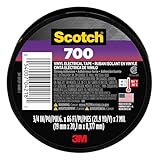
Look, we’ve all been there. You’re in the middle of a DIY project, maybe fixing a leaky faucet or wiring up some new LED strips, and you reach for that roll of tape. You’ve got plumbers tape (PTFE tape, Teflon tape – whatever you call it) sitting right there. It’s white, it’s tape-like, and your brain goes, ‘Could this work?’ I’m here to tell you, straight up, if you’re asking ‘can I replace plumbers tape for electrical tape?’ the answer is a resounding NO, unless you like playing with fire – literally.
I’ve wasted my fair share of cash on products that promised the moon and delivered a dusty crater. Plumbing tape is one of those things that looks like it might do a lot of jobs, but it really only has one. Electrical tape has a very specific job too, and they are miles apart in what they’re made of and what they do. Let’s get this sorted so you don’t end up with a shocker of a situation.
What the Heck Is Plumbers Tape Even for?
Alright, let’s start with the basics. Plumbers tape – that flimsy white stuff you wrap around pipe threads. It’s made of PTFE, or polytetrafluoroethylene, which is a fancy name for a type of plastic. Its job is pretty simple: to act as a lubricant and a sealant for threaded pipe connections. When you wrap it around the male threads of a pipe, it fills in the tiny gaps between the threads. This makes it easier to screw the pipes together without them seizing up, and it also helps create a watertight seal.
Think about it. When you’re connecting two metal pipes, especially with water pressure involved, you need something that can withstand moisture, temperature changes, and the constant stress of pressure. PTFE tape is designed for this. It’s inert, meaning it doesn’t react with water or most chemicals you’d find in a plumbing system.
It also has a low coefficient of friction, so it won’t get all gummy or degrade when you’re tightening those fittings. It’s like giving the threads a little grease and a thin, flexible gasket all in one.
You can buy a whole roll for a few bucks, and it lasts forever, which is probably why people get tempted to use it for other things. I once saw a buddy try to seal a leaky garden hose connection with it. It lasted about ten minutes before the water pressure blew it out like a champagne cork.
Lesson learned.
The key thing here is its purpose. It’s designed to prevent leaks in water or gas lines by filling microscopic voids in threaded fittings. It’s not designed to insulate, resist heat, or provide any sort of structural integrity. It’s a sealant, plain and simple, for specific applications. You wouldn’t use a sealant to hold wires together, and you shouldn’t use electrical tape for plumbing.
Now, About Electrical Tape: It’s Not Just Any Tape
Electrical tape, on the other hand, is a whole different beast. The most common type you’ll find is made of PVC (polyvinyl chloride). What sets it apart isn’t just the material, but its properties. First and foremost, it’s an insulator. That means it’s designed to prevent electricity from flowing through it. This is absolutely vital when you’re dealing with wires, especially those carrying any significant voltage. If you have exposed wires or a splice that isn’t properly secured, touching them could give you a nasty shock or worse. Electrical tape creates a barrier to stop that from happening.
Beyond insulation, good electrical tape has to be flexible enough to wrap around irregular shapes like wire connectors and splices. It also needs to have a decent adhesive that will stick well, even when you’re stretching it as you wrap. Importantly, it needs to withstand a range of temperatures and not become brittle and crack, especially in colder environments, or melt and become sticky in warmer ones. The adhesive on electrical tape is formulated to stay put without conducting electricity or degrading over time due to heat from the wires themselves or ambient conditions.
I remember a job where I was patching up some outdoor holiday lights. The original tape had rotted away, leaving the wires exposed. I grabbed what I thought was electrical tape, but it turned out to be some cheap imitation that felt more like duct tape. After a week, the sun and rain had made it peel off, and I had a couple of dead bulbs and a very worried-looking homeowner. I ended up having to re-do the whole section with proper, high-quality electrical tape. It cost me a bit more time and a few extra dollars, but it was worth avoiding a potential fire hazard or a shock. That’s the difference: specific design for specific, often dangerous, functions. (See Also: Can I Use Electrical Tape To Connect Wires )
Why You Absolutely Cannot Swap Them
Here’s where we get blunt. Asking ‘can I replace plumbers tape for electrical tape?’ is like asking if you can use a butter knife to saw through a two-by-four. They might both be made of metal, but their function and design are completely different. Plumbers tape is all about creating a seal on threaded pipes. It’s thin, it’s not very strong, and it offers zero electrical insulation. If you tried to wrap electrical wires with plumbers tape, two things would happen:
- No Insulation: Electricity would happily flow through that PTFE tape as if it weren’t there. You’d have exposed live wires basically wrapped in a non-barrier. One wrong touch and zap!
- Poor Adhesion & Durability: It’s not designed to stick to itself or to wires long-term, especially under stress or temperature fluctuations. It would likely unravel, leaving your wires exposed to the elements and creating a mess.
On the flip side, using electrical tape for plumbing is also a bad idea, though less immediately dangerous. Electrical tape is not designed to seal threaded pipes.
It’s thin and stretchy, and while the adhesive is good for wires, it’s not formulated to withstand the constant pressure of water or gas lines. It would likely stretch, deform, and leak. You’d end up with a mess of wet floors or a gas leak, which is obviously not ideal. I once tried to temporarily patch a tiny weep from a shower head fitting with a few wraps of electrical tape.
It held for about an hour, then started dribbling, and by the next morning, it was a steady stream. Total failure. The tape just swelled up and lost all integrity.
The common advice is always to use the right tool for the job, and this is a prime example. The materials science and engineering behind each tape are fundamentally different, optimized for completely different environments and stresses. It’s like using a screwdriver as a hammer – it might make a noise, but it’s not going to do the job well and you’re likely to break something.
When the Common Advice Is Wrong (and When It’s Right)
Here’s a contrarian thought for you: Sometimes, the “DIY spirit” gets people into trouble by encouraging them to make substitutions that are just plain dumb. Everyone says, ‘If it looks similar, it probably does a similar job.’ That’s often wrong. Plumbers tape and electrical tape are designed for entirely different realms of your house – the wet ones and the live ones. Trying to cross-pollinate them is a recipe for disaster.
The right advice here is simple: use what’s designed for the job. Plumbers tape for threaded pipe connections, and electrical tape for insulating and bundling electrical wires. It sounds obvious, but the temptation to grab the nearest roll of tape when you’re in a pinch can be strong. I’ve seen people try to use duct tape as a gasket, masking tape for painting, and yes, plumbers tape for electrical work. Almost every single time, it fails, sometimes spectacularly.
However, there’s a nuance. Within electrical tapes themselves, there’s a huge range. You’ve got your basic vinyl tapes, which are fine for general-purpose wiring. Then you have high-temperature tapes, like those made of rubber or mastic, which are far superior for high-stress applications like splicing large wires or in areas that get hot.
The common advice to “just use electrical tape” is generally good, but it often fails to differentiate between the cheap stuff and the good stuff. For anything beyond a simple lamp cord repair, you want a reputable brand known for its insulation properties and adhesion. I learned this when I had a splice in my outdoor security light that kept failing.
It was a cheap tape that couldn’t handle the temperature swings. Switching to a higher-grade, often slightly thicker, electrical tape solved it instantly. So, while the advice to use electrical tape is right, the type of electrical tape can matter a lot. (See Also: Can Electrica Tape Catch On Fire )
A Quick Look at Tape Properties: What to Watch For
Let’s break down what makes these tapes different in a more structured way. It’s not just about what they look like, but what they’re made of and what they do. Here’s a comparison to help clear things up:
| Feature | Plumbers Tape (PTFE) | Electrical Tape (PVC) | Verdict |
|---|---|---|---|
| Primary Function | Thread sealant for water/gas pipes | Electrical insulation, wire bundling | Completely different roles |
| Material | Polytetrafluoroethylene (PTFE) | Polyvinyl Chloride (PVC) | Different chemical structures |
| Electrical Conductivity | Non-conductive (but not an insulator) | Excellent insulator | Important difference for safety |
| Adhesion | Self-adhesive when wrapped; doesn’t stick well to itself unless tightly compressed | Good adhesive to itself and surfaces; designed to stretch and hold | Electrical tape is sticky; plumbers tape is slippery when dry |
| Temperature Resistance | Generally good, but can degrade in extreme cold/heat over time | Varies by quality; good quality resists cracking and melting | Specialty tapes offer better performance |
| Water Resistance | Excellent | Good, but not its primary purpose; can degrade adhesive | Both have some water resistance, but for different reasons |
| Flexibility | Flexible, but can tear easily | Very flexible, especially when stretched | Both are flexible, but in different ways |
| Cost per Roll | Very low ($1-5) | Moderate ($3-10, depending on quality/brand) | Plumbers tape is cheaper for a lot more material |
| Risk of Failure | Leaks, pressure blowouts | Electric shock, short circuits, fire hazard | Electrical failure is far more dangerous |
As you can see, the properties are designed for entirely different environments. Plumbers tape is designed to be compressed and form a seal under pressure, relying on its material properties to not bond chemically but to fill voids. Electrical tape is designed to stretch, conform, and stick, creating a physical and electrical barrier. Trying to force one into the other’s role is asking for trouble. I’ve seen DIY electrical “fixes” that looked like they were wrapped in sticky plastic wrap, and they always end up failing and looking shoddy. Don’t be that person.
Real-World Scenarios: When You Might Be Tempted (and Why You Shouldn’t)
Let’s talk practical. When do people get these bright ideas to swap tapes? Usually, it’s when they’re in a bind and see something that looks like it might work. A common scenario is a minor leak under a sink. You’ve got a pipe fitting that’s weeping a little, and you don’t have any pipe dope or Teflon tape handy, but you do have a roll of electrical tape in your toolbox. Your brain says, ‘It’s a tape, it’s sticky, maybe it’ll seal this?’ No. It won’t. It’s not designed for water pressure, it’s not designed to adhere to metal threads under those conditions, and it will fail. You’ll just end up with a bigger mess and potentially water damage.
Another one is fixing a frayed electrical cord. Say the outer sheath of a lamp cord or a charger cable is starting to break down, exposing some of the inner wires. If you don’t have electrical tape, you might be tempted to grab something else. Maybe it’s plumbers tape, thinking it will hold the sheath together.
Bad idea. The PTFE tape will offer zero insulation.
Or maybe you’ve got some fabric-based tape, thinking it’s strong. That might hold it together physically for a bit, but it’s still not providing the electrical insulation and protection you need.
The real danger with electrical cords is that they’re often in high-traffic areas or near flammable materials. A short circuit from a failed “fix” could start a fire.
I remember helping a friend who had a frayed power cord for his gaming PC. He’d wrapped it with some kind of packing tape. It looked okay, but when he plugged it in, there was a spark and a puff of smoke. Thankfully, the circuit breaker kicked in, but that tape was clearly not up to the job.
We replaced it with proper electrical tape, and it was fine. It’s a stark reminder that some materials are simply not interchangeable when safety is on the line.
Even for simple bundling of wires, electrical tape is the standard for a reason. It’s flexible, sticks well, and provides a bit of protection. You could use zip ties, but they’re rigid and can sometimes damage wire insulation if cinched too tightly. Electrical tape offers a softer, more conformable way to keep wires neat and tidy without risking damage. But again, don’t reach for the plumbers tape for this. It won’t stick to itself properly, it’ll look sloppy, and it offers no protection. (See Also: Can I Substitute Duct Tape For Electrical Tape )
Can Electrical Tape Be Used for Plumbing?
No, you absolutely should not use electrical tape for plumbing. Electrical tape is designed to insulate wires and is not made to withstand the constant pressure, moisture, and temperature fluctuations of a plumbing system. It will likely fail, leading to leaks and potential water damage. Always use plumbers tape or pipe dope for threaded pipe connections.
Is Plumbers Tape Conductive?
Plumbers tape (PTFE tape) is not conductive. While it’s not designed as an insulator in the same way electrical tape is, it won’t readily conduct electricity. However, it’s far too flimsy and not adhesive enough to provide any reliable electrical insulation or protection for wires. Relying on it for electrical work is a significant safety hazard.
What Can I Use If I Don’t Have Plumbers Tape?
If you don’t have plumbers tape, the best alternative is pipe joint compound (also known as pipe dope). It’s specifically designed for sealing threaded pipe connections and works very effectively. In a true emergency, for very low-pressure, non-important applications where a leak is acceptable for a short time, some people might try wrapping a threaded fitting very tightly with multiple layers of plastic wrap or even a strong, waterproof tape, but these are unreliable and not recommended for long-term solutions or for anything carrying significant pressure or gas.
What’s the Difference Between Plumbers Tape and Teflon Tape?
There is no difference. Plumbers tape is simply a common name for tape made of PTFE (polytetrafluoroethylene), which is the same material as Teflon. So, plumbers tape and Teflon tape are the same product, used for sealing threaded pipe joints.
The Bottom Line: Stick to the Plan
Ultimately, the question of ‘can I replace plumbers tape for electrical tape?’ boils down to understanding the fundamental purpose and material properties of each. Plumbers tape is a sealant for pipes; electrical tape is an insulator for wires.
They are not interchangeable. Trying to use one for the other is not a clever shortcut; it’s a gamble with your safety and your property. I’ve learned the hard way that cutting corners on materials, especially when electricity or water pressure is involved, almost always ends up costing more in the long run, not to mention the potential for serious damage or injury. So, the next time you’re tempted to grab the wrong roll of tape, take a deep breath and reach for the one specifically designed for the task at hand.
Your future self, free from shocks and leaks, will thank you.
Verdict
So, to circle back to the burning question: can I replace plumbers tape for electrical tape? Absolutely not. It’s a terrible idea. Think of it this way: you wouldn’t use a screwdriver to hammer a nail, and you shouldn’t use plumbers tape to insulate wires. The materials are different, the properties are different, and the risks are vastly different.
I’ve seen enough DIY disasters to know that sticking to the intended purpose of tools and materials is always the smartest play. Electrical tape is cheap enough, and so is plumbers tape. Grab the right one for the job, and save yourself the headache, the potential shock, or the leak. Trust me on this one; it’s not worth the risk.
Next time you’re at the hardware store, make sure you grab both. Keep your plumbing tidy and your electrical work safe. It’s really that simple.