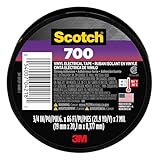
I’ve stood in the middle of a project, staring at a tangle of wires, realizing I’m out of the one thing I actually needed: proper wire connectors. And then, the dreaded thought creeps in: can I use electrical tape instead of wire caps? It’s a question born of desperation and a tight deadline, a whisper of “maybe this will work” in the face of immediate inconvenience. I’ve been there, fumbling with DIY fixes, and let me tell you, the answer isn’t as simple as a quick wrap and a prayer.
This isn’t about cutting corners; it’s about understanding what holds. When you’re dealing with electricity, even low voltage, the stakes are higher than just a wobbly light fixture. We’re talking potential fire hazards, failed connections, and a whole lot of frustration down the line.
Why Electrical Tape Is Not a Wire Cap (and Never Will Be)
Look, I’m all for ingenuity. I’ve jury-rigged my way out of more jams than I care to admit. But when it comes to joining wires, electrical tape and wire caps serve fundamentally different purposes. Wire caps, those little plastic doodads (they’re officially called “wire nuts” for many applications, but let’s stick to the common term), are designed to create a secure, insulated, and mechanically stable connection. They twist onto the wires, compressing them together and providing a reliable physical bond.
Electrical tape, on the other hand, is… well, tape. It’s an adhesive strip designed to insulate exposed wires, sure, but it’s not built for the mechanical stress of a wire joint. Imagine trying to hold two pieces of metal together permanently with Scotch tape. It might hold for a bit, but any vibration, pull, or temperature change is going to make it a flimsy mess. That’s the essence of the problem with using electrical tape as a substitute for wire caps. You’re sacrificing mechanical integrity and long-term reliability for a quick fix.
I learned this the hard way when I was wiring up some accent lights in my garage a few years back. I ran out of wire nuts and, in a moment of misguided confidence, decided to twist the wires together and wrap them TIGHTLY with electrical tape. It looked okay. It worked. For about three weeks. Then, one afternoon, a faint smell of burning plastic wafted into the garage. The tape had loosened, the wires had pulled apart slightly, and the exposed copper was arcing. Luckily, it was low voltage and didn’t start a fire, but it was a stark reminder that some shortcuts just aren’t worth the risk.
The primary function of a wire cap is to maintain electrical continuity and mechanical security. When you twist wires together and cap them, you’re creating a solid joint. That joint is then protected from physical stress. Electrical tape, even multiple layers, can shift. The adhesive can degrade over time, especially with heat cycles that are common in electrical systems. Vibration is the enemy of tape-wrapped connections. Over time, the tape can loosen, allowing the wires to pull apart, creating intermittent connections or, worse, exposed conductors.
Wire caps also provide a different kind of insulation. They are typically made of a thermoplastic material that is rated for the voltages and temperatures involved. They create a sealed, solid barrier. Electrical tape, while rated for electrical insulation, is inherently flexible and can be prone to nicks or tears if not applied perfectly, which is hard to do consistently on a twisted wire joint. Furthermore, the pressure applied by a wire cap helps make sure good contact between the conductors, reducing resistance and heat buildup. Tape doesn’t offer that same consistent compression.
What Actually Makes a Good Wire Connection
So, if electrical tape isn’t the answer, what does make a solid, reliable wire connection? It boils down to three key things: good contact, mechanical security, and proper insulation. Wire caps excel at all three. When you twist the wires together before screwing on the cap, you’re creating a tight bundle. The cap then further compresses this bundle, making sure all strands of the wires are making firm contact with each other. This minimizes resistance, which is important for preventing heat buildup. Think of it like a handshake: a firm grip makes good contact. A loose, sloppy grip is unreliable.
The mechanical security comes from the screw-on action of the wire cap. It physically holds the wires together. Even if you pull on the wires, they are anchored within the cap. This prevents the conductors from separating, which is most important. Imagine a simple lamp cord connected to a switch. If that connection comes loose, the light flickers, or worse, you get a shock hazard. Wire caps are engineered to prevent that kind of failure.
Finally, insulation. Wire caps are made of plastic designed to withstand electrical current and heat. They are molded to create a solid, continuous barrier. When applied correctly, they enclose the entire connection, leaving no exposed metal. Electrical tape, by contrast, is a flexible strip. While it’s designed for insulation, its effectiveness depends heavily on how it’s applied. It’s very easy to leave gaps or to have the tape stretch and pull away over time, especially if the connection experiences any movement or heat. The adhesive itself can also degrade, compromising the seal. (See Also: Can I Use Electrical Tape To Connect Wires )
There are other methods, of course. Soldering offers a very strong and reliable connection, but it’s a skill that requires practice and the right equipment, and often needs additional insulation applied afterward. Crimp connectors are another excellent option, creating a very strong mechanical and electrical bond when done with the proper crimping tool. They are often used in automotive and appliance wiring. But for general household wiring, especially when dealing with multiple wires of the same gauge, wire caps are the go-to. They are simple, effective, and designed for the job. The common advice to use wire caps for joining wires isn’t just common; it’s based on solid engineering principles for safety and reliability.
When You Might think Tape Is Okay (and Why You’re Probably Wrong)
I’ll be blunt: there’s no scenario in standard electrical wiring where electrical tape is a proper substitute for a wire cap. However, I can see why people might be tempted. Maybe they’re just adding a tiny LED light, or fixing a low-voltage garden stake light. Perhaps the wires are stranded and small, and they can twist them together tightly and wrap them with many, many layers of tape, thinking that sheer volume of tape will make up for the lack of mechanical grip. Or maybe they’re in a pinch, miles from a hardware store, and the project absolutely has to be finished right now.
I’ve seen people twist two small, stranded wires together, then meticulously wrap them with what looks like half a roll of high-quality electrical tape, making sure every millimeter is covered. From a purely insulation standpoint, if done perfectly, it might prevent a direct short for a while, especially on low-voltage DC circuits where heat and mechanical stress are less of a concern. But here’s the kicker: it’s still not a mechanically secure connection. Any tugging, any vibration, any slight expansion or contraction from heat cycles can compromise that connection. The adhesive on electrical tape isn’t designed to hold wires rigidly together under tension; it’s designed to stick to itself and the wire for insulation.
Another tempting situation is when the wires are very stiff and already have a tight twist from how they’re bundled, or if you’re just temporarily disconnecting something to move it. People think, “I’ll just tape it up so it doesn’t fray.” That’s not the same as joining two circuits. That’s more like temporarily securing an already terminated wire. But joining two live or to-be-joined conductors? That’s where the danger lies. The common advice to use wire caps for joining wires is exactly that: for joining. Not for covering the end of a single wire, or for temporarily bundling.
The real problem is that “it works for now” mentality. Electrical fires often start from shoddy connections that have been slowly degrading for months or even years. A connection that looks fine after a week might be a ticking time bomb. So, while I understand the temptation, and I’ve certainly been tempted myself, the honest answer is that electrical tape is for insulating after a proper connection has been made, not for making the connection itself. It’s like using a bandage on a broken bone – it covers it, but it doesn’t fix the underlying structural problem.
My Personal Experience: The Great Outlet Fiasco
A few years ago, I was rewiring an old kitchen. Replacing outlets, adding some new circuits for the microwave and dishwasher. You know, the usual homeowner stuff. I was making pretty good progress, feeling like a pro, when I hit a snag. I had a junction box where multiple wires needed to connect, and I’d underestimated how many wire caps I’d need. I was completely out. The nearest hardware store was a good 45-minute drive, and the day was already shot. My wife was due home soon, and I wanted the power back on.
Panic set in. Then, the devil on my shoulder whispered, “electrical tape.” I had a fresh roll of good quality, vinyl electrical tape. I figured, “What’s the worst that could happen?” These were standard 12-gauge wires, nothing too heavy-duty. I twisted the bundles together as tightly as I could, making sure good contact, and then I proceeded to wrap each joint with what felt like a mile of tape. I overlapped generously, making sure there were no gaps, creating a thick, insulated layer. I visually inspected them, tugged gently, and they seemed… solid. I reconnected the power, and everything worked. The lights came on, the fridge hummed. I breathed a sigh of relief, feeling smug about my ingenuity.
Fast forward about six months. I was changing a light fixture in the pantry, which is adjacent to the kitchen. As I opened the pantry door, I noticed a faint, persistent smell of burnt plastic.
It was strongest near the kitchen wall. My stomach did a little flip. I turned off the breaker to the kitchen and cautiously opened up the junction box I had taped. (See Also: Can Electrica Tape Catch On Fire )
What I saw made my blood run cold. The electrical tape had blackened, cracked, and in several places, peeled back. The twisted wire bundles were exposed, and one pair had clearly been arcing, leaving scorch marks on the insulation of the other wires and the inside of the box.
If that hadn’t been a relatively accessible junction box, or if the tape hadn’t failed in a way that created an obvious smell, it could have easily started a fire. I immediately redid the connections properly with new wire caps and learned a lesson I’ll never forget: never, ever compromise on wire connections.
Electrical Tape vs. Wire Caps: A Quick Comparison
Here’s a table to lay it out plain. One is designed for the job, the other is… not. It’s not about being fancy; it’s about safety and reliability. I’ve added my verdict on each point because frankly, when it comes to electricity, you need to know what’s genuinely trustworthy.
| Feature | Wire Caps (e.g., Wire Nuts) | Electrical Tape | My Verdict |
|---|---|---|---|
| Mechanical Security | Excellent. Designed to grip and hold wires firmly. | Poor. Adhesive can degrade, tape can slip/loosen under stress. | Wire Caps WIN. Key for preventing wires from pulling apart. |
| Electrical Contact | Excellent. Compresses wires for solid contact. | Poor. No compression, relies on surface contact which can be inconsistent. | Wire Caps WIN. Better contact means less resistance and heat. |
| Insulation Rating | Good to Excellent. Made of specific thermoplastic, rated for voltage/temp. | Good. Vinyl tape has good dielectric strength, but application is key. | Slight Edge to Wire Caps. Their form factor makes sure complete, consistent coverage. |
| Ease of Use | Very Easy. Twist on. | Moderate. Requires careful, overlapping application to be effective. | Wire Caps WIN. Faster and more reliable for the average person. |
| Long-Term Reliability | Excellent. Designed for permanent connections. | Fair to Poor. Can degrade with heat, vibration, and age. | Wire Caps WIN. Proven track record in permanent installations. |
| Primary Function | Join and insulate wires securely. | Insulate exposed conductors after a connection is made. | Wire Caps WIN. They do the connecting. Tape just covers it. |
When to Call a Pro (and When to Just Buy More Caps)
Look, I’m a DIYer. I love tackling projects around the house. But there are lines you just don’t cross. If you’re ever in doubt about anything electrical, the best advice I can give you is to stop, turn off the power at the breaker, and call a qualified electrician. They’ve got the training, the experience, and the tools to do the job safely and correctly. It might cost you a bit upfront, but it’s a pittance compared to the cost of a fire, a serious injury, or extensive property damage.
So, when should you consider calling a pro? Anytime you’re dealing with your main electrical panel, any work that requires rewiring circuits, or if you’re uncomfortable with any part of the process. If you’re questioning whether you can substitute a fundamental connector like a wire cap with something else, that’s a giant red flag waving in your face. It’s a sign that you might be out of your depth, and that’s perfectly okay. Knowing your limits is a sign of intelligence, not weakness.
Beyond that, if you simply run out of wire caps, the solution is incredibly simple: go buy more wire caps. They are cheap.
You can get a multi-pack of assorted sizes for just a few bucks at any hardware store or even a supermarket. Seriously, I keep a variety pack in my toolbox at all times. The cost of a small pack of connectors is negligible compared to the potential risks of trying to make a dodgy connection with electrical tape.
I’ve also learned to buy a larger quantity than I think I’ll need for a project. It’s always better to have a few left over than to be scrambling mid-job.
For example, on my kitchen rewire, I initially bought a small box, but I should have bought the big contractor pack. Lesson learned the expensive (and scary) way. (See Also: Can I Substitute Duct Tape For Electrical Tape )
The National Electrical Code (NEC) has specific requirements for joining conductors, and wire connectors are listed and approved for use under those codes. Electrical tape, while having its own UL listing for electrical insulation, is not listed as a primary means of joining conductors. This distinction is important for safety and code compliance. So, while I appreciate the spirit of improvisation, for electrical connections, stick to what’s designed for the job.
Can Electrical Tape Be Used to Insulate Bare Wires?
Yes, electrical tape can be used to insulate bare wires after a proper connection has been made with a connector like a wire cap or crimp. Its primary purpose is to add an extra layer of insulation or to cover minor nicks on an insulated wire. However, it is not designed to create the initial mechanical and electrical connection itself.
Will Using Electrical Tape Cause a Fire?
While electrical tape itself is flame-retardant, using it instead of proper wire connectors can significantly increase the risk of a fire. A poorly made connection can lead to arcing, overheating, and eventually ignition of nearby materials. This is especially true if the tape loosens or degrades over time, exposing the conductors.
Is It Safe to Use Electrical Tape on Low Voltage Wiring?
For low-voltage DC circuits, the risks are generally lower than with household AC power. However, a loose or failing connection can still cause intermittent operation, damage to connected devices, or even short circuits. It’s still best practice to use proper connectors for reliability, even on low-voltage applications.
How Many Layers of Electrical Tape Are Needed?
When used correctly for insulation over a proper connection, several overlapping layers are typically recommended to make sure complete coverage and to create a sufficiently thick barrier. The exact number can vary, but you want to make sure no part of the underlying conductor is visible and that the tape forms a smooth, continuous sheath.
What Should I Use If I Run Out of Wire Caps?
If you run out of wire caps, the safest and most recommended action is to stop the project and go purchase more wire caps. They are inexpensive and specifically designed for joining wires safely and reliably. Do not attempt to use electrical tape as a substitute for the connection itself.
Verdict
So, can I use electrical tape instead of wire caps? The short, blunt answer is no. Not if you care about safety, reliability, or not having to redo the job in a few months (or worse, dealing with a fire hazard). Electrical tape is for insulating, not for connecting. Think of it as the bandaids and gauze after a surgeon has done the stitching – key for protection, but not the stitching itself.
I’ve learned this the hard way, and I’ve seen the consequences of cutting corners. The few bucks you save on a pack of wire nuts is not worth the potential risk to your home and safety. Every time I’ve been tempted, I’ve pictured that scorched junction box, and the urge to improvise vanishes.
Next time you’re in the middle of a wiring job and realize you’re short on connectors, resist the urge. Go get the right parts. Your future self, and your home, will thank you for it.