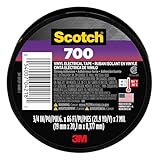
I’ve been elbow-deep in wires, connectors, and questionable DIY fixes for longer than I care to admit. Early on, I remember staring at a tangled mess of speaker wire after a storm knocked out power, feeling a desperate urge to just wrap it all up with whatever I had. That’s when the thought, ‘can I use electrical tape to connect wires?’ first really hit me. Spoiler alert: the answer is complicated, and often, the quick fix bites you later. It’s the kind of question that pops up when you’re in a pinch, and the internet is flooded with opinions, but few actually tell you what you need to know from someone who’s been there.
We’ve all been there, staring at a frayed wire or a loose connection, thinking that a roll of that ubiquitous black tape might just do the trick. It feels so… convenient. But convenience often comes at a cost, especially when you’re dealing with electricity. Let’s cut through the noise and talk about what really happens when you go down the electrical tape route.
The Temptation of the Quick Fix: Why Electrical Tape Seems Like a Good Idea
Look, nobody wants to make a shoddy connection. But sometimes, you’re in a situation where a permanent, proper fix isn’t immediately possible. Maybe it’s a temporary repair on an outdoor light fixture before the rain hits, or a quick-and-dirty fix on a low-voltage appliance to get it working for the weekend.
Electrical tape, with its stretchy, adhesive nature, feels like it’s designed for this. It’s cheap, readily available, and it wraps around things neatly. It’s the go-to for a lot of people when they’re not sure what else to use, or when they’re just trying to get something functional again, fast. I’ve certainly been tempted.
I remember one time, the wire on my old shop vacuum started fraying near the plug. My initial thought was, ‘Just wrap it in electrical tape, it’ll be fine for a while.’
It was fine, for about three days. Then, the tape started to peel, exposing bare wire, and I got a nasty little jolt.
Lesson learned, the hard way.
The marketing around electrical tape often leans into its versatility. It’s ‘vinyl,’ it’s ‘insulating,’ it’s ‘weather-resistant’ – all good selling points. And for some very specific, low-stakes applications, it might even serve a temporary purpose.
But the reality is, most of us are thinking about using it for more than just wrapping a handle. We’re thinking about joining two wires together, and that’s where the real problems start. It’s the shiny black roll that whispers promises of easy fixes, but often, it’s a siren song leading you to a potential disaster.
The common advice you’ll find is that it’s for insulation and protection, not for making a secure mechanical or electrical connection. This is one of those times where the common advice is actually pretty spot on, and ignoring it is a mistake many DIYers make.
The core issue is that electrical tape is primarily an insulator, not a connector. Think about it: it’s a thin strip of PVC or rubberized material with adhesive. Its job is to wrap around something that’s already connected, to keep stray electrons from escaping or to prevent accidental contact with other conductive parts.
It doesn’t provide any mechanical strength, nor does it create a low-resistance electrical path. When you use it to join wires, you’re relying on the tape to hold them together and somehow carry the current, which it’s fundamentally not designed to do.
This is a key distinction that many people miss. They see it as a way to ‘stick wires together’ and insulate them simultaneously. But the ‘sticking together’ part is where the wheels come off. The adhesive is designed to stick to itself and the wire surface, not to create a solid, conductive junction.
The Cold, Hard Truth: Why It’s a Bad Idea for Wire Connections
Let’s get blunt: using electrical tape to directly connect two bare wires is a terrible idea. It’s like trying to build a bridge out of chewing gum. (See Also: Can I Use Electrical Tape To Connect Wires )
It might hold for a minute, but it’s not going to last, and it’s potentially dangerous. The primary reason is that electrical tape doesn’t create a secure mechanical connection.
Wires can easily wiggle loose, especially with vibration or movement. When that happens, you end up with intermittent contact, arcing, and eventually, a failed connection or a fire hazard. I learned this the hard way trying to jury-rig a trailer light. I spliced two wires, twisted them together, and wrapped them with electrical tape.
Within a week, the tape had loosened, the wires had pulled apart, and one of my brake lights was out. Annoying, and frankly, a bit scary to think about what could have happened if the connections had shorted out.
Furthermore, electrical tape isn’t designed for the sustained heat that can be generated at a connection point, especially under load. Cheaper tapes can dry out, become brittle, or the adhesive can melt, all of which compromises the insulation. Then there’s the issue of moisture.
While some tapes have decent water resistance, they aren’t waterproof seals. Water can creep in, causing corrosion and further degrading the connection. Think about all the different types of electrical tape out there.
Not all are created equal. Some are better than others, but the fundamental flaw remains: they are insulators, not conductors or structural connectors. The common advice to never use it for making actual splices is one you should take to the bank.
It’s meant for wrapping existing, properly made connections, or for bundling wires together after they’ve been terminated.
The adhesive on electrical tape also degrades over time. It’s not formulated for long-term, high-stress electrical applications.
Heat, cold, UV exposure, and even just time can cause the adhesive to lose its tackiness. This means the tape can start to unwrap itself, exposing the wire. This is particularly problematic in outdoor or in-wall applications where you can’t easily see or check the connection. You might think you’re safe and sound, but over months or years, that tape can fail.
And when it fails, it’s not a gentle goodbye; it’s often a sudden, potentially dangerous event. This is why electricians and anyone who knows their stuff will always tell you to use proper connectors for wire junctions. The cost of a few wire nuts or crimp connectors is negligible compared to the risk of fire or electrical shock.
What You should Be Using Instead (the Right Way)
So, if electrical tape is out, what’s in? The answer depends on the type of wire, the voltage, and the application, but there are several reliable methods. For low-voltage DC applications (like most car wiring or hobby electronics), crimp connectors are often the best bet.
You use a special tool to crimp a metal sleeve onto the two wires, creating a strong mechanical and electrical bond. For household AC wiring (like in your walls, appliances, or extension cords), wire nuts are the most common and easiest solution for joining solid or stranded wires. You simply twist the wires together inside the plastic cap.
For a more solid and permanent connection, especially for larger gauge wires or in situations with a lot of vibration, soldering can be used, followed by heat-shrink tubing for insulation and protection. I’ve done a lot of soldering on older appliances and audio equipment, and the resulting connection feels incredibly solid and reliable. (See Also: Can Electrica Tape Catch On Fire )
It takes a bit more skill and equipment, but the payoff is worth it.
Here’s a quick rundown of common, legitimate wire connection methods:
| Method | Best For | Pros | Cons | My Verdict |
|---|---|---|---|---|
| Wire Nuts | Household AC wiring (solid & stranded) | Easy to use, inexpensive, readily available | Can loosen over time if not installed correctly, not ideal for very high vibration |
Solid Choice. My go-to for most home wiring. Just make sure to get the right size and twist ’em on tight. |
| Crimp Connectors | Low-voltage DC, automotive, some appliance repairs | Very secure mechanical and electrical connection, durable | Requires a specific crimping tool, can be bulky |
Rock Solid. For anything low-voltage, these are gold. Never had one fail on me when crimped properly. |
| Soldering with Heat Shrink Tubing | High vibration, permanent installations, important connections | Extremely strong and reliable connection, excellent conductivity, professional look | Requires soldering iron and skill, takes longer, more expensive equipment |
The Professional Way. If you want it done right and to last forever, this is it. Takes practice but worth it. |
| Wago Lever Connectors | Solid and stranded wires, quick connections in junction boxes | Very fast and easy to use, secure, visually inspectable connection | More expensive than wire nuts, can be bulkier |
Modern Marvel. These are quickly becoming my favorite for speed and reliability. Super intuitive. |
When I’m working on older equipment, especially anything with multiple wires of different gauges, I often reach for Wago connectors. They’re a bit pricier than wire nuts, but the lever mechanism makes it so easy to insert the wires, and you can visually confirm the connection. It’s a little bit of future-proofing for yourself, as they’re less likely to come loose than a poorly installed wire nut. The key takeaway here is that there are always better, safer, and more reliable options than relying on electrical tape to join wires. It’s not a matter of ‘if’ it will fail, but ‘when’.
When Electrical Tape might Have a Limited Role (and When It Doesn’t)
Okay, let’s be clear. I’m not saying electrical tape is entirely useless. It has its place, but that place is almost never for making the actual electrical connection between two wires. Its primary legitimate uses are:
- Insulating Exposed Connections: After you’ve made a secure connection using a wire nut, crimp connector, or solder joint, you can wrap electrical tape around the outside of that connector. This adds an extra layer of protection against accidental contact or environmental factors.
- Bundling Wires: If you have a neat bundle of wires that need to be kept together, electrical tape can serve this purpose well. Think of organizing cables behind a TV or in a computer case.
- Temporary Insulation on Low-Voltage, Non-Important Circuits: In very specific, low-stakes scenarios where there’s no significant heat generated and the connection is not important (e.g., a temporary fix on a toy, or a battery-powered LED strip where the current is minimal), it might hold for a short while. But even then, I’d be looking for a better solution ASAP.
What it is not for, and what you should avoid at all costs:
- Joining two bare wires together where the tape is expected to carry the current or provide the mechanical bond.
- Any connection that will be exposed to significant heat (e.g., near an engine, a motor, or in a hot appliance).
- Outdoor connections or connections in damp environments where water ingress is a risk.
- Connections in high-vibration areas (like vehicles or heavy machinery).
- Any situation where a failure could lead to fire or injury.
I once saw someone try to fix a frayed extension cord by twisting the wires and wrapping them with layers and layers of electrical tape. It looked thick and secure, but it was a disaster waiting to happen. It wasn’t long before that cord started to overheat, and thankfully, tripped a breaker before it became a fire. The common advice is that electrical tape is for insulating, not connecting. This is a simple but vital distinction. It’s the difference between protecting a finished job and trying to do the whole job with the wrong tool. The temptation to use it for a quick splice is strong, but the consequences are far too severe to justify the convenience.
Common Mistakes and How to Avoid Them
The biggest mistake people make is thinking electrical tape is a connector. It’s not. It’s an insulator. This misunderstanding leads to all sorts of problems.
Another common error is using the wrong type of tape. Not all electrical tapes are created equal. Some are designed for higher temperatures or for better UV resistance, but even the best ones are still fundamentally insulators. When you’re looking at a roll, check the specifications.
A good quality electrical tape, like 3M Super 35 or Scotch 88, will be more durable and flexible than cheap, generic brands. But again, this is for insulating existing connections, not making them. I spent about $15 on a roll of what looked like heavy-duty electrical tape once, thinking it would be great for reinforcing some outdoor wiring. Within six months, it had cracked and peeled away, leaving the wires exposed to the elements. (See Also: Can I Substitute Duct Tape For Electrical Tape )
That $15 felt like $150 wasted when I had to redo the entire splice properly.
A related mistake is improper installation. Even when using electrical tape for its intended purpose (insulating a connection), people often don’t wrap it correctly. You need to overlap each layer by at least half the width of the tape, stretching it slightly as you go. This creates a tight, smooth barrier. Wrapping it loosely or without sufficient overlap leaves gaps for moisture and dirt to penetrate. Another classic error is trying to use electrical tape on frayed wires without first cleaning them up or making a solid splice. You’re just putting a bandage on a gaping wound. The wire is still compromised, and the tape will eventually fail or create a weak point.
The most insidious mistake, though, is believing that a DIY fix with electrical tape is “good enough” for a temporary solution. Electricity doesn’t care if it’s temporary. A loose connection can arc, generate heat, and melt surrounding materials, leading to a fire.
I’ve seen it happen. My neighbor once tried to fix a broken lamp cord by twisting the wires and wrapping it all up with electrical tape. He figured he’d get a new cord ‘next week’.
A few days later, the tape started to smoke. Luckily, he was home and smelled it, but it was a stark reminder that electricity is unforgiving. When it comes to electrical connections, there’s no room for ‘good enough’. Always use the right tool for the job.
If you’re unsure, it’s always better to consult a qualified electrician than to risk a fire or shock.
Frequently Asked Questions About Electrical Tape and Wire Connections
Can I Use Electrical Tape to Splice Wires Permanently?
No, you absolutely should not use electrical tape to permanently splice wires. Electrical tape is designed for insulation, not for creating a secure mechanical or electrical connection. It can degrade over time, loosen, and lead to dangerous situations like arcing or fire.
Is Electrical Tape Waterproof?
While some high-quality electrical tapes offer good resistance to moisture, they are not typically considered waterproof in the long term. Water can eventually seep into connections wrapped with electrical tape, leading to corrosion and failure. For truly waterproof connections, specialized waterproof connectors or heat-shrink tubing with sealant are necessary.
What Happens If I Use Electrical Tape to Connect Wires?
If you use electrical tape to connect wires, you risk creating an insecure connection that can lead to intermittent power, arcing, overheating, and potentially fire. The tape itself can degrade, dry out, or lose its adhesion, exposing the bare wires and compromising safety.
How Long Does Electrical Tape Last on Wires?
The lifespan of electrical tape on wires varies greatly depending on the quality of the tape, the environmental conditions (heat, UV exposure, moisture), and the stress on the connection. In ideal conditions, a good quality tape might last for several years when used for its intended insulating purpose. However, when used as a connector, its lifespan is significantly shortened, and failure can occur much sooner, sometimes within weeks or months.
Verdict
So, to answer the burning question: can I use electrical tape to connect wires? The short, blunt answer is no. Not if you value safety and reliability. It’s a tool meant for insulation, for adding a protective layer around a properly made connection, not for making the connection itself. I’ve wasted my share of time and money on quick fixes that didn’t last, and messing with electrical connections is one area where cutting corners is just asking for trouble.
If you’re faced with a wire that needs joining, reach for the right stuff: wire nuts, crimp connectors, or Wago connectors. They’re inexpensive, readily available, and designed for the job. Don’t let the convenience of that black roll of tape lure you into a dangerous situation. Your future self, and potentially your home, will thank you for doing it right the first time.
Next time you’re tempted to reach for electrical tape for a splice, take a deep breath and get yourself the proper connector. It’s the only way to be truly safe.