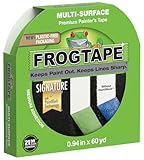
I’ve stood in the hardware store aisle, staring at that bright green tape, wondering if it could be the magic bullet for my 3D printing woes. You know the drill: peeling prints, warped corners, a general sense of printer-induced despair. I’d heard whispers, seen a few questionable forum posts, and frankly, I was desperate enough to try anything. So, the big question on my mind, and probably yours too, is: can you use Frog Tape on a 3D printer?
Let me cut to the chase. It’s not a straightforward yes or no. While Frog Tape has its fans in the painting world for its crisp lines, applying it to a 3D printer build plate comes with a whole different set of considerations.
Frog Tape’s Claim to Fame (and Why It Matters Here)
Frog Tape is famous for its “PaintBlock” technology. This isn’t just some fancy marketing term; it’s a chemical gimmick that reacts with latex paint, causing the tape to swell and create a barrier. On walls, this means razor-sharp edges when you’re painting trim.
It’s brilliant for that specific job. When you’re talking about 3D printing, though, that sophisticated chemical reaction is largely irrelevant, and frankly, a bit of a red herring. What we’re really after when we put tape on a build plate is adhesion. We want the first layer of our print to stick like glue.
Frog Tape’s primary selling point for painting – its ability to prevent paint bleed – is the opposite of what we need for 3D printing. We need something that enhances adhesion, not something designed to prevent a liquid from seeping under it. The core mechanism that makes Frog Tape great for painting doesn’t translate directly to helping your ABS stick to the bed. It’s like trying to use a screwdriver to hammer a nail; the tool is good, but it’s designed for a different purpose entirely.
Many people online, especially those new to the hobby or new to specific printing challenges, see a strong tape and think it’ll be a universal fix. I’ve seen forum threads where people argue it’s the best thing since sliced bread for adhesion, and I’ve tried it, coming away with less-than-stellar results. The green color is eye-catching, sure, but it doesn’t inherently make it a better build surface. My first attempt involved me carefully applying a few strips of the standard green Frog Tape to my glass bed, hoping for the best.
The print started okay, but by the third layer, I heard that sickening crackle of a print detaching. It wasn’t a total failure, but it was far from the perfect adhesion I’d hoped for. This experience solidified my skepticism about using it as a go-to build surface solution.
The Reality of Adhesion: What 3d Printers Actually Need
What your 3D printer build plate actually craves isn’t fancy paint-blocking technology. It’s a surface that provides consistent, reliable grip for that important first layer. Think of it as a handshake. You want a firm, confident grip, not a slippery, uncertain touch. Different filaments have different needs. PLA, the most common beginner filament, is generally forgiving. It likes a slightly tacky surface. ABS, on the other hand, is a notorious diva. It needs a strong bond to prevent warping, and it often requires higher bed temperatures. PETG is somewhere in the middle, usually happy with a good adhesion surface but can sometimes be a bit too sticky, leading to damage when removing prints.
The common advice you’ll see online often boils down to a few materials: painter’s tape (which Frog Tape is a type of), blue painter’s tape specifically, hairspray, glue sticks, and specialized build surfaces like PEI sheets. Frog Tape falls into the painter’s tape category. The standard blue painter’s tape is often cited, and it’s true that some people have success with it. The difference, however, often lies in the specific formulation and adhesive properties of the tape.
Frog Tape’s “PaintBlock” feature is designed to react to paint, not necessarily to create a universally strong bond with extruded plastic. This is where the confusion arises. (See Also: Does Painters Tape Pull Off Paint )
People see ‘painter’s tape’ and assume all painter’s tape is created equal for 3D printing. It’s not.
My own experiments with various types of painter’s tape showed me this firsthand. I tried a generic brand, a strong-grip version, and yes, Frog Tape. The generic and the strong-grip offered better, albeit inconsistent, adhesion than the Frog Tape for my PLA prints. The Frog Tape’s adhesive felt less aggressive, and the surface didn’t seem to ‘grab’ the molten plastic as effectively. It’s possible the coating designed to interact with paint interferes with the plastic’s adhesion, or maybe it just doesn’t have the right tackiness. It’s a subtle but important difference. When a print is layered up, especially taller prints, that initial grip has to hold strong through significant forces. A weak handshake just won’t cut it.
Frog Tape vs. The Competition: A Real-World Showdown
Let’s break down how Frog Tape stacks up against the usual suspects for build plate adhesion. This isn’t about fancy specs; it’s about what actually works when you’re staring at a failed print at 2 AM.
| Adhesion Method | Pros | Cons | My Verdict |
|---|---|---|---|
| Frog Tape | Readily available, relatively inexpensive. | Inconsistent adhesion, the “PaintBlock” feature is irrelevant, can be too slick for some filaments. | Meh. Better options exist. Use only if desperate. |
| Blue Painter’s Tape (Standard) | Very affordable, easy to find, good for PLA if applied well. | Can still be inconsistent, requires careful application, may not be enough for ABS. | Decent for PLA. A budget-friendly starter. |
| Glue Stick (e.g., Elmer’s Purple) | Excellent adhesion for many filaments, cheap, easy to reapply, protects the build surface. | Can be messy, requires cleaning the bed between prints, sometimes too sticky. | Reliable Workhorse. My go-to for tricky prints. |
| Hairspray (Aquanet Extra Super Hold) | Good adhesion, especially for PLA and PETG, easy to apply, readily available. | Can build up residue, might require occasional bed cleaning, fumes can be noticeable. | Solid Performer. Especially with PLA. |
| PEI Sheet (Textured or Smooth) | Excellent adhesion for a wide range of filaments, durable, clean removal, no mess. | Higher upfront cost, can be damaged if prints are removed too aggressively. | The Gold Standard. Worth the investment. |
As you can see, while Frog Tape is technically a tape, its primary function isn’t adhesion in the way we need for 3D printing. The other options, especially the glue stick and PEI sheets, offer a more predictable and solid grip. I’ve spent more money on filament ruined by a failed first layer than I care to admit, and trying to make Frog Tape work was one of those early, frustrating experiences. The idea that any tape will do is a common misconception. It’s like thinking any old rag will work for polishing a car; sure, it might remove some dust, but you won’t get that showroom shine. For 3D printing, we need more than just a dust rag.
Common Mistakes When Using Tape on 3d Printers
People often make the same few mistakes when they decide to try using tape for adhesion on their 3D printer build plate, and Frog Tape is no exception. The biggest one, in my experience, is thinking that the brand or color of the tape matters more than its actual adhesive properties for plastic. That bright green Frog Tape is designed for paint, not molten plastic. So, when you slap it on, you’re basically relying on the basic stickiness of the tape’s adhesive, which might not be formulated for the temperatures and pressures involved in 3D printing.
Another massive error is improper application. You can’t just haphazardly lay down strips. You need to make sure there are no air bubbles trapped underneath. These bubbles create low spots where the filament won’t adhere well, leading to warping or complete detachment. Overlapping the tape is also a common pitfall. If the overlap is too thick, it can create an uneven surface, and your nozzle might drag or snag on it, ruining the print before it even gets going. Think of it like tiling a floor; you wouldn’t just throw tiles down and expect a smooth surface. Each piece needs to be laid with care and precision.
I remember one particularly infuriating print where I’d applied tape (not Frog Tape, but a similar mistake with a different brand) and thought I was good to go. Turns out, I had a tiny wrinkle near the edge that I’d missed. The print started fine, but about an hour in, the nozzle caught that little raised edge of tape, and the whole thing ripped free from the bed.
It wasn’t just a lost print; it was a tangled mess of filament stuck to the nozzle and the partially printed object. Cleanup took longer than the print would have. Furthermore, people often forget that tape can degrade with heat. Many 3D printer beds reach temperatures that can soften or even melt certain adhesives, compromising their grip over time.
This is why some tapes, even those that work initially, will fail after a few prints. You need a material that can withstand the thermal cycling. Frog Tape, with its focus on paint adhesion, might not be engineered for the sustained heat of a 3D printer bed, leading to premature failure. (See Also: Does Painters Tape Rip Paint Off Walls )
How to Apply Tape Effectively
- Clean your build plate thoroughly. Use isopropyl alcohol (IPA) to remove any oils or dust. A clean surface is most important for any adhesion method.
- Cut the tape to size. Don’t just rip it. Use a sharp craft knife for clean edges.
- Apply strips carefully, one by one. Start at one edge and lay the tape down with a firm, smooth motion, pushing out any air bubbles as you go. A plastic scraper or a credit card can help with this.
- Overlap the tape slightly. Aim for a minimal overlap (maybe 1-2 mm) to make sure continuous coverage without creating a significant ridge.
- Rub down the edges. Make sure the tape is firmly adhered to the build plate all the way to the edges to prevent filament from getting underneath.
Real-World Use Cases: When Frog Tape might Not Be the Worst Idea
Okay, so I’ve been pretty harsh on Frog Tape for 3D printing. And honestly, for most standard printing needs, it’s probably not your best bet.
But are there any scenarios where you might consider it, perhaps out of sheer desperation or for a very specific, niche application? I’ve wracked my brain, and I can think of a couple of fringe cases.
First, if you are printing with PLA and absolutely nothing else is available – no glue stick, no hairspray, no other tape – and you’re in a pinch, Frog Tape might get you a print. It’s a gamble, though.
You’d need to make sure your bed is perfectly level, your Z-offset is spot on, and you’re not printing anything too large or complex that puts a lot of stress on the first layer. It’s the ‘last resort’ category.
Another, slightly more plausible, scenario is using it as a temporary mask for specific regions of the build plate if you’re experimenting with dual extrusion or trying to prevent adhesion in a small area. For instance, if you have a print that has a delicate overhang that you don’t want sticking to the bed in a particular spot, you could, in theory, cut a piece of Frog Tape to cover just that small area. However, even then, I’d question its heat resistance and its ability to peel cleanly without leaving residue after the print. I’ve had issues with other painter’s tapes leaving sticky residue on my build plate after being exposed to heat, and Frog Tape isn’t necessarily immune to that. It’s a risk you’d have to weigh.
The reality is, the community has moved on to more reliable solutions. The advent of PEI sheets, for instance, has made manual adhesion methods like tape and glue sticks almost obsolete for many users.
These dedicated build surfaces are designed from the ground up for 3D printing. They offer superior adhesion, durability, and ease of use. When you can get a decent glue stick for less than a roll of Frog Tape, and it consistently delivers better results, why would you settle? I know I’ve personally moved almost entirely away from tape-based adhesion for my primary printers.
It’s just not worth the hassle when there are superior, albeit slightly more expensive, options that save you time, filament, and frustration. My early days of tinkering were filled with trying every trick in the book, and Frog Tape was one of those experiments that landed in the ‘learned my lesson’ pile. It’s good for painting, but for plastic that needs to stick to a hot plate, there are far better tools for the job.
Is Frog Tape Worth the Hassle for 3d Printing? My Verdict
Let’s be blunt. Can you use Frog Tape on a 3D printer? Yes, technically, you can stick it to your build plate. Will it give you consistently good results, especially compared to other readily available options? In my experience, and after seeing many others struggle with it, the answer is a resounding no. The specific technology that makes Frog Tape excellent for painting—its ability to swell and create a barrier against paint—is completely counterproductive for 3D printing adhesion. You want the plastic to stick, not for the tape to create a barrier against it. It’s like using a raincoat to keep your coffee warm; the materials are designed for different things. (See Also: Does Masking Tape Work The Same As Painters Tape )
I’ve wasted enough filament and countless hours troubleshooting prints that failed due to poor bed adhesion to know what works and what doesn’t. Frog Tape falls into the latter category for most users. It’s a common mistake for beginners to assume that if a tape is good for one precise application (like painting clean lines), it’ll be good for another. But 3D printing requires a different kind of grip. Think about the forces involved: molten plastic being extruded under pressure, rapidly cooling and contracting, all while trying to hold onto a surface. Frog Tape just doesn’t have that solid, reliable grip needed for the job.
There are countless stories online of people trying it and being disappointed. It’s not a miracle solution. If you’re looking for reliable bed adhesion, I’d strongly recommend sticking to tried-and-true methods.
A good quality glue stick (Elmer’s Purple is a personal favorite for its ease of use and removal) or a reliable hairspray are much more effective and often cheaper in the long run than the filament you’ll waste trying to make Frog Tape work. For those willing to invest a bit more upfront, a PEI sheet is, in my opinion, the gold standard and will save you headaches down the line. Don’t fall for the bright green packaging; it’s a trap for unsuspecting 3D printer users looking for a quick fix. Focus on materials designed for the job.
Frequently Asked Questions About Frog Tape and 3d Printing
Will Frog Tape Make My 3d Prints Stick Better?
Generally, no. Frog Tape is designed with ‘PaintBlock’ technology to prevent paint bleed, which means it swells when it contacts latex paint. This feature is not beneficial for 3D printing adhesion and can actually make the surface less grippy for molten plastic compared to other tapes or adhesion methods.
Can I Use Frog Tape If I’m Printing with Pla?
You might get a print to stick with PLA using Frog Tape, especially if you have a very level bed and perfect Z-offset settings. However, it’s far from guaranteed and is significantly less reliable than other common adhesion methods like glue sticks or standard blue painter’s tape.
What Are the Best Alternatives to Frog Tape for 3d Printer Adhesion?
For reliable adhesion, consider using a glue stick (like Elmer’s Purple), a light coating of extra-hold hairspray, or investing in a specialized build surface like a PEI sheet. These options are specifically designed to provide good grip for various 3D printing filaments.
Why Is Frog Tape Not Good for 3d Printing?
The core reason is its ‘PaintBlock’ technology, which is designed to react with paint. This chemical property is irrelevant for 3D printing and doesn’t provide the consistent, strong adhesion needed for molten plastic to bond effectively to the build plate. It can also be less heat-resistant than desired.
Final Verdict
So, to circle back to the initial question: can you use Frog Tape on a 3D printer? The short, honest answer is that while you can physically apply it, it’s not something I’d recommend as a reliable solution for consistent 3D printing adhesion. The fancy technology that makes it great for painting is actually a hindrance when you need your plastic to stick firmly to the build plate.
I’ve seen too many failed prints and wasted hours to endorse it for this purpose. There are simply better, more predictable methods available that don’t involve the gamble of hoping Frog Tape decides to cooperate with your filament this time. Save your sanity and your filament.
If you’re struggling with bed adhesion, do yourself a favor and explore proven methods like glue sticks or PEI sheets. Your prints (and your wallet) will thank you.