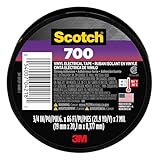
I’ve seen it. The desperate homeowner, faced with a frayed wire and no proper connectors, eyeing that roll of black electrical tape like it’s a magic wand. We’ve all been there, staring at a problem and wondering if a quick fix will actually hold. So, the million-dollar question: can black electrical tape be used to connect wires? The honest answer is a resounding, sometimes dangerous, ‘it depends,’ and usually, ‘no, not really for the long haul.’
Sure, you can wrap it around. It looks like you’ve done something. But does it actually connect anything electrically? And more importantly, is it safe? I’ve wasted enough cash on products that promised the moon and delivered dust, so let’s cut through the noise.
When Quick and Dirty Looks Like the Only Option
Let’s be brutally honest. Sometimes, you’re in a pinch. The lamp you need for your late-night reading flickers out, or a garden light goes dark right before guests arrive. You rummage through your toolbox, and there it is: a roll of that familiar black, stretchy tape. It looks like it should work. It’s designed for wires, right? That’s what the label says. But the reality of whether can black electrical tape be used to connect wires for anything more than a temporary, eye-off-it-immediately situation is a lot more nuanced than that.
The primary reason people reach for electrical tape in these moments is its elasticity and adhesive properties. It stretches, allowing you to wrap it tightly around a joint. It sticks, creating a physical barrier. It’s also usually black, which, in the world of wires and conduits, feels vaguely official.
But here’s the rub: electrical tape isn’t designed to be a conductor or a permanent mechanical fastener for wire-to-wire connections. It’s primarily an insulator. Its job is to keep stray electricity from escaping an already connected wire, not to make the connection itself. Think of it like using a plastic bag to hold two pieces of wood together; the bag might keep them from falling apart for a bit, but it’s not a joinery solution.
The adhesive on electrical tape can also degrade over time, especially with temperature fluctuations or exposure to UV light, meaning that ‘fix’ you thought was secure could loosen up when you least expect it.
I remember once, years ago, trying to fix a broken wire on an old outdoor Christmas light string. It was a single strand, and one of the little bulb sockets had corroded and broken the wire inside. I didn’t have any wire nuts handy, just a roll of good quality electrical tape. I stripped the ends, twisted them together – feeling pretty confident – and then wrapped the whole mess with several layers of tape.
It worked! For about three hours. Then, a slight drizzle came, the tape got damp, and the whole string went dark.
I ended up having to go out in the cold, find the offending wire, and re-do it properly with a proper connector. Lesson learned: temporary doesn’t always cut it, and sometimes, the ‘right tool’ isn’t optional.
Why Your ‘electrical Tape Connection’ Is a Gamble
The common advice, and the advice you’ll get from anyone who knows what they’re doing, is to use proper wire connectors. This isn’t just corporate speak to sell you more hardware; it’s about safety and reliability. When you twist two bare wires together and wrap them with electrical tape, you’re creating a weak point. There’s no guarantee of consistent contact. Tiny vibrations, temperature changes, or even just the natural springiness of the wires can cause the connection to loosen. This leads to increased resistance at that point, which generates heat. And what happens when electrical connections get too hot? Bad things. Think melted insulation, fire hazards, or a complete failure of the circuit.
I’ve seen folks do this on extension cords that get dragged around, on appliance power cords, and even on wiring inside a car. It’s a ticking time bomb. The tape itself can also become brittle or sticky over time, losing its insulating properties and potentially allowing moisture or debris to compromise the connection. Furthermore, electrical tape isn’t rated for the mechanical stress that wires often endure. It’s designed to be wrapped around something already joined, not to be the primary holding mechanism for a splice.
Here’s a contrarian thought: Some people argue that for low-voltage, low-current applications, like a small hobby electronics project where the wires aren’t stressed and the current is minimal, electrical tape might suffice as a temporary insulator over a soldered or crimped connection. I disagree. Why? Because it’s incredibly easy to get wrong, and the potential downside (a fire, a dead device) far outweighs the minuscule effort of using the correct connector. Even for low voltage, reliability matters. You don’t want your custom-built robot to suddenly stop working because the tape on its wiring decided to give up the ghost. Stick to the plan, use the right stuff.
What to Use Instead: The Real Deal
So, if electrical tape isn’t the answer for connecting wires, what is? This is where we move from guesswork to actual solutions. The most common and universally accepted methods involve wire connectors. These aren’t fancy gadgets; they’re simple devices designed to securely join two or more wires while also providing insulation. (See Also: Can Electrical Tape Withstand High Heat )
The most recognizable are wire nuts (also called Marrettes in some regions). These are typically plastic caps with internal threads that you screw onto the twisted ends of stripped wires. They come in various sizes for different wire gauges. They create a tight, secure mechanical connection and provide excellent insulation. They are inexpensive, readily available, and incredibly effective for most home wiring applications, like joining light fixtures or outlet wires. I probably have a hundred of these scattered around my workshop; they cost pennies and save a world of headache.
Another excellent option, especially for situations requiring a more solid or vibration-resistant connection, are crimp connectors. These are metal sleeves that you slide over the stripped wire ends, and then you use a special crimping tool to physically deform the sleeve, permanently binding the wires together. Often, these are heat-shrinkable, meaning you can slide a piece of heat-shrink tubing over the crimp and then heat it, causing the tubing to shrink and seal the connection. This makes for a very strong, waterproof, and insulated splice. For automotive or high-vibration environments, this is the way to go.
For very specific or high-reliability applications, you might encounter terminal blocks or lever-style connectors (like Wago connectors). Terminal blocks are strips with screw terminals where you insert stripped wires and tighten them down. Lever connectors have a small lever you lift to open a clamp, insert the wire, and then close the lever to secure it. These are fantastic for modularity or when you might need to disconnect and reconnect wires frequently. They provide a very clean and secure connection and are often faster to use than wire nuts for multiple connections.
The key takeaway is that all these methods provide both a reliable electrical connection and adequate insulation, which is something electrical tape alone cannot reliably do for a splice.
Here’s a quick rundown of common connector types:
| Connector Type | Best For | Pros | Cons | My Verdict |
|---|---|---|---|---|
| Wire Nuts | Home wiring (junction boxes, fixtures, outlets) | Cheap, easy, widely available, good insulation | Can loosen if not twisted tight enough, not ideal for high vibration | Go-to for most DIY home jobs. Reliable if done right. |
| Crimp Connectors (with heat shrink) | Automotive, appliances, outdoor wiring, high vibration | Very strong mechanical connection, excellent insulation, often waterproof | Requires a specific crimping tool, slightly more time-consuming | The bomb-proof option. Worth the extra effort for important circuits. |
| Lever Connectors (e.g., Wago) | Quick junction points, modular wiring, quick disconnects | Extremely fast to use, secure, reusable, clean look | More expensive per connection than wire nuts, can be bulkier | My new favorite for quick fixes and projects where I might tweak things. Fast and secure. |
Common Mistakes That Make People Grab the Tape
Why do so many people instinctively reach for electrical tape when faced with a wire connection problem? It often stems from a few common misunderstandings or mistakes regarding electrical work. First off, there’s the ‘shortcut’ mentality. People see a task, think about the ‘proper’ way, and then decide it’s too complicated, too time-consuming, or requires tools they don’t have. Electrical tape, on the other hand, is universally available and requires no special tools beyond scissors or a knife to cut it. It feels like an accessible solution for a daunting problem.
Another mistake is a lack of understanding about what actually constitutes a ‘connection.’ Many believe that simply touching two wires together and wrapping them is enough. They don’t grasp the concept of resistance, heat buildup, or the importance of a mechanically sound joint.
They see the tape as the ‘glue’ that holds the electrical connection together, rather than just a protective layer over a connection that needs to be made with appropriate hardware. I’ve seen people strip wires, twist them together maybe once or twice, and then wrap them with tape.
This is a recipe for disaster. A proper wire nut requires twisting the wires together firmly before screwing on the nut, making sure good contact between the wire strands themselves.
The perceived ‘fix’ of electrical tape is also deceptive. It looks like a solution.
You wrap it, it holds the wires together physically, and it covers the bare metal. For a short period, it might even conduct electricity. This temporary success reinforces the bad habit. It’s like using duct tape to fix a leaky pipe – it might hold for a while, but the underlying problem is still there, waiting to cause a bigger mess.
I once had a neighbor who ‘fixed’ a loose wire on his lawnmower starter by wrapping it with electrical tape. It worked for a few mows, then one day, sparks flew, the tape melted, and the mower wouldn’t even crank. (See Also: Can I Put Electrical Tape On Battery )
He ended up needing a whole new starter coil, which cost him way more than a proper connector would have.
Finally, there’s the intimidation factor of electrical work. Most people aren’t comfortable with electricity. The idea of messing with wires can be frightening. Electrical tape seems less ‘intimidating’ because it’s a passive material you wrap, rather than a mechanical connection you actively make. However, the consequences of an improper tape job can be far more severe than a slightly awkward wire nut installation. It’s a classic case of ‘penny wise, pound foolish.’
Real-World Scenarios: When ‘temporary’ Is a Bad Idea
Let’s talk about where people try to get away with using electrical tape as a connector and why it almost always backfires. One of the most common places is on appliance power cords. You know, the cord that plugs into the wall? If that gets damaged – maybe the cord got pinched, or the insulation is frayed near the plug – the impulse might be to strip the wires, twist them, and tape them up.
This is a colossal mistake. These cords carry significant current, and any poor connection will heat up rapidly.
The plastic insulation of the tape will melt, potentially exposing live wires and creating a fire hazard or electrocution risk. I saw a toaster once that had a repaired cord this way; the tape had melted into a gooey mess, and the bare wires were just millimeters from the metal toaster casing. Scary stuff.
Another area where I’ve seen this misuse is in automotive wiring. Cars have constantly vibrating engines, varying temperatures, and exposure to moisture and chemicals.
Electrical tape, especially standard grade, will degrade quickly in these conditions. A loose connection from tape can lead to intermittent electrical faults, blown fuses, or even damage to sensitive electronic components.
While some specialized automotive tapes exist, they are not designed to make the connection itself. I once spent an entire weekend chasing down an electrical gremlin in a classic car, only to find that a previous owner had ‘repaired’ a trailer light wire with electrical tape that had vibrated loose, causing all sorts of phantom power issues. Replacing it with a proper crimp connector took minutes and solved the problem instantly.
Even low-voltage applications aren’t always safe. Think about outdoor lighting, speaker wire, or even some networking cables.
While the voltage might be low, a poor connection due to tape can still lead to signal degradation, intermittent performance, or simply a failure of the device. For instance, using tape on a speaker wire might result in muffled sound or static.
If you’re running a long run of low-voltage landscape lighting, a loose connection at a splice point can mean half your lights are dim or don’t work at all. The tape might hold them together, but it won’t guarantee the clean, low-resistance pathway needed for optimal performance. My buddy tried to ‘fix’ a broken wire on his outdoor patio string lights with electrical tape. He wrapped it up, and it looked okay.
But the slight flex from the wind eventually loosened the connection, creating a high-resistance spot that heated up enough to melt the tape and fuse the wire ends together. He had to cut out a whole section of the string lights and replace it with a new one. (See Also: Can I Just Put Electrical Tape On Macbook Charger )
A Few Practical Tips From the Trenches
Alright, let’s say you’re in a real bind and need to make a connection right now, and you only have electrical tape. What’s the absolute least bad way to do it, understanding this is a desperate measure and needs to be fixed properly ASAP? First, and this is a must, always disconnect power to the circuit before you touch any wires. Seriously. Flip the breaker, unplug the device, whatever it takes. Working with electricity when it’s live is how people get hurt. Don’t be a hero; be safe.
Second, if you must use tape as a temporary insulator over a connection you’ve made (twist wires together securely first!), use high-quality, branded electrical tape. Not the cheap dollar-store stuff. Look for tape that explicitly states it’s rated for electrical use and ideally has good temperature and UV resistance. Brands like 3M Super 33+ or Scotch 88 are generally reliable. Wrap it with multiple layers, overlapping each layer by at least half the width of the tape. Pull it snug, but not so hard that it loses its elasticity. The goal is to create a thick, smooth insulating barrier that completely covers the splice. Think of it like wrapping a gift – no gaps allowed.
Third, understand that this is a temporary fix only. As soon as humanly possible, you need to go back and make a proper, permanent connection using the appropriate wire connectors. This might mean getting wire nuts, crimp connectors, or even replacing the entire cord or section of wire if it’s severely damaged. Don’t let that tape job become a permanent fixture. It’s a stopgap, a way to get out of immediate trouble, not a solution. I’ve seen DIY repairs that have lasted years but were still fundamentally unsafe. It’s like driving on a spare tire forever; it might get you around for a while, but eventually, you need to get it replaced with a proper tire.
Here’s a final, blunt piece of advice: if the wire is frayed, corroded, or damaged beyond just a clean break, don’t even bother trying to splice it with tape. Replace the wire or the component. The tape is meant to insulate sound wire connections, not to hold together a mess of damaged strands. It’s like trying to patch a hole in a rotten boat with duct tape – the underlying problem is too severe for a simple band-aid.
Frequently Asked Questions
Can I Use Black Electrical Tape to Join Two Wires Permanently?
No, you absolutely should not use black electrical tape to join two wires permanently. Electrical tape is designed as an insulator to cover already connected wires, not to create the electrical connection itself. Permanent connections require mechanical fasteners like wire nuts, crimp connectors, or terminal blocks to make sure a secure electrical path and prevent heat buildup.
Is Electrical Tape Safe for Outdoor Use?
Standard black electrical tape is not generally recommended for long-term outdoor use. Exposure to UV rays, extreme temperatures, and moisture can degrade the adhesive and the insulating properties of the tape, leading to failure. For outdoor applications, consider using specialized outdoor-rated tapes or, more importantly, proper waterproof connectors and enclosures.
What Kind of Tape Is Best for Joining Wires?
Black electrical tape is designed for insulating wires, not joining them. For joining wires, you should use appropriate wire connectors such as wire nuts, crimp connectors, or lever-style connectors (like Wago). These provide a secure mechanical and electrical connection. If you need to insulate a splice, high-quality electrical tape is used over the proper connector.
Will Electrical Tape Hold Up to Heat?
Some high-quality electrical tapes have a certain degree of heat resistance, but they are not designed to withstand the prolonged heat generated by a poor electrical connection. If a connection is generating significant heat, the tape will likely melt or degrade, compromising its insulating ability and increasing the risk of fire or failure.
Conclusion
So, to circle back to the main question: can black electrical tape be used to connect wires? The short, honest answer is no, not for anything that needs to be reliable or safe long-term. While it might physically hold twisted wires together and offer some insulation, it doesn’t create a proper electrical connection. This is a important distinction. The potential for heat buildup, loose connections, and subsequent fires or equipment damage is far too high to consider it a viable solution for joining wires.
I’ve learned the hard way that cutting corners on electrical work is a gamble you don’t want to take. Spending a few dollars on the right connectors – be it wire nuts, crimps, or lever types – is always the wiser, safer choice. They’re designed for the job, they’re reliable, and they’ll save you headaches, potential damage, and maybe even a lot more money down the line.
If you find yourself with a wire that needs connecting, please, for the love of all that is safe and functional, use the proper tools and components. Your future self (and anyone who might use the device or system you’re working on) will thank you. Next time you see that roll of black tape, remember its purpose: insulating what’s already connected, not creating new connections.