I remember staring at that frayed cord on my old shop vacuum. It had seen better days, and frankly, it looked like a chewed-up dog toy. My first instinct, like probably yours, was to grab the silver roll sitting on the shelf. But then a little voice in my head, seasoned by years of DIY disasters, whispered, ‘Hold on a sec. Can duck tape be used for electrical repairs?’ It’s a question many of us have pondered when a quick fix seems within reach.
We’ve all been there: a wire’s looking a bit sad, a connection’s come loose, and the nearest proper electrical tape is, well, nowhere to be found. That’s when the allure of the ubiquitous duct tape hits. It sticks to pretty much anything, right? But when it comes to something as finicky and potentially dangerous as electrical work, ‘pretty much anything’ isn’t good enough.
The Siren Song of the Silver Roll
Let’s cut to the chase: duct tape is NOT designed for electrical work. Its primary job is to hold things together, usually in a rough-and-tumble environment. Think sealing boxes, patching tarps, or keeping a muffler from falling off your car (temporarily, of course). The adhesive is strong, the backing is durable (enough for most non-electrical abuse), and it’s cheap.
This makes it incredibly tempting when you’re faced with a minor electrical boo-boo. I’ve personally been guilty of it.
Years ago, the power cord on my portable workbench light started to split near the plug. It was late, I had a project to finish, and the thought of driving to the hardware store was a buzzkill. So, I wrapped it in a few layers of duct tape, feeling rather clever. It held, for a while.
Then, one evening, I smelled that acrid, burning plastic scent. The duct tape had started to melt and ooze, and the wires underneath were dangerously exposed again. That was a stark, smoky reminder that just because something can stick, doesn’t mean it should.
The fundamental problem is that duct tape’s adhesive isn’t rated for the kind of heat generated by electrical currents, especially in a faulty connection. It’s also not designed to be an insulator. While the fabric backing might offer a thin, temporary barrier, it’s porous and can degrade. Think of it like trying to plug a leaky boat with a band-aid – it might work for a minute, but you’re asking for trouble down the line. Furthermore, the sticky residue left behind by duct tape can be a nightmare to remove later, especially if you ever need to make a proper repair. It gums up connections and can even pull away insulation if you’re not careful.
My shop vacuum incident was a wake-up call. It taught me that saving a few bucks and a few minutes upfront can cost you a lot more in terms of safety and potential damage later. I ended up replacing the cord entirely, which was a simple job but would have been much harder if the old connection point was a gummy, melted mess from the duct tape.
Why Electrical Tape Is King (and Duct Tape Isn’t)
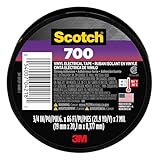
So, if duct tape is out, what’s the right stuff? It’s called vinyl electrical tape, and it’s a completely different beast. I keep a few rolls of it in my toolbox, and honestly, it’s one of those things you don’t appreciate until you really need it. Electrical tape is made from a flexible vinyl material that acts as an insulator. It’s designed to withstand a certain voltage, resist abrasion, and remain pliable over a range of temperatures. The adhesive on electrical tape is specifically formulated to adhere well to itself and to wires, creating a snug, protective layer that can handle the stresses of electrical applications.
When you wrap electrical tape, you overlap each layer, building up a solid, insulating sheath. This is important because it’s not just about covering the exposed wire; it’s about creating a barrier that prevents current from escaping and prevents external moisture or debris from getting in. Duct tape, on the other hand, is basically fabric with a sticky backing. It’s not a uniform insulator, and its fabric nature can wick moisture. Imagine a tiny thread pulling water towards a live wire – not ideal.
I’ve seen people try to double up on duct tape, thinking more layers equal more protection. This is a dangerous misconception. You’re just adding more material that isn’t designed for the job, potentially creating a thicker, less flexible lump that can snag or damage the underlying wiring. The proper way to tape a wire is with overlapping layers of actual electrical tape, applied with consistent tension to create a smooth, smooth finish. It’s a small detail, but it makes a world of difference in the long run for preventing shorts, shocks, and fires. The physics are simple: you need a material that can handle the electrical load and environmental factors, and duct tape just doesn’t cut it.
Here’s a quick comparison:
| Feature | Duct Tape | Electrical Tape | Verdict |
|---|---|---|---|
| Primary Use | General purpose adhesion, sealing, bundling | Insulating and protecting electrical wiring | Electrical tape is purpose-built. |
| Material | Fabric-backed with rubber-based adhesive | Vinyl (PVC) with synthetic rubber adhesive | Vinyl is a much better insulator. |
| Insulation Properties | Poor; not rated for voltage | Good; rated for specific voltages | Electrical tape offers important safety. |
| Temperature Resistance | Limited; adhesive can melt or degrade | Good; remains flexible in cold, resists heat | Electrical tape performs reliably. |
| Flexibility/Conformability | Stiff, wrinkles easily | Very flexible, conforms to shapes | Electrical tape wraps smoothly. |
| Adhesive Residue | Can be very sticky and hard to remove | Generally less residue, easier cleanup | Less mess with electrical tape. |
My rule of thumb now? If it carries electricity, it gets electrical tape. If it’s holding a cardboard box shut, maybe duct tape is fine. The cost difference is pennies on the dollar for the peace of mind electrical tape provides. (See Also: Can I Use Electrical Tape To Connect Wires )
Common Myths and Mistakes
The biggest myth I encounter is that duct tape’s strength makes it a good substitute for electrical tape. People think the thick fabric weave will somehow offer superior protection. In reality, that fabric is often more of a liability.
It’s not a smooth, non-conductive surface. It can fray, and its adhesive doesn’t have the same dielectric strength (the ability to withstand voltage without conducting). I once saw a friend try to repair a frayed extension cord with multiple layers of duct tape, arguing that it was ‘thicker’ than electrical tape. Within a month, he had a melted, gooey mess that was a fire hazard.
He was lucky it didn’t cause a serious incident. That’s the kind of mistake that really sticks with you.
Another common error is not using enough electrical tape, or not wrapping it correctly. People sometimes just do a quick wrap around a damaged section. This leaves gaps and weak points. Proper electrical tape application involves overlapping each layer by at least half, and stretching the tape slightly as you wrap.
This makes sure the tape adheres well to itself, creating a smooth, protective barrier. It’s also vital to extend the taping well beyond the damaged area on either side. You’re not just fixing the visible damage; you’re reinforcing the surrounding insulation too.
Many people also mistakenly believe that any tape that’s ‘sticky’ will do, overlooking the specific properties required for electrical safety. They might grab packing tape or even masking tape in a pinch, which are even worse offenders than duct tape.
Then there’s the idea that if the repair looks okay, it’s fine. This is incredibly dangerous. A poorly insulated wire might not show obvious signs of distress immediately.
It could be an intermittent problem, or something that only manifests under specific load conditions. The risk of arc faults, short circuits, or even a direct shock is always present if the insulation isn’t up to par. I’ve learned the hard way that a visual inspection isn’t enough.
You need to know the material you’re using is rated for the job. The common advice is always to use proper materials, and while that can sound like corporate jargon, in this case, it’s literally life-saving advice.
Don’t be that person who cuts corners and then has to explain to the fire department why their house is a pile of ash.
When Duct Tape Might (barely) Be Okay: The Edge Cases
Okay, let’s be brutally honest for a second. Are there any situations where duct tape might be considered, even in the loosest sense, for something related to electrical work? I’d argue only in the most temporary, non-important, and low-voltage scenarios, and even then, with extreme caution and the absolute intention to replace it with proper materials ASAP. For instance, if you have a very low-power, low-voltage DC appliance (think a small LED strip, not a power tool) where a wire has come slightly loose from its terminal, and you need to prevent it from wiggling out while you are actively looking for the correct connector or tape, a tiny piece of duct tape might hold it in place. But this is not insulation; this is purely mechanical retention.
I’m talking about something so low-risk that a static shock from your carpet would be more dangerous. Even then, I’d be hesitant. My personal experience is that once you start down the path of using duct tape for electrical issues, it’s a slippery slope. You get used to it, and then you might try it on something a bit more serious. The temptation is always there because it’s readily available. I’ve seen people use it to temporarily secure a loose plug prong (terrible idea), or to hold a cracked plastic casing of a power strip together (also a terrible idea). These are not ‘repairs’; they are delaying inevitable, and potentially dangerous, failures. (See Also: Can Electrica Tape Catch On Fire )
The key here is ‘temporary’ and ‘low-risk’. If you’re wiring a birdhouse with a 3-volt battery and a tiny LED, and a wire pops off its solder point, maybe a tiny strip of duct tape to keep it from un-soldering itself while you get your soldering iron hot could be argued. But if there’s any chance of mains voltage, significant current, heat generation, or moisture exposure, duct tape is a hard no. The fabric backing is a weak point, the adhesive isn’t a proper insulator, and it can degrade. Think of it as a ‘hold this one wire from falling out of a plug for 30 seconds while I grab the real tools’ kind of situation, and even then, I’d be sweating it.
The Only Time Duct Tape Is Your Friend (sort Of)
There’s one scenario where duct tape plays a supporting role, and that’s in securing a bundle of wires or a temporary housing after the electrical work is done. For example, if you’ve run a new low-voltage cable and need to temporarily secure it along a wall while you figure out the permanent mounting solution, duct tape can work. Or, if you’ve done a proper repair on a power cord with electrical tape, and you want to add an extra layer of mechanical protection to the exterior of the repair (not as the primary insulator), you could judiciously wrap a bit of duct tape over the top of the electrical tape. This is purely for physical abrasion resistance, not insulation. It’s like putting a clear coat over paint; the paint is the protection, the clear coat is just an extra layer of defense against scratches.
However, even in this supporting role, I’m very cautious. Duct tape adhesive can leave a sticky residue on the electrical tape, making future repairs more difficult. It also adds bulk. A better option for reinforcing a repair would be to use a few more layers of high-quality electrical tape, or perhaps some heat-shrink tubing if the repair is suitable for it. The official stance from most electrical safety organizations is clear: duct tape has no place in direct electrical insulation or repair. The Institute of Electrical and Electronics Engineers (IEEE) standards, while complex, implicitly require materials specifically designed and tested for electrical applications, which duct tape is not.
I learned this when I was trying to make a repair on an old appliance. I’d used electrical tape, but the cord bent sharply right at the repair point and I worried about the electrical tape cracking over time. So, I wrapped a bit of duct tape over it for extra beef. A few months later, I had to replace the cord entirely due to internal wire fatigue.
The duct tape was brittle, had lost its adhesion, and the electrical tape underneath was stretched and peeling in places, partly due to the way the duct tape had pulled at it. It made the final repair much messier. So, while there’s a theoretical use as a secondary protective layer, I usually skip it. It’s rarely worth the potential hassle or the slight compromise it introduces.
Stick to what’s designed for the job.
Practical Tips for Real Electrical Repairs
When you actually need to do an electrical repair, here’s what I’ve learned works. First, always, always disconnect the power. I can’t stress this enough. Before you even look at a wire, flip the breaker or unplug the device. It sounds obvious, but when you’re in the zone, you can forget. Trust me, I’ve had a few close calls where I instinctively reached for a tool while the circuit was still live. That’s when your heart jumps into your throat. It’s a hard lesson to learn, and one you only need to learn once to respect.
Next, identify the right type of electrical tape. For standard household wiring and low-to-medium voltage applications, a good quality vinyl electrical tape from a reputable brand (like 3M, Scotch, or Gardner Bender) is your best bet. Look for tapes that specify they are suitable for electrical insulation. They come in different colors, and using black or grey is standard for cord repairs, but colored tape can be useful for marking different circuits if you’re doing more involved work. Some tapes are also rated for higher temperatures or voltages, so check the packaging if you’re unsure.
When you’re taping, clean the wire first. Remove any dirt, grease, or old residue.
Then, start wrapping the electrical tape a few inches before the damaged area. Overlap each subsequent layer by about half the width of the tape, and apply gentle, consistent tension.
Stretch it slightly as you go. You want a smooth, firm wrap without any gaps or wrinkles.
Continue taping a few inches past the damaged section. For a really solid repair, especially on flexible cords, you might do three or four layers. (See Also: Can I Substitute Duct Tape For Electrical Tape )
Make sure the tape adheres well to itself. Once done, give it a gentle tug to make sure it’s secure.
If it’s a flexible cord, bend it a bit to make sure the tape doesn’t split or loosen.
Here’s a process I follow:
- Disconnect Power: Absolutely important. Flip the breaker, unplug the device, and double-check with a non-contact voltage tester if you have one.
- Inspect Damage: Carefully examine the wire and insulation. Note the extent of the fraying or damage.
- Clean the Area: Wipe away any dirt, oil, or debris from the wire and surrounding insulation.
- Select Proper Tape: Use a high-quality vinyl electrical tape.
- Apply Tape: Start an inch or two before the damage. Overlap by 50% with each wrap. Stretch slightly for a snug fit. Extend an inch or two past the damage.
- Build Layers: Apply at least 3-4 overlapping layers for good insulation and mechanical strength.
- Test Gently: Flex the repaired area slightly to make sure the tape is secure and doesn’t split.
- Permanent Fix: If the damage is extensive or the cord is old, consider replacing the entire cord or device. This is not a permanent solution for severe damage.
And remember, if you’re ever in doubt, or the damage looks significant, don’t guess. Call a qualified electrician. It’s cheaper than a house fire or a hospital visit. This isn’t about being fancy; it’s about basic safety.
The Faq Corner: Debunking Duct Tape Myths
Can Duct Tape Be Used for Electrical Repairs?
No, generally speaking, duct tape is not suitable for electrical repairs. It is not designed to be an electrical insulator and can degrade, melt, or become conductive under certain conditions, posing a fire or shock hazard. For any electrical work, always use proper vinyl electrical tape.
Why Is Duct Tape Bad for Electrical Wires?
Duct tape’s adhesive is not formulated for electrical insulation, and its fabric backing is not a reliable insulator. It can’t withstand electrical voltage safely, and its adhesive can break down under heat, leading to melting and further exposure of wires. It can also wick moisture, which is dangerous around electricity.
What Kind of Tape Should I Use for Electrical Repairs?
You should always use vinyl electrical tape. It is specifically designed to insulate wires, resist abrasion, and remain flexible across a range of temperatures. Reputable brands like 3M or Scotch offer good quality electrical tapes.
Can I Use Duct Tape as a Temporary Fix for Electrical Wires?
While tempting, using duct tape even as a temporary fix for electrical wires is strongly discouraged. It offers minimal actual insulation and can quickly become a safety hazard. It’s better to temporarily secure a wire mechanically with non-conductive means if absolutely necessary, but always with the intent to use proper electrical tape immediately.
Verdict
So, after all that, can duck tape be used for electrical repairs? The resounding, no-nonsense answer is: don’t do it. It’s a tempting shortcut, I get it. We’ve all seen those survival videos or heard of people using it for everything under the sun. But when it comes to electricity, the stakes are just too high. The ‘stickiness’ of duct tape is a poor substitute for genuine insulating properties, and its adhesive is not rated for the heat electrical components can generate. I learned that the hard way with my shop vacuum cord, and the smell of burning plastic is something I’ll never forget.
Stick to vinyl electrical tape. It’s cheap, it’s effective, and it’s designed for the job. Take the extra five minutes to grab the right roll from the store or your toolbox. Your safety, and the safety of your home, is worth far more than the few dollars you might think you’re saving by using duct tape. If you’re unsure about a repair, or if the damage looks serious, don’t hesitate to call a professional. Better safe than sorry, as my old man used to say.
The next time you see a frayed wire, resist the urge to reach for that silver roll. Your future self will thank you.