I’ve seen it. You’ve probably seen it. That moment when a wire sparks, or a frayed cord looks like it’s about to deliver a nasty surprise. Your brain immediately goes to the shiny roll of silver tape in the toolbox. But can duct tape be used for electrical insulation? Honestly, the answer is complicated, and most of the quick online advice is just plain wrong or dangerously incomplete. I’ve been there, fumbling with temporary fixes that ended up costing me more time and money than they were worth.
The reality is, while duct tape is a miraculous fix for a thousand other things, its application to electrical work requires a serious dose of skepticism and a clear understanding of its limitations. Let’s cut through the noise and get down to what actually matters.
The Shiny Silver Siren Song: Why We Think Duct Tape Works
Look, I get the impulse. Duct tape is the superhero of the DIY world. It’s sticky, it’s strong, it’s everywhere. You can patch a leaky hose, hold a broken bumper on, or even secure a wobbly chair with it. So, when faced with a sad, exposed wire, it’s natural to think, “Why wouldn’t this work?” It feels like it should do the job, right? It’s a barrier, after all. It covers the offending copper.
The truth is, duct tape has a fabric backing, often cotton or a blend, that’s coated with a rubber-based adhesive. This fabric is porous. It’s not designed to block moisture or electricity. What people often don’t realize is that the adhesive itself offers a tiny bit of dielectric strength – meaning it can resist electrical current to a very limited degree.
But it’s usually not enough for anything beyond a very low voltage and a very temporary, non-important situation. I once tried to temporarily insulate a garden sprinkler wire with duct tape in a pinch. It worked for about three days before the dew and the slight voltage from the pump shorted it out, frying a perfectly good timer. Cost me eighty bucks and a whole Saturday morning fussing with the irrigation system.
The common advice you’ll find online often glosses over these important details. It’s usually a mix of “yeah, it’s fine for a quick fix” or outright denial. But the reality is more nuanced. It’s not a complete “no,” but it’s a very, very loud “probably not a good idea unless you have absolutely no other choice and understand the risks.” The fabric backing is the biggest giveaway. It’s a conduit, not a barrier. Think about it: if duct tape was truly a good electrical insulator, why would we have dedicated electrical tape?
Many people conflate ‘tough’ with ‘insulating’. Duct tape is tough. It can take a beating. But electrical insulation is about preventing current flow, and that requires specific dielectric properties that duct tape, in its standard form, just doesn’t possess to a reliable degree. The adhesive can break down over time, especially with heat or UV exposure, making the situation worse. So, while the initial stickiness might fool you into thinking it’s secure, it’s a ticking time bomb for any real electrical application.
Electrical Tape vs. Duct Tape: What’s the Real Difference?
This is where the rubber meets the road, or rather, where the polymer meets the wire. Standard, everyday duct tape is designed for adhesion and brute force. Its primary purpose is to stick things together and hold them, usually in a mechanical sense. The fabric weave in its backing is a dead giveaway. It’s designed for tear strength and adhesion on rough surfaces. When you look at actual electrical tape, you’re looking at a fundamentally different material. It’s typically made from vinyl or PVC, which are plastics specifically engineered to be non-conductive. This material has high dielectric strength, meaning it can withstand a significant voltage before breaking down and allowing current to pass through.
Here’s a simple way to think about it: Duct tape is like a sturdy bandage. It covers and holds.
Electrical tape is like a specialized insulator glove. It actively prevents something from happening.
The adhesive on electrical tape is also formulated differently. It’s designed to remain flexible, resist moisture and UV light, and, importantly, not degrade and become conductive over time. Electrical tape is also self-amalgamating in some cases, meaning it fuses with itself to create a smooth, waterproof, and electrically sound barrier. Standard duct tape adhesive just gets gummy and loses its grip.
I learned this the hard way when I used duct tape on an outdoor extension cord that was getting a bit gnarly. A good rainstorm turned my “fix” into a sticky, conductive mess that shorted out my patio lights. Switched to proper electrical tape after that, and the problem was solved for years.
Beyond the material properties, there’s also the thickness and pliability. Electrical tape is designed to be stretched and wrapped tightly around irregular shapes, conforming to the wire and creating a smooth, unbroken surface. Duct tape, while sticky, is thicker and more rigid. It doesn’t conform as well, leaving potential gaps or weak points where moisture or physical damage can occur. Manufacturers of electrical tape will often specify the voltage rating it can handle, giving you a clear indication of its capabilities. You won’t find that on a roll of Gorilla Tape. The common advice to just wrap it tightly doesn’t account for the inherent limitations of the material itself.
Let’s put it in a table, because sometimes seeing it laid out helps. This isn’t just about preference; it’s about physics and safety. (See Also: Can I Use Electrical Tape To Connect Wires )
| Feature | Standard Duct Tape | Electrical Tape (Vinyl) | Verdict |
|---|---|---|---|
| Primary Material | Fabric backing with adhesive | Vinyl/PVC | Vinyl is inherently insulating. Fabric is porous. |
| Dielectric Strength | Very Low, unreliable | High, rated for specific voltages | Electrical tape is designed for this. Duct tape is not. |
| Moisture Resistance | Poor, fabric absorbs | Excellent | Important for outdoor or damp environments. |
| Adhesive Durability | Breaks down, gets gummy | Stable, designed for long-term use | Duct tape’s failure is inevitable. |
| Flexibility/Conformity | Limited | Excellent, stretches to conform | Electrical tape creates a better seal. |
When ‘good Enough’ Is Dangerously Not Enough
The most insidious thing about using duct tape for electrical insulation is that it might work, for a while. This creates a false sense of security. You see that shiny silver band holding a wire together, and you think, “Problem solved!” This is especially true for low-voltage applications. Think about a small LED strip light or a 12-volt accessory in a car. For a short period, duct tape might prevent a direct short circuit. But electrical systems are dynamic. They generate heat. They are exposed to vibration. They can get damp. These conditions are the enemies of duct tape as an insulator, and they are common in almost every electrical scenario.
I’ve encountered more than a few DIY disasters where duct tape was the culprit. A friend’s holiday lights kept shorting out because someone had used duct tape on a frayed connection near a sprinkler head. The water seeped into the fabric, the adhesive failed, and the whole string went dark, tripping the breaker. It wasn’t a dramatic explosion, but it was a persistent, annoying problem that could have easily escalated to a fire hazard. The common advice you see online often doesn’t differentiate between a 120V wall outlet wire and a tiny wire in a battery-powered toy. The stakes are wildly different.
The danger isn’t always immediate. It’s about cumulative degradation. The adhesive can dry out, the fabric can wick moisture, and the underlying insulation can be compromised. What was a “temporary fix” yesterday can become a real fire risk tomorrow. The heat generated by even a slightly overloaded circuit can cause the duct tape adhesive to soften and run, potentially exposing the wire. Furthermore, if the duct tape is covering a connection that is already loose, the added bulk and lack of conformability can actually worsen the connection, increasing resistance and heat buildup. It’s a vicious cycle.
This is why I’m so blunt about it: if you’re dealing with anything that carries significant voltage, or anything that will be exposed to the elements, or anything that’s going to be flexed or vibrated, duct tape is simply not an option. The cost of proper electrical tape is pennies on the dollar compared to the potential cost of a fire, an electrical shock, or replacing damaged equipment. It’s not about being overly cautious; it’s about being realistically safe. The “good enough” approach to electrical work is a gamble you don’t want to take.
Real-World Uses: Where Duct Tape might Play a Tiny Role (with Caveats)
Okay, so when can you actually consider duct tape in the vicinity of electrical wiring, even if not as the primary insulator? This is where we get into the world of extreme, last-resort, temporary fixes where safety is constantly being reassessed. I’m talking about situations where the wire itself isn’t live, or where the duct tape is purely for mechanical protection of already-insulated wires, and even then, with massive caveats.
For instance, let’s say you have a bundle of perfectly insulated wires, and you need to secure them together to prevent them from being chafed or snagged during a temporary setup, like a stage prop or a short-term event. You could use duct tape to wrap the bundle. Here, the duct tape isn’t providing insulation; it’s acting as a protective wrap for the existing insulation. But even then, I’d be hesitant. A UV-resistant, heavy-duty zip tie or proper wire loom is always a better bet. The adhesive residue from duct tape can also be a nightmare to clean up later, potentially damaging the wire’s jacket.
Another scenario, and this is a stretch, is very low-voltage, non-important applications. Think about a battery-powered LED string for a costume. If one of the tiny, insulated wires within that string gets a minuscule nick, and you’re absolutely unable to access it to repair it properly, you might use a tiny piece of electrical tape first to cover the nick, and then a small piece of duct tape over that for added mechanical security. But this is a situation where the voltage is so low that a direct shock is impossible, and the risk of fire is negligible.
Even then, I’d only do this if I was confident the wire wouldn’t be stressed or exposed to any moisture. It’s a hack, and a risky one at that.
My personal experience has taught me that even in these fringe cases, the temptation to rely on duct tape for more than it’s worth is strong. I once saw a fellow DIYer use duct tape to “fix” a frayed power cord on a small appliance. He figured since it was only for a few hours, it’d be fine.
Five hours later, a small plume of smoke started curling from the cord. Luckily, it was just the duct tape smoldering, not a full-blown fire, but it was a stark reminder that “temporary” and “low-risk” are subjective terms when electricity is involved. The best use of duct tape around electrical work is usually to tape down a power cord to the floor so no one trips on it, provided it’s not near an exposed wire.
That’s it. Anything more is asking for trouble. The core principle of ‘can duct tape be used for electrical insulation’ hinges on the word ‘insulation,’ which it fundamentally fails at reliably.
The Right Tools for the Job: Electrical Tape and Beyond
So, if duct tape is largely a no-go for electrical insulation, what should you be using? This is where we pivot from the makeshift to the proper.
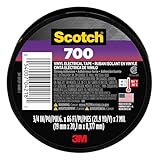
The undisputed champion for insulating electrical wires is, you guessed it, electrical tape. Specifically, vinyl electrical tape is the go-to for most household and general-purpose electrical work. (See Also: Can Electrica Tape Catch On Fire )
It’s designed to stretch, conform, and create a durable, insulating barrier. Brands like 3M Super 33+ or Scotch 88 are workhorses for a reason.
They’re rated for specific voltages, are flexible, and resist degradation from UV light and common chemicals. When wrapping, you want to overlap each layer by about half the width of the tape, stretching it as you go to make sure a tight, smooth seal. This creates a solid barrier against shorts and environmental factors.
Beyond vinyl tape, there are other specialized options for different needs. For higher voltage applications or situations requiring extreme durability, you might look at rubber splicing tape or mastic tape. Rubber splicing tape, when stretched and wrapped, actually vulcanizes (fuses) to itself, creating a solid, waterproof, and highly insulating mass. Mastic tape is thicker and provides excellent abrasion resistance and sealing properties, often used in conjunction with other tapes. For permanent repairs on larger cables or splices, heat-shrink tubing is another excellent option. You slide a piece of the tubing over the splice, then heat it (with a heat gun, not a lighter, please!), and it shrinks tightly around the wire, creating a sealed, insulated connection.
Wire nuts are another common and effective solution for joining wires. They’re basically plastic caps with internal threads that screw onto the ends of wires, holding them together securely and providing insulation.
They come in various sizes to accommodate different wire gauges. For exposed connections, especially outdoors or in damp environments, waterproof wire nuts or junction boxes are a must. These often come with sealant inside or are designed to be used with silicone caulk to prevent moisture ingress. The key takeaway is that for any electrical repair or modification, there’s a purpose-built tool or material designed for safety and reliability.
Using the correct product isn’t just about following the rules; it’s about making sure your home, your equipment, and, most importantly, yourself remain safe. The initial cost of these proper materials is minimal compared to the potential consequences of using the wrong thing.
Common Mistakes and How to Avoid Them
Let’s talk about the pitfalls. The biggest mistake, by far, is believing that duct tape is a viable substitute for actual electrical tape. We’ve hammered this home, but it bears repeating. It’s a tempting shortcut, but it’s a dangerous one.
Another common error is improper application of electrical tape. Just slapping a few layers on loosely without stretching or overlapping doesn’t create a proper seal.
You need to stretch the tape as you apply it so it forms a tight, unified layer. Overlapping by at least half the width of the tape on each subsequent wrap is key to preventing moisture ingress and making sure a strong electrical barrier. I remember a time I tried to patch a small cut on a cord with electrical tape, but I didn’t stretch it enough.
A few weeks later, after a particularly humid spell, I got a nasty shock when I touched the appliance. Lesson learned.
Failing to identify the voltage rating of the electrical tape is another mistake. While standard vinyl tape is good for most household 120V and 240V circuits, higher voltage applications, like industrial equipment or certain automotive wiring, might require tape with a higher dielectric rating.
Always check the packaging or product specifications to make sure the tape is suitable for the job. Similarly, not considering the environment is a major oversight. Is the repair outdoors and exposed to rain and UV? Is it near a heat source?
Standard vinyl tape has its limits. For extreme conditions, you might need specialized tapes like mastic tape or silicone tape. (See Also: Can I Substitute Duct Tape For Electrical Tape )
I once had to fix a cable on a piece of outdoor festival lighting. Regular electrical tape would have degraded within a season.
I ended up using a combination of rubber splicing tape and self-amalgamating tape for a truly bombproof fix.
Finally, and this is a big one, people often neglect to inspect the wire itself. Before you even think about tape, look closely at the wire jacket. Is it brittle? Is it cracked extensively?
Is the conductor itself damaged? If the wire is severely degraded, no amount of tape, electrical or otherwise, is going to be a safe long-term solution. In such cases, the entire cord or cable needs to be replaced. Trying to patch up severely damaged wiring is like putting a band-aid on a broken bone.
It might look like you’ve done something, but the underlying problem remains and will likely worsen. Always assess the overall condition of the wire, not just the visible damage. If you’re unsure about the integrity of a wire, err on the side of caution and replace it. My rule of thumb is: if it looks sketchy, it probably is.
Can Duct Tape Be Used as a Temporary Fix for Electrical Wires?
While tempting, using duct tape as a temporary fix for electrical wires is generally not recommended and can be dangerous. Its fabric backing is porous and not designed for electrical insulation. While the adhesive might offer minimal resistance, it breaks down easily with heat, moisture, and age, compromising any insulating effect and potentially creating a fire hazard. For any temporary electrical repair, proper electrical tape is the safe and effective choice.
What Kind of Tape Is Safe for Electrical Wiring?
The only tape considered safe for electrical wiring is dedicated electrical tape, typically made of vinyl or PVC. This material has high dielectric strength, is flexible, and resists moisture and UV degradation. For higher voltage applications or more solid protection, rubber splicing tape or heat-shrink tubing are also safe and effective options. Always make sure the tape’s rating is suitable for the voltage and environmental conditions.
Why Isn’t Duct Tape a Good Electrical Insulator?
Duct tape isn’t a good electrical insulator primarily because of its fabric backing, which is porous and can absorb moisture, acting as a conductor. The adhesive also degrades over time and under heat, losing its insulating properties. Electrical tape, conversely, is made from non-conductive plastics like vinyl, engineered with high dielectric strength to prevent electrical current flow reliably.
How Many Layers of Duct Tape Would It Take to Insulate a Wire?
There’s no safe or reliable number of duct tape layers that can effectively insulate an electrical wire for any meaningful application. Duct tape’s fundamental material properties, particularly its porous fabric backing and non-uniform adhesive, prevent it from achieving the dielectric strength required for safe electrical insulation, regardless of how many layers are applied. Relying on it for insulation is inherently risky.
Final Thoughts
So, to circle back to the core question: can duct tape be used for electrical insulation? The blunt, honest answer is no, not reliably or safely. While it might offer a fleeting, minimal barrier in extremely low-voltage, non-important situations, its inherent design flaws make it a gamble that rarely pays off. The fabric backing, the adhesive breakdown, and the lack of proper dielectric strength mean it’s a recipe for disaster in any real electrical application.
My advice? Save the duct tape for patching your leaky garden hose or securing that wobbly shelf. When it comes to electricity, always reach for the right tool. Invest in proper electrical tape, wire nuts, or heat-shrink tubing. These are inexpensive, readily available, and designed specifically for the job, offering the safety and reliability that duct tape simply cannot provide. Don’t let a cheap shortcut lead to a costly or dangerous outcome.
Next time you’re tempted to grab that silver roll for a frayed wire, stop for a second. Ask yourself if the potential risks are worth the convenience. For electrical insulation, the answer is almost always going to be a resounding no, and the question of ‘can duct tape be used for electrical insulation’ should be firmly put to rest.