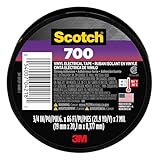
I remember staring at that frayed wire behind the old fridge, the insulation looking like a moth-eaten sweater. My electrical tape was nowhere to be found. In a panic, I grabbed the silver roll of duct tape sitting on the workbench. “It’s tape, right?” I thought. That little experiment taught me a hard lesson about improvising. So, the question that many of you probably ask when you’re in a pinch is: can duct tape be used in place of electrical tape? I’ve spent years wrestling with both, and the answer isn’t as simple as a quick yes or no.
Let’s be clear: while both are sticky and come on rolls, their jobs are vastly different. Thinking they’re interchangeable is a recipe for a potential shock, a fire hazard, or just a really messy failure. I’ve wasted money on flimsy electrical tapes and I’ve seen duct tape spectacularly fail where it shouldn’t. It’s time for some blunt honesty about what works.
Why You’re Asking: The Impromptu Fix
Look, we’ve all been there. You’re in the middle of a project, maybe you’re rewiring a lamp, fixing a loose connection on a power tool, or even just trying to secure some holiday lights. Suddenly, you realize you’re out of the specific tape you need. The electrical tape is gone. Vanished. And there, taunting you with its silvery sheen, is the ubiquitous roll of duct tape. It’s strong, it’s sticky, it’s… well, it’s duct tape. It feels like it can do anything, right? This is where the thought process starts: ‘Can duct tape be used in place of electrical tape for this quick fix?’ It’s a tempting shortcut, especially when you just need something to hold for a moment.
My first real “oh, this isn’t good” moment happened when I was trying to repair the cord on my old hedge trimmer. The insulation was cracked, and I needed to seal it up fast before the rain started.
I figured duct tape was tough enough. I wrapped it on, feeling pretty smug about my resourceful solution.
A week later, I went to use the trimmer, and the tape felt… wrong. It had softened, stretched, and was oozing a sticky residue. Worse, the exposed wire beneath it looked just as bad, if not worse, because the duct tape had trapped moisture. It was a mess, and a stark reminder that just because something is sticky doesn’t mean it’s appropriate for the job.
This isn’t about laziness; it’s about understanding what materials are designed for what purpose.
The primary driver behind this question is often urgency and accessibility. Electrical tape isn’t always in every toolbox or junk drawer. Duct tape, on the other hand, seems to be a permanent resident of garages, sheds, and even car trunks everywhere. Its reputation for being a universal fix-all is well-earned in many contexts – holding a leaky pipe temporarily, securing a broken car part, sealing a box – but its versatility has led many to overestimate its capabilities in more sensitive applications. This is a common misunderstanding, and it’s one that can lead to genuine problems if not addressed.
The Real Deal: What Electrical Tape Actually Does
Electrical tape isn’t just colored vinyl. It’s specifically engineered for a job, and that job is to insulate and protect electrical wiring. The material itself is typically made of PVC (polyvinyl chloride), a type of plastic that has excellent dielectric properties. What does that mean in plain English? It means it’s really good at stopping electricity from flowing through it. This is its primary superpower. Think of it like a tiny, flexible rubber suit for your wires. (See Also: Can I Use Electrical Tape To Connect Wires )
Beyond the material, the adhesive on electrical tape is also important. It’s designed to stick well without becoming brittle or gooey over time, especially when exposed to the temperature fluctuations that electrical components often endure. It needs to hold firm, not conduct, and resist degradation.
The tape is also often designed to be somewhat stretchy, allowing you to wrap it tightly around irregular shapes and make sure a smooth, continuous barrier. When you wrap electrical tape properly, overlapping each layer by about half, you create a smooth, protective cocoon that can handle voltage and prevent short circuits.
I’ve seen cheap electrical tape peel off or become gummy after a few months, so even within the category, quality matters, but the fundamental design principles are sound.
The thickness and width are also standardized for a reason. They provide a sufficient layer of insulation for most common household voltages. It’s meant to be applied in multiple layers to build up that dielectric strength. When you’re dealing with live wires or connections that carry current, the margin for error is razor-thin. A failure here doesn’t just mean a failed connection; it can mean sparks, overheating, fire, or even electrocution. Electrical tape is a safety device, plain and simple. It’s not just about keeping wires bundled; it’s about creating a safe environment for electricity to do its job without escaping and causing harm. Understanding these technical aspects is key to appreciating why duct tape falls so short.
Duct Tape: The Jack of All Trades, Master of None (for Wires)
Now, let’s talk about duct tape. It’s the hero of the emergency repair world, isn’t it? That silver stuff, often called ‘gaffer tape’ in the film industry (though true gaffer tape is a different beast entirely, often cloth-backed and residue-free), is incredibly strong and sticky. It’s constructed with a woven fabric backing sandwiched between adhesive layers. This fabric gives it its legendary tensile strength and makes it resistant to tearing. It’s fantastic for holding things together, sealing, patching, and generally brute-forcing a solution.
However, when it comes to electrical insulation, duct tape is a colossal fail. Why? First, the adhesive. It’s designed for adhesion to a wide variety of surfaces, not for long-term electrical stability.
It can break down under heat or cold, become brittle, or, as I’ve experienced, turn into a sticky, gooey mess. This residue can attract dirt and debris, which ironically can create conductive paths. Second, the fabric backing.
While strong, it’s not inherently non-conductive in the way PVC is. Depending on the moisture content of the fabric and the surrounding environment, it can actually conduct electricity, especially at higher voltages. It’s like trying to plug a hole in a dam with a burlap sack – it might slow the leak for a minute, but it’s not going to hold back the flood. (See Also: Can Electrica Tape Catch On Fire )
I once had to remove duct tape from a car battery terminal where someone had ‘secured’ a loose connection. The tape had corroded the terminal and the adhesive had turned into this horrible, gummy substance that took me nearly an hour to scrape off, all while wearing thick rubber gloves. It was a testament to duct tape’s sheer stickiness, but also its utter unsuitability for anything requiring electrical integrity.
The common advice you’ll find is that duct tape is NOT a substitute for electrical tape, and believe me, after years of tinkering, I wholeheartedly agree. It’s a temporary patch at best, and a dangerous one at worst, when electricity is involved. The material simply isn’t designed for the stresses and demands of electrical work.
When Could Duct Tape seem Like a Solution (and Why It’s Still a Bad Idea)
So, you might be thinking, “Okay, but what if it’s just a super low-voltage thing? Like a toy or a small LED strip?” Even in these scenarios, using duct tape instead of electrical tape is a gamble. Let’s break down the common situations where people consider this substitution:
- Low-Voltage DIY Projects: Think hobby electronics, battery-powered gadgets, or LED strip lighting. The voltage is low, so the risk of a dangerous shock might seem minimal. However, duct tape’s adhesive can degrade, causing wires to loosen and potentially short circuit, damaging components. It can also trap moisture, leading to corrosion over time.
- Temporary Cable Management: You need to tidy up a bundle of low-voltage cables. Duct tape is strong and can hold them together. But again, it’s not designed for this. The adhesive can leave residue on the cables, making future reconfigurations a sticky nightmare. Furthermore, it doesn’t offer any protection against accidental kinks or abrasions that could damage the internal wires.
- Securing a Non-Conductive Part: Maybe you’re trying to hold a plastic casing together on a device, and the screws are stripped. Duct tape might seem like the obvious choice for its strength. In this specific instance, if the tape is absolutely nowhere near any electrical components or wiring, and it’s purely for structural support of plastic, it might not cause an immediate electrical hazard. But you’re still dealing with the adhesive issues and the potential for it to fail over time.
Here’s my contrarian take: While everyone hammers home that duct tape is never for electrical work, I’ll admit I’ve used it for extremely low-voltage, non-important, temporary cable bundling on things like extension cords for garden tools in a pinch – after I’d already properly insulated any actual electrical connections with real tape. Even then, it felt like a compromise. The key is that it was never used to insulate the wires themselves. It was just holding together the outer sheath. But even this I do reluctantly, because the residue is a pain, and it doesn’t look professional. It’s a sign you’re out of the right stuff and should be getting some.
The fundamental problem is that you can’t always predict how the environment will affect the tape, or how much voltage might fluctuate, or if that cable will get snagged and pulled in a way you didn’t anticipate. Relying on duct tape for anything remotely related to electricity, even indirectly, is inviting trouble. It’s a trade-off you’ll likely regret.
The Comparison: Duct Tape vs. Electrical Tape in a Nutshell
To really drive this home, let’s put them side-by-side. It’s not just about stickiness; it’s about performance under specific conditions. I’ve put together a little table to show you the key differences when it comes to electrical applications. Remember, this is based on my experience wrestling with both for years, not just what the labels say.
| Feature | Electrical Tape (Proper) | Duct Tape | My Verdict |
|---|---|---|---|
| Primary Function | Electrical insulation, protection | General-purpose adhesion, sealing, patching | Electrical tape is purpose-built; duct tape is a generalist. |
| Material | PVC (Polyvinyl Chloride) | Woven fabric backing, rubber-based adhesive | PVC offers superior dielectric strength. |
| Electrical Insulation | Excellent (dielectric strength) | Poor to non-existent; can conduct | Duct tape fails here completely. |
| Adhesive Performance | Stable over temperature range, non-hardening | Can soften, harden, leave residue, degrade | Electrical tape adhesive is far more reliable. |
| Durability (Electrical) | Designed for long-term electrical protection | Degrades quickly under electrical stress/heat | Duct tape is not built for electrical longevity. |
| Flexibility/Stretch | Good, allows for tight, smooth wraps | Stretches but can deform and weaken | Electrical tape wraps more cleanly. |
| Temperature Resistance | Good (varies by type, but generally stable) | Poor; can become brittle or gooey | Duct tape is sensitive to extremes. |
| Cost (per roll) | $3 – $10 | $5 – $15 | Duct tape can be more expensive, but it’s the wrong kind of expensive for electrical. |
As you can see, the table clearly shows that for anything involving electricity, electrical tape is the only game in town. Duct tape’s strength and adhesion are impressive for many tasks, but when it comes to safety and reliable electrical connections, it’s simply not designed for the job. Trying to use it as a substitute is like using a hammer to screw in a lightbulb – you might eventually get it in, but it’s the wrong tool, and you’re likely to break something (or get shocked).
Practical Tips for When You really Need Electrical Tape
Okay, so we’ve established that using duct tape in place of electrical tape is a bad idea. But what if you’re in a bind and need to make a proper repair? Here are my tips for getting it right, and what to do when you’re tempted by that silver roll: (See Also: Can I Substitute Duct Tape For Electrical Tape )
- Buy Quality Electrical Tape: This sounds obvious, but I’ve seen people buy the cheapest, thinnest electrical tape they can find. Don’t. Invest in a reputable brand. For general household use, a good quality vinyl electrical tape is usually sufficient. For higher voltage or more demanding applications, you might need specific types, but for most of us, a good standard roll will last ages and perform reliably. I personally prefer brands like 3M Super 33+ or Scotch 88. They cost a bit more, maybe $7-10 for a good roll, but they don’t dry out or peel off like the cheap stuff that costs $2.
- Prep the Wire: Before you do anything, make sure the wire is clean and dry. Any dirt, grease, or moisture will compromise the tape’s adhesion and insulation. If the insulation is frayed, trim back any loose bits so you have a clean edge to work with.
- Wrap Correctly: This is important. Start wrapping about an inch back from the damaged area, extending onto the good insulation. Overlap each previous layer by at least half the width of the tape. Pull the tape taut as you wrap to make sure it conforms to the wire and creates a smooth, continuous barrier. Don’t just slap it on haphazardly. Work your way past the damaged section and then another inch or so onto the good wire.
- Multiple Layers are Key: Don’t rely on a single wrap. Most electrical jobs require at least two or three layers of tape to build up sufficient dielectric strength. The first layer provides the primary insulation, the second adds a mechanical barrier and reinforces the first, and subsequent layers make sure a solid, protective wrap.
- Know When to Call a Pro: If you’re dealing with significant damage, exposed wires, or anything that makes you uncomfortable, don’t guess. Call a qualified electrician. The cost of a professional is far less than the potential cost of damage or injury from a botched repair. I’ve learned this the hard way more than once, trying to save a buck and ending up spending more in the long run.
- Keep a Proper Roll Handy: The best way to avoid the duct tape temptation is to have a roll of good electrical tape in your toolbox at all times. Store it somewhere accessible. I keep one in my primary toolbox and a smaller roll in my car for emergencies. It’s a small investment for peace of mind and electrical safety.
The goal is always to create a safe, reliable electrical connection. Duct tape fundamentally fails at this. It’s a good tool for a leaky hose, a temporary car bumper fix, or holding a poster on the wall. It is not a substitute for proper electrical insulation.
What Are the Dangers of Using Duct Tape on Electrical Wires?
The primary dangers include poor insulation leading to short circuits, overheating, and potential fires. Duct tape’s adhesive can degrade, causing connections to loosen. The fabric backing can also conduct electricity, especially if it becomes damp. This greatly increases the risk of electric shock and damage to electrical systems.
Can Duct Tape Be Used for Temporary Electrical Repairs?
While it might seem like a quick fix, using duct tape for any electrical repair, even temporary, is strongly advised against. It does not provide reliable electrical insulation and can exacerbate problems or create new hazards like fire or shock due to its poor dielectric properties and adhesive instability.
What Is the Best Alternative to Electrical Tape for Insulating Wires?
The best and safest alternative is to use proper electrical tape designed for the task. If you need a more solid or permanent solution, heat-shrink tubing or insulated wire connectors (like Wago connectors or wire nuts) are excellent, reliable options for insulating and securing electrical connections.
Will Duct Tape Melt on Electrical Wires?
Duct tape is not designed to withstand the heat generated by electrical current. While it may not “melt” in the way plastic does, the adhesive can soften and become sticky, and the material itself can degrade, compromise its integrity, and potentially become a fire hazard if exposed to heat from electrical components or short circuits.
Final Thoughts
So, to answer the big question: can duct tape be used in place of electrical tape? The short, blunt answer is no. Absolutely not, if you value safety and want your electrical work to last. I’ve seen too many botched jobs, too many sticky messes, and I’ve learned my own painful lessons. Duct tape is fantastic for a million things, but keeping electricity where it belongs isn’t one of them. It’s like trying to use a garden hose to fill a swimming pool – you’ll make a mess and it won’t work.
If you’re looking at a frayed wire and reaching for that silver roll, stop. Take a breath. Go buy a proper roll of electrical tape. It costs a few dollars, and it will do the job safely and effectively. My experience tells me that cutting corners on electrical work is never worth the risk. You might save a few bucks in the short term, but the potential for damage, injury, or a fire is just too high.
My advice is simple: respect the tools and their intended uses. For electrical insulation, only electrical tape will do. Everything else is just a temporary, dangerous patch. Keep a good roll handy, and when in doubt, always call a professional. Your safety and your home depend on it.