I’ve seen people do some wild things with duct tape. From fixing a leaky boat to holding together a car bumper, it’s the go-to for a quick fix. But when it comes to something as sensitive as electrical cords, you have to stop and ask: can duct tape be used on electrical cords? I’ve been elbow-deep in wiring for years, and let me tell you, the answer isn’t as simple as ‘yes’ or ‘no’. It’s a messy situation with potentially shocking consequences if you get it wrong.
This stuff is everywhere, and the temptation to just wrap it around a frayed wire is strong. I remember one time, late at night, my kid’s favorite lamp flickered out. The cord looked gnarly, and the nearest hardware store was miles away. My hand instinctively went to the roll of silver tape sitting on my workbench. It’s that moment of desperation that gets people into trouble.
When the Silver Tape Looks Like Salvation (but Isn’t Always)
Look, I get it. You’ve got a cord that’s seen better days. The insulation is cracked, maybe a bit of the wire is peeking through, and you’re staring down the barrel of a potential fire hazard or, worse, a nasty shock. Your brain immediately goes to the magic roll of duct tape. It’s strong, it’s sticky, and it’s right there. So, the big question we’re all dancing around is: can duct tape be used on electrical cords? The short, blunt answer is: not in the way you probably want it to be used for anything permanent or truly safe.
Let’s be brutally honest. Duct tape is designed for… well, ducting. And general repairs. It’s made of a cloth backing with a polyethylene coating and a strong adhesive. It’s not engineered to be an insulator against high voltage electricity. It might stop you from touching exposed wires for a few minutes, sure. But that’s like putting a band-aid on a gaping wound. It doesn’t address the underlying problem, and it can create a false sense of security.
I learned this the hard way trying to fix a power strip that was getting a bit chewed up by my cat. I wrapped the frayed section with duct tape, feeling pretty smug about my DIY skills. A few days later, I noticed the tape was bulging and felt warm to the touch. That was my wake-up call. The heat generated by the faulty connection was melting the adhesive and compromising the tape’s integrity. If I hadn’t checked, it could have easily turned into a fire. That little incident cost me a new power strip and a healthy dose of humility.
The main issue is that duct tape’s adhesive isn’t rated for the temperatures electrical cords can reach, especially under load. It’s also not particularly good at resisting oil or solvents, which can degrade it over time. And while it might feel thick, it’s not a reliable insulator. You’re basically relying on a glorified sticky cloth to protect you from live electricity. That’s a gamble I’m no longer willing to take.
So, while you might see countless anecdotal stories online of people using duct tape for quick fixes on cords, my advice is to treat it as a temporary, ‘get out of immediate danger’ measure only. Think: getting a device unplugged safely, not using it as a long-term repair. It’s the difference between putting out a small spark and trying to extinguish a bonfire with a water pistol.
Why ‘real’ Electrical Tape Is Your Only Friend Here
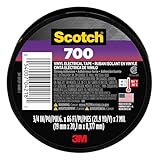
Alright, let’s talk about the stuff that’s actually made for the job: electrical tape. You’ve seen it. It’s usually black, comes on a roll, and feels a bit stretchy and rubbery. There’s a reason for that. Unlike your everyday duct tape, electrical tape is specifically designed to be a safe and effective insulator. The primary material is usually PVC (polyvinyl chloride), which has excellent dielectric properties. This means it’s really good at resisting the flow of electricity. The adhesive on electrical tape is also formulated to maintain its stickiness and integrity across a wider range of temperatures, including the heat that can be generated by electrical connections.
When I first started tinkering with electronics, I thought all tape was pretty much the same. Boy, was I wrong.
I’d use whatever I had on hand. A nick in a wire on my old soldering iron? Duct tape. A loose connection on a speaker cable?
Masking tape, maybe. It seemed fine at the time.
Then, during a particularly ambitious project involving a home-built amplifier, I had a minor short circuit. Sparks flew (literally), and the ‘repair’ I’d made with what I thought was good quality tape just melted into a sticky mess. That’s when I finally wised up and bought a proper roll of 3M Super 33+ electrical tape. The difference was night and day. (See Also: Can I Use Electrical Tape To Connect Wires )
It felt more substantial, adhered better, and I haven’t had a similar issue since. That roll has been through countless projects, and it’s still going strong.
The common advice is that you need to wrap electrical tape tightly, overlapping each layer by at least half. This creates a smooth, protective barrier. And it’s true. You want to avoid any gaps where moisture or dirt could get in, or where the underlying wire could be exposed. The tape’s stretchiness allows it to conform to the shape of the cord, creating a snug fit. For minor abrasions, a few good wraps are usually enough. For more serious damage, you might need to extend the taping a bit beyond the damaged area to make sure a secure seal. It’s not just about covering the problem; it’s about creating a reliable insulation shield.
Here’s a little comparison I’ve put together from my own experiences. It’s not a formal spec sheet, but it’s my real-world take:
| Material | Primary Use Case | Insulation Rating (My Verdict) | Temperature Tolerance (My Verdict) | Durability (My Verdict) |
|---|---|---|---|---|
| Duct Tape | Temporary fixes, sealing, bundling | Poor to Fair (Not rated for electrical) | Fair (Can degrade/melt) | Fair (Adhesive can fail) |
| Electrical Tape (PVC) | Insulating wire splices, repairing cord damage | Excellent (Specifically rated) | Good to Excellent (Maintains integrity) | Excellent (Adhesive holds well) |
| Friction Tape | Added grip, initial layer for insulation | Fair (Good dielectric but porous) | Fair (Can dry out) | Fair (Less durable than PVC) |
So, when someone asks if duct tape can be used on electrical cords, the answer leans heavily towards ‘no’ for anything beyond an absolute emergency to prevent immediate contact. For actual, safe repair and insulation, you absolutely need to reach for proper electrical tape.
The Common Mistakes That Get People Into Trouble
It’s easy to fall into traps when you’re trying to fix something on the fly. The biggest mistake, hands down, is thinking that any old tape will do. People grab duct tape, masking tape, even packing tape, and slap it over a frayed wire. They see it as a quick fix, a way to avoid the hassle of buying a new cord or calling an electrician. But this is where the real danger lies. You’re not fixing the problem; you’re just covering it up, and often with something that’s not designed to handle the stress of electricity.
I’ve seen cords repaired with duct tape that looked perfectly fine on the outside but were a disaster waiting to happen. The tape can look intact, but underneath, the wires are still exposed, or the insulation has degraded further. The heat generated by even a minor fault can cause the adhesive on duct tape to break down, making it less effective and potentially creating a sticky, messy blob that offers even less protection. This is why you see those horror stories about fires starting from seemingly minor electrical issues.
Another common blunder is using too little electrical tape, or not wrapping it correctly. If you only wrap a tiny section, or if you leave gaps, you’re not creating a proper insulating barrier. Electricity is sneaky; it’ll find the path of least resistance.
If there’s even a small opening, moisture, dust, or just plain air can compromise the insulation. I remember helping a buddy fix an extension cord that had a nasty tear.
He’d wrapped it, but he’d done it in one go, without overlapping. It looked okay, but when it got rained on slightly, it shorted out. We had to redo it properly, with multiple overlapping layers, and extend it a good inch past the damaged area on both sides. It took longer, but it was the only way to be sure it was safe.
People also often underestimate the importance of the type of electrical tape. There are different grades of electrical tape. For most household applications and lower voltage wiring, standard PVC electrical tape (like 3M Super 33+ or similar) is perfectly adequate. However, for higher voltage applications or situations where extreme temperatures are a concern, you might need specialized tapes like high-voltage rubber splicing tape or vinyl tapes designed for specific environments. Using the wrong type is like using a regular screwdriver for a bolt that needs an impact wrench – it might work for a moment, but it’s not the right tool for the job and can lead to failure.
And then there’s the ‘it’s just a little frayed’ mentality. We’ve all been there. That tiny bit of exposed wire, or that small crack in the insulation. (See Also: Can Electrica Tape Catch On Fire )
It doesn’t seem like a big deal. But even a small imperfection can be a point of failure. Heat can build up, the fraying can worsen, and before you know it, you’ve got a real problem on your hands. The best practice, in my opinion, is to err on the side of caution.
If a cord is significantly damaged, it’s almost always better and safer to replace it entirely rather than try to patch it up. The cost of a new cord is peanuts compared to the potential cost of a fire or injury.
When Duct Tape might Be an Emergency Measure
Okay, so I’ve bashed duct tape pretty hard for electrical cord repairs, and for good reason. But let’s be real for a second. Life happens. You’re in a bind, you need to prevent immediate danger, and duct tape is the only thing within reach. In an absolute, dire emergency, can duct tape be used on electrical cords? Yes, but with HUGE caveats. This is strictly for preventing immediate contact, not for any kind of long-term fix or reliable insulation. Think of it as a temporary dam to stop a leak until you can get a proper repair kit, not a permanent plumbing solution.
Picture this: you’re camping, it’s pouring rain, and your only extension cord powering a vital medical device has a small tear. The power is still live, and the rain is getting into that tear. The immediate risk is electrocution or a short that fries the device. In this specific, high-stakes scenario, a few wraps of duct tape might give you just enough of a barrier to prevent water from getting to the exposed wires and to stop you from accidentally touching them while you unplug it. It’s about buying yourself a few minutes to get to safety or a proper tool.
I had a situation once where a dog chewed through the cord of a small appliance. It wasn’t a high-draw item, just a fan, but the insulation was definitely compromised. It was late, I didn’t have replacement cord, and I needed the fan to keep my server cool. I used duct tape to wrap the damaged section.
My goal wasn’t to insulate it permanently; it was to stop the exposed wires from shorting out and to create a visual cue that this cord was damaged and should be replaced ASAP. I made sure to unplug it immediately after use and then went and bought a new cord the next day. The duct tape served its purpose: preventing immediate disaster and flagging the problem.
This is where the confusion often arises. People see these emergency uses and extrapolate them into general repair. They think, “Well, it worked for that guy in the camping situation, so it should work for my lamp cord.” That’s faulty logic. The key difference is intent and duration. Was the duct tape used to prevent immediate shock or fire until a proper solution could be implemented, or was it used as the actual repair itself? If it’s the latter, you’re playing with fire. Literally and figuratively.
So, to be crystal clear: duct tape on electrical cords is a ‘last resort, immediate danger mitigation only’ strategy. It’s not a substitute for proper electrical tape. It will degrade, it can melt, and its adhesive properties are not designed for electrical applications. If you find yourself in a situation where you’re even considering duct tape for an electrical cord, take a deep breath, assess the actual risk, and if possible, find a proper electrical tape or, even better, a replacement cord. Don’t rely on silver-colored fabric to protect you from electricity.
Practical Tips for Cord Care and Safe Repair
Beyond just knowing whether duct tape can be used on electrical cords, the real value is in preventing damage in the first place and knowing what to do when damage inevitably occurs. Cord care is often overlooked, but it’s your first line of defense against frayed wires and potential hazards. Think of it like maintaining your car; regular checks can prevent big, expensive problems down the line.
One of the simplest things you can do is to avoid kinking or tightly coiling cords. Sharp bends put stress on the internal wires and insulation, leading to cracks and breaks over time. When you’re done using a cord, loosely loop it rather than wrapping it tightly around the plug or a power brick.
This sounds minor, but I’ve seen countless cords fail simply because they were treated roughly. (See Also: Can I Substitute Duct Tape For Electrical Tape )
Another tip is to keep cords away from heat sources, sharp edges, and high-traffic areas. Plugging and unplugging is a common source of damage. Instead of yanking on the cord itself, always grab the plug. This might seem obvious, but I’ve seen enough people yank on cords to know it’s a habit worth breaking. Also, be mindful of where your cords are routed. Under rugs, behind furniture that gets moved frequently, or anywhere a pet might chew on them are all prime locations for damage. Using cord covers or raceways can offer a physical barrier and make your space look tidier, too. It’s a small investment that can save you a lot of trouble and potential danger.
When you do find damage, the first thing to do is unplug the device. Always. Then, assess the severity. If it’s a minor nick in the outer sheath that hasn’t exposed any wires, you might be able to get away with a few wraps of proper electrical tape. Make sure you’re using a good quality PVC electrical tape. Clean the area around the damage first to make sure the tape adheres properly. Wrap the tape tightly, overlapping each layer by at least half, and extend the tape a good inch or so beyond the damaged area on both sides. This creates a solid, insulated patch.
If the insulation is significantly damaged, if wires are exposed, or if the cord has been severely kinked or cut, it’s time for a replacement. Trying to repair a severely damaged cord is often not worth the risk. Modern appliances and electronics aren’t usually prohibitively expensive to replace, and the peace of mind you get from using a safe, undamaged cord is invaluable. Seriously, I’ve spent maybe $15 on a replacement extension cord that was frayed and could have caused issues. That’s a small price to pay compared to the potential cost of a fire or an electrical shock. When in doubt, always choose replacement over repair for significant cord damage.
Frequently Asked Questions About Electrical Cords and Tape
Can I Use Duct Tape to Fix a Frayed Power Cord?
Generally, no. Duct tape is not designed to be an electrical insulator and can degrade with heat, potentially becoming a fire hazard. While it might offer a very temporary barrier in an absolute emergency to prevent immediate contact, it is not a safe or reliable repair solution for frayed power cords. Proper electrical tape should always be used for cord repairs, and severely damaged cords should be replaced.
Is Electrical Tape Waterproof?
Most standard PVC electrical tapes are water-resistant rather than fully waterproof. They can offer a decent level of protection against moisture for temporary repairs. For applications requiring true waterproofing, specialized tapes like rubber splicing tape or self-fusing silicone tape are typically recommended, as they create a more solid and impermeable seal.
How Long Does Electrical Tape Last on a Cord?
The lifespan of electrical tape on a cord can vary greatly depending on the quality of the tape, the environmental conditions (temperature, humidity, exposure to chemicals), and the amount of stress the cord undergoes. High-quality electrical tape in a stable indoor environment can last for many years. However, in harsh conditions or under constant flexing, it may degrade, lose adhesion, or become brittle over time, necessitating reapplication or cord replacement.
What Happens If You Use Duct Tape on an Electrical Cord?
Using duct tape on an electrical cord is risky. The adhesive can melt or degrade due to heat generated by the cord, compromising its integrity. The tape itself is not a reliable insulator, leaving the underlying wires vulnerable to contact, shorts, and potential fire hazards. It can also give a false sense of security, leading to continued use of a dangerous cord.
When Is It Okay to Use Duct Tape on Electrical Cords?
It is only acceptable to use duct tape on electrical cords in an absolute, immediate emergency situation to prevent direct contact with exposed wires or to stop moisture ingress until the cord can be safely unplugged or a proper repair can be made. This is a temporary measure to mitigate immediate danger, not a repair solution. As soon as possible, the device should be unplugged, and the cord should be properly repaired with electrical tape or replaced entirely.
Conclusion
So, to circle back to that burning question: can duct tape be used on electrical cords? My honest, hard-won answer is a resounding ‘not really, and certainly not as a proper fix.’ Duct tape might feel like a hero in a pinch, but it’s a weak one when it comes to the demands of electrical safety. It’s a temporary band-aid that can actually make things worse by masking a problem and failing under heat. Always reach for proper electrical tape for any repair, and if the damage is significant, don’t be a hero – replace the cord.
My takeaway from years of messing with wires and tapes is that cheaping out on the right materials for electrical work is a fool’s errand. The cost of a good roll of electrical tape or a new cord is minuscule compared to the potential consequences of a shoddy repair. Treat your electrical cords with respect; they carry power, and power demands respect.
The next time you’re tempted to grab that silver roll for an electrical issue, I urge you to pause. Think about the risks. If you don’t have proper electrical tape handy, your best bet is usually to unplug the device and get yourself to a store that sells it, or buy a replacement cord. Your safety, and the safety of your home, is worth more than a few minutes saved.