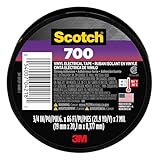
I remember staring at a frayed wire on my ancient toaster oven, the kind with the glowing coils. Sparks were flying. My toolbox was a mess, but I knew I had duct tape. Lots of it. I slapped some on, thinking, ‘This is basically the same as that fancy black tape, right?’ Wrong. So, so wrong. The real question is, can duct tape replace electrical tape? Let’s get into it, no fluff.
This isn’t about some mythical, perfect repair. It’s about what actually works, what’s safe, and what’s just a bad idea waiting to happen. I’ve wasted more money on ‘miracle’ tapes and gadgets than I care to admit. So when you’re in a pinch, and you’re wondering if that roll of silver stuff can do the job of the specialized black tape, here’s the honest truth.
Duct Tape vs. Electrical Tape: What’s the Real Difference?
Alright, let’s cut to the chase. Duct tape and electrical tape look similar enough if you squint, and both are sticky. But comparing them for electrical work is like comparing a butter knife to a chef’s knife. Both cut, sure, but one is designed for a specific, important job, and the other… well, it’s duct tape. Its primary gig is holding things together, sealing, and generally being a sticky band-aid for the universe.
Electrical tape, on the other hand, is a whole different beast. It’s made from vinyl, which is a type of plastic. This isn’t some random choice. Vinyl has some serious advantages when it comes to electricity.
For starters, it’s a fantastic insulator. This means it resists the flow of electricity, preventing shocks and short circuits. It also has a good amount of stretch to it, which is important for wrapping around irregular shapes like wire connectors and splices.
This stretch allows it to conform snugly, creating a tight seal that keeps out moisture and dust – both enemies of electrical integrity. Plus, it’s designed to handle a certain range of temperatures and UV exposure without degrading quickly. You won’t find duct tape boasting those specs.
Duct tape? Its adhesive is aggressive, designed to stick to rough surfaces like concrete or wood.
It’s a fibrous mesh usually coated with polyethylene. While it’s incredibly strong and versatile for its intended uses – think patching a leaky hose, holding a busted car part together temporarily, or securing tarps – it’s not built for the nuanced demands of electrical insulation. The adhesive can break down when exposed to heat generated by electrical current.
The fabric backing isn’t an insulator at all; it’s quite the opposite. And that goo? It can get gummy and migrate over time, especially in warmer conditions, leaving you with a sticky, conductive mess. I once used duct tape to hold a loose wire in a lamp.
It worked for about two days before the heat started melting the adhesive, and I came back to a sticky, slightly burnt-smelling mess that could have easily caused a fire. That’s when I learned my lesson about treating electrical issues with anything less than the right tool.
So, when someone asks if can duct tape replace electrical tape, the immediate, honest answer is no, not for anything that carries a real electrical load or where safety is a concern. For a quick, temporary fix on a low-voltage, non-important item where you just need to keep two bare wires from touching for a few minutes while you get the real tape, maybe. But for anything else? You’re asking for trouble.
When a Temporary Fix Becomes a Permanent Problem
I’ve seen folks try to get clever. They’ll use duct tape to wrap a frayed extension cord, or worse, a wire in a car’s engine bay. This is where the line between ‘ingenious’ and ‘idiotic’ gets incredibly blurry.
The problem with duct tape is its deceptive nature. It looks like it’s doing a job, it feels secure, and for a while, it might even hold. But underneath that silver façade, disaster is often brewing. The adhesive, as I mentioned, isn’t designed for heat generated by electrical current.
It can soften, melt, and ooze. This goo can not only make a terrible mess, but it can also become conductive, especially if it picks up dirt or moisture. (See Also: Can I Use Electrical Tape To Connect Wires )
Suddenly, that ‘fix’ is actively creating a path for electricity where you don’t want it. That leads directly to short circuits, which can fry your devices or, in the worst-case scenario, start a fire.
Another huge issue is durability. Duct tape’s fabric backing is strong for ripping branches off a tree, but it doesn’t offer much in the way of flexibility or long-term protection against abrasion or UV. Exposed wires are vulnerable. If the duct tape gets nicked, scraped, or weathered, the underlying wires are right there, ready to cause trouble. Electrical tape, being vinyl, is specifically designed to be tough, flexible, and resistant to environmental factors that would quickly degrade duct tape. It stretches and conforms, creating a smooth, continuous barrier. Duct tape, with its weave, is inherently less uniform and more prone to developing weaknesses over time.
I had a buddy who, bless his heart, tried to ‘fix’ a broken wire on his motorcycle’s taillight assembly with duct tape. He was miles from anywhere and swore it would get him home. It did, technically.
But on the ride back, the vibration and road grime got into the weave of the tape, the adhesive started to break down from the engine heat, and the whole thing shorted out, killing his battery and leaving him stranded anyway. He ended up having to buy a whole new wiring harness because the ‘quick fix’ had caused so much secondary damage. That’s the trap: thinking you’re saving time or money, only to end up with a bigger, more expensive problem down the line. It’s a classic case of penny wise and pound foolish, especially when we’re talking about electricity.
The common advice is generally sound: use the right tool for the job. For electrical work, that tool is electrical tape. Trying to substitute it with duct tape is a gamble with pretty low odds of a good outcome. The perceived savings are never worth the potential risks, which include damaged equipment, personal injury, and fire hazards. It’s just not built for it, plain and simple.
When Can Duct Tape sort Of Do the Job? (spoiler: Rarely)
Okay, I promised to be blunt, and here’s a blunt truth: there are very few scenarios where duct tape can even pretend to replace electrical tape. We’re talking about edge cases so narrow they’re practically invisible.
Think about a very low-voltage, low-amperage situation where insulation is secondary to simply keeping two wires from physically touching each other in a completely dry, static environment. For example, maybe you have a tiny, battery-powered LED string light, the kind you get for craft projects, and one of the very thin wires has a minor abrasion.
If you just need to prevent that one tiny wire from brushing against another one for a short period until you can replace the whole string, a small piece of duct tape might provide that physical barrier. It’s not ideal, it’s not a real insulator, but it stops the immediate physical contact.
Another hypothetical is if you’re dealing with something that’s already insulated, and the tape is just to provide a bit of extra physical protection to that existing insulation, and even then, only in a very low-stress environment. Imagine a wire that’s already properly insulated with its original sheath, but it’s in a spot where it might rub against something. You could, in theory, wrap it with duct tape to add a sacrificial layer of protection. But even here, a proper abrasion-resistant tape, or even just a bit of heat-shrink tubing, would be a far better, more professional solution. The key is that the primary insulation is already there. Duct tape is just a mechanical shield, not an electrical one.
I once had a desk lamp where the power cord started to fray near the plug. It was a simple lamp, low power. I didn’t have electrical tape handy, but I did have duct tape.
I carefully wrapped a few layers around the frayed section, making sure it was smooth and covered. It held for a while, and I was smug about my quick fix. However, the cord would move every time I adjusted the lamp.
After about a month, I noticed the duct tape felt a bit loose and gummy. I pulled it off, and the wires underneath were starting to show through the plastic insulation again, and the duct tape adhesive had made a sticky mess.
So, even in that low-voltage, low-movement scenario, it wasn’t a long-term solution. It became a problem waiting to happen. (See Also: Can Electrica Tape Catch On Fire )
The truth is, when people ask if can duct tape replace electrical tape, they’re usually looking for a shortcut or a universal fix. And while duct tape is famously versatile, its versatility doesn’t extend to reliable electrical insulation. The materials, the adhesive, and the construction are fundamentally unsuited for the job. It’s like using a hammer to screw in a screw – you might get it in, but you’re likely to damage the screw, the material, and possibly your hand in the process. For anything that carries a significant electrical current, or where safety is a factor, duct tape is a gamble you shouldn’t take. Stick to electrical tape.
The Ugly Truth About Adhesives and Insulation
Let’s talk about what makes tape sticky and what makes it insulate. Duct tape uses an aggressive, pressure-sensitive adhesive, often based on natural or synthetic rubber, or sometimes a solvent-based adhesive. Its goal is to grab onto as many surfaces as possible, with high tack.
This is great for patching a tent or sealing a box. However, this adhesive compound isn’t formulated with electrical insulation or heat resistance in mind.
When it gets even moderately warm – and electrical wires generate heat, especially under load – it can soften. This softening means it loses its grip, and worse, the adhesive itself can become conductive. I’ve seen this goo ooze out, pick up dust and fibers, and create a sticky, conductive mess that actively promotes short circuits or corrosion. It’s the opposite of what you want.
Electrical tape, on the other hand, typically uses a vinyl (PVC) backing with a rubber-based or acrylic adhesive. The vinyl is key. It’s chosen for its excellent dielectric strength – that’s its ability to withstand an electric field without conducting electricity. It’s flexible, it’s resistant to abrasion, and it doesn’t degrade as quickly when exposed to the elements or moderate heat.
When you stretch electrical tape, it conforms tightly to the wire, creating a smooth, continuous layer of insulation. There are no fabric weaves to trap dirt or moisture, and the adhesive stays put within its operational temperature range.
Some high-performance electrical tapes can even handle temperatures exceeding 200°F (93°C), which is far beyond what duct tape’s adhesive can tolerate before turning into a sticky mess.
I learned this the hard way when I tried to repair a small appliance’s power cord with duct tape. The cord got a little warm during use, and the adhesive started to weep.
It wasn’t a dramatic failure, but over a few weeks, the tape became loose, sticky, and the exposed wire insulation underneath started to look brittle. It was a disaster waiting to happen. When I finally peeled off the gunk, I found that the adhesive had actually started to degrade the plastic insulation of the wire itself in a couple of spots. That’s a nasty surprise you absolutely do not want.
Electrical tape doesn’t do that. It remains stable and protective. The common advice you hear about using electrical tape for electrical work?
It’s not just corporate jargon; it’s rooted in material science and safety. For electrical insulation, you need a material with high dielectric strength and a stable adhesive, and duct tape simply doesn’t provide that.
Its strengths lie elsewhere entirely.
Practical Tips: When You must Use Tape (and What to Grab)
Okay, so we’ve established that duct tape is a terrible idea for most electrical work. But what if you’re in a bind, miles from the nearest hardware store, and you absolutely need to secure a wire or prevent a short for a few minutes to get somewhere safe? My advice is: don’t. Just don’t. However, if you’re in a truly dire, no-other-options situation, and we’re talking about something extremely low-power and non-important, here’s how you might mitigate the risk, though it’s still a bad idea. First, make sure the power is OFF. Double-check. Triple-check. If it’s a plug-in appliance, unplug it. If it’s a battery-powered device, remove the batteries. You are trying to prevent physical contact, not insulate against current. (See Also: Can I Substitute Duct Tape For Electrical Tape )
Second, if you have to use duct tape, use multiple layers, applied smoothly and tightly. Don’t just slap a single piece on. Wrap it around several times, overlapping generously.
Try to keep the surface as smooth as possible to avoid creating nooks and crannies where dirt and moisture can collect. And remember, this is temporary.
As soon as humanly possible, get yourself some actual electrical tape. I’d say the limit for this kind of ‘desperate measures’ use of duct tape is when you’re dealing with something like a hobby circuit using AA batteries, or perhaps a very low-voltage garden light where the transformer is perfectly fine and the wire is just nicked. Anything more significant, and you’re playing with fire, literally.
Here’s a quick rundown of what actual electrical tape to look for, because it’s not all the same:
| Type of Tape | Best For | Verdict |
|---|---|---|
| Standard Vinyl Electrical Tape | General household wiring, splices, low-voltage applications. Good stretch and adhesion. | The go-to for most DIYers. Reliable for its intended use. |
| High-Temperature Electrical Tape | Applications near heat sources, automotive wiring, demanding environments. | If you know it’s going to get hot, grab this. Worth the extra few bucks. |
| Rubber Splicing Tape | Creating a truly waterproof, fused splice, often used by professionals. Self-fuses to form a solid mass. | Overkill for most home repairs, but the gold standard for heavy-duty, exposed splices. |
| Duct Tape (for comparison) | Patching, sealing, temporary holds, general repairs (NOT electrical). | Absolutely not for electrical insulation. Use it for anything else. |
The key takeaway is this: electrical tape is cheap. A roll will last you ages. The peace of mind and safety it provides are immeasurable. My first mistake with the toaster oven was thinking I could get away with a shortcut. My second was assuming duct tape’s strength translated to electrical safety. It doesn’t. Invest in proper electrical tape. It’s one of the few tools where the ‘right’ tool is also the cheapest and safest option.
People Also Ask (and My Answers)
Can Duct Tape Be Used as Insulation?
No, duct tape is not a reliable electrical insulator. While it can provide some physical separation, its adhesive can degrade with heat, become conductive, and the fabric backing offers no insulating properties. For electrical insulation, you need materials specifically designed for that purpose, like vinyl electrical tape, which has excellent dielectric strength.
Is Duct Tape Safe for Wires?
Duct tape is generally not safe for wires that carry electrical current. The heat generated by the current can soften its adhesive, leading to melting, oozing, and potential conductivity. It can also degrade the wire’s original insulation over time. For wire safety, always use proper electrical tape or other certified insulation methods.
What Tape Can Replace Electrical Tape?
For most electrical applications, nothing truly replaces standard vinyl electrical tape. If you need higher temperature resistance, high-temperature electrical tape or rubber splicing tape are appropriate substitutes. For very specific, low-voltage, non-important physical separation needs, other strong tapes might be considered for a temporary physical barrier, but they won’t offer true electrical insulation.
How Long Does Duct Tape Last on Wires?
The lifespan of duct tape on wires is unpredictable and generally short, especially if the wires carry current or are exposed to heat or movement. The adhesive can begin to degrade within weeks or months, losing its grip and becoming gummy. This compromises its ability to keep wires separated and can lead to a sticky mess that attracts dirt and moisture, increasing the risk of shorts.
Verdict
So, can duct tape replace electrical tape? The short, unvarnished answer is a resounding no. While duct tape is a miracle worker for countless household fixes, electrical insulation is not one of its talents. You’re trading temporary convenience for potential fire hazards, short circuits, and costly damage. I’ve seen firsthand how duct tape’s adhesive breaks down under heat, turning a supposed fix into a sticky, conductive mess. It’s a gamble that simply isn’t worth the stakes.
When it comes to electrical work, especially anything beyond the most basic, low-voltage battery circuit, always reach for proper electrical tape. It’s cheap, readily available, and designed specifically for the job. My own experiences have taught me that skimping on the right materials for electrical repairs is a false economy. Save the duct tape for patching leaky hoses and securing tarps – its true calling.
Next time you’re faced with frayed wires, remember this: a few extra bucks spent on a roll of electrical tape today can save you a lot of headaches, heartache, and possibly even your home, tomorrow.