So, the lights flicker, a wire’s looking a bit frayed, and you’re wondering, can duct tape work as electrical tape? I’ve been there. Standing in the garage, toolbelt on, only to realize the actual electrical tape is… somewhere. Probably in that other toolbox. My first instinct, like many, was to reach for the silver roll. It’s tough, it sticks, what’s the big deal, right? Well, the big deal is that it’s not designed for the job, and my initial ‘fix’ ended up costing me more than just time.
I’ve spent years messing around with wires, from dodgy extensions cords on camping trips to trying to keep that ancient stereo system from shorting out my entire apartment. You learn pretty fast what’s a temporary band-aid and what’s a genuine solution. Duct tape has its place – holding together a broken car bumper on the way to the shop, sealing a drafty window, even emergency repairs on camping gear. But for electrical work? That’s a whole different ballgame.
The Myth of the Mighty Silver Roll
Let’s cut to the chase: can duct tape work as electrical tape? The short answer is a resounding NO, at least not for anything you care about staying powered, safe, or not starting a fire. I know, I know.
You see people do it all the time in movies, on DIY shows, or maybe even your uncle swore by it. It’s strong, it’s sticky, it’s readily available. It seems like it should work.
But here’s the blunt truth: it’s a terrible idea, and relying on it is just asking for trouble down the line. I learned this the hard way after a ‘quick fix’ on a garden light extension cord. It looked fine for a few weeks, then during a rainstorm, sparks flew.
Not ideal when you’re trying to enjoy a summer evening.
The fundamental problem is that duct tape isn’t designed to be an insulator. The adhesive is rubber-based, which can get gooey and lose its grip when it heats up. And electrical connections? They generate heat.
Especially if there’s a slight resistance issue or the connection isn’t perfect. Real electrical tape is made from vinyl, which is specifically formulated to be non-conductive, flexible, and resistant to extreme temperatures and UV rays. It’s also designed to stretch and conform to irregular shapes, creating a tight, protective seal that won’t break down over time. Duct tape, on the other hand, is basically cloth reinforced with polyethylene.
That cloth? It’s porous and can wick moisture. That adhesive?
It’s sticky, sure, but it’s not designed for electrical insulation. Think of it like trying to plug a leaky boat with chewing gum.
It might hold for a bit, but you wouldn’t trust it for a long voyage.
I remember a time when I was rewiring some old outdoor Christmas lights. One of the connections was a bit loose, and I didn’t have any proper tape handy. I grabbed the duct tape, wrapped it around super tight, feeling pretty smug about my resourcefulness.
A few days later, a storm rolled in, and a section of lights went dead. When I investigated, the duct tape had melted, oozed off, and exposed the wire. The rain had gotten in, and I’d created a short circuit. It wasn’t just inconvenient; it was a genuine hazard.
The heat generated by even a low-voltage connection can be enough to degrade the adhesive on duct tape. Over time, this leads to the tape loosening, exposing the wire, and creating an unsafe condition. (See Also: Can I Use Electrical Tape To Connect Wires )
People often confuse ‘tough’ and ‘sticky’ with ‘insulating’ and ‘safe’. Duct tape is tough and sticky, but it’s a terrible electrical insulator. It’s designed to hold things together, to provide a barrier against the elements, but not to prevent electricity from flowing where it shouldn’t. Using it is like putting a regular bandage on a deep surgical cut; it might cover it, but it won’t do the job the right way.
Why Your Go-to Roll Fails the Spark Test
The biggest reason duct tape fails as an electrical insulator is its material composition. Standard duct tape is made of a fabric mesh backing (often cotton or polyester) coated with a polyethylene layer and then a pressure-sensitive adhesive. That adhesive is typically a rubber-based compound. When electricity flows through a wire, especially if there’s any resistance or the connection isn’t perfect, heat is generated. Rubber adhesives, while sticky, can soften and melt when exposed to heat, losing their adhesion. This can happen even at temperatures that aren’t excessively high, certainly within the range of what a faulty electrical connection might produce.
Furthermore, the fabric backing on duct tape isn’t designed for insulation. It’s porous, meaning it can absorb moisture.
If the taped connection is exposed to humidity or water, the moisture can penetrate the tape, compromising its insulating properties even further. This creates a pathway for electricity to travel, potentially causing short circuits, shocks, or even fires.
Electrical tape, on the other hand, is typically made from vinyl (PVC). Vinyl is a polymer that is inherently a good electrical insulator.
It’s also designed to be flexible, allowing it to stretch and conform tightly around wires and connections, creating a smooth, protective barrier. It’s formulated to withstand a wider range of temperatures and resist UV degradation, which is why it’s suitable for both indoor and outdoor use.
I once tried to use duct tape to repair a frayed cord on a low-power appliance, thinking it would be fine because it wasn’t a ‘main’ line. Within a month, the adhesive had started to creep, and the tape was peeling away. The exposed wire was a disaster waiting to happen, and I shudder to think what could have occurred if it had gotten wet or been touched by someone unaware. It’s the same principle as using regular sticky tape for a serious wound.
It might cover it, but it doesn’t offer the sterile, protective barrier needed for healing. Duct tape offers a sticky barrier, but it’s not a safe electrical one.
It’s a classic case of using the wrong tool for the job, driven by convenience rather than safety or efficacy.
The lack of stretch and flexibility in duct tape also means it doesn’t create the tight, airtight seal that electrical tape does. This can leave small gaps where moisture or contaminants can enter. Moreover, as the adhesive breaks down and the tape loosens, these gaps widen, increasing the risk of failure. When you compare it to the specialized properties of electrical tape, duct tape’s shortcomings become glaringly obvious. It’s like comparing a plastic grocery bag to a heavy-duty, waterproof tarp. Both hold things, but only one is built for serious protection.
What to Look for in Real Electrical Tape
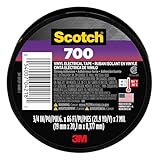
If you’re going to do any electrical work, even simple repairs, you absolutely need proper electrical tape. Don’t even think about improvising with duct tape. The good news is that electrical tape is cheap, readily available, and comes in different types for different needs. The most common type you’ll find is vinyl electrical tape. This is your go-to for most household electrical repairs. It’s flexible, durable, and provides excellent insulation. Brands like Scotch (3M) and Gardner Bender are solid choices. You can usually find it in black, but it also comes in other colors, which can be useful for color-coding wires if you’re doing more complex wiring jobs.
When you’re picking out electrical tape, check the packaging for its voltage rating and temperature range. For most home wiring, a tape rated for at least 600 volts is more than sufficient. You’ll also want a tape that’s rated for a reasonable temperature range, say -18°C to 105°C (0°F to 220°F). This makes sure it won’t degrade if the connection gets warm or if it’s used in a cooler environment. The elasticity is also key. Good electrical tape stretches significantly without breaking, allowing you to wrap it tightly around irregular shapes, creating a smooth, fused layer that protects the underlying connection. This stretching action is what helps create a moisture-resistant seal.
There are also specialized electrical tapes. High-voltage tape, often made of ethylene propylene rubber, is designed for much higher voltage applications and provides a self-fusing layer when stretched. There are also specialty tapes for extreme temperatures, UV resistance, or specific chemical environments. (See Also: Can Electrica Tape Catch On Fire )
But for 99% of what the average person needs to do – fixing a frayed cord on a lamp, a loose connection on a garden tool, or reinforcing a wire nut connection – standard vinyl electrical tape is perfectly adequate and the only safe choice. Don’t let the ease of grabbing a roll of duct tape tempt you; the difference in performance and safety is night and day. I’ve seen too many makeshift fixes fail spectacularly to ever recommend anything less than the real deal.
I’ve always kept a few rolls of good quality electrical tape in my toolbox. It’s one of those things that costs next to nothing but can save you a lot of hassle and potential danger. I remember a repair on an old vacuum cleaner where the power cord was showing some wear near the plug. I used a few wraps of vinyl electrical tape, stretched it taut, and overlapped the layers carefully. It’s been years, and that repair is still solid, no signs of degradation. It felt secure, looked neat, and most importantly, it was safe. That’s the experience you want with electrical repairs.
| Material | Primary Use | Insulation Properties | Temperature Resistance | Adhesive Type | Verdict for Electrical Work |
|---|---|---|---|---|---|
| Duct Tape (Fabric/Polyethylene) | General repairs, sealing, binding | Poor to non-existent | Low to moderate, degrades with heat | Rubber-based, can soften/melt | Absolutely Not Recommended. Fails due to heat, moisture, and poor insulation. |
| Vinyl Electrical Tape (PVC) | Electrical insulation, wire splicing | Excellent | Good range (-18°C to 105°C typical) | Acrylic or rubber-based, formulated for adhesion and flexibility | Highly Recommended. Designed for electrical safety and durability. |
| Rubber Self-Fusing Tape | High-voltage splicing, weatherproofing | Excellent (self-fusing) | Very good, often wider range than vinyl | None (fuses to itself) | Excellent for specific, higher-demand applications. Overkill for basic repairs. |
Common Mistakes and Why They Happen
The most common mistake, hands down, is the belief that duct tape is a universal fix-all. It’s so ubiquitous and effective for so many non-electrical tasks that people just assume it’ll work for everything, including wiring. This mindset often stems from a lack of understanding about the specific demands of electrical insulation. People see it as just “wrapping something up,” not realizing the important differences in material properties and safety standards. It’s like thinking any old cloth will work as a fire blanket – it might cover the flames for a second, but it won’t extinguish them and might even make things worse.
Another mistake is underestimating the heat generated by electrical connections. Even a seemingly low-amperage circuit can produce enough heat to cause a rubber-based adhesive on duct tape to soften and fail over time. This leads to the tape loosening, exposing the wire, and creating a hazard. People might think, “It’s just a low-voltage garden light, what’s the worst that can happen?” The worst that can happen is a fire, especially if the faulty connection is near flammable materials or if it’s exposed to moisture.
I recall a friend who used duct tape to insulate a connection in his car’s stereo system. He was proud of how it looked, all neat and tidy.
A few months later, during a hot summer day, the tape started to sag. The adhesive oozed out, attracted dust and grime, and eventually, the wires shorted out, blowing a fuse and taking out a part of his dashboard. He’d wasted time and money on a fix that was fundamentally flawed from the start.
This illustrates the ‘out of sight, out of mind’ problem. Electrical issues can be hidden behind panels or within walls, and a faulty repair can fester for a long time before causing a noticeable problem, often a dangerous one.
The ‘good enough’ mentality is also a killer. When a repair is needed quickly, the easiest, most accessible solution often wins, regardless of its suitability. Duct tape is almost always the easiest and most accessible thing to grab. This leads people to cut corners on safety. The advice I’d give is to treat electrical work with the respect it deserves. If you’re not sure, get the right materials. It’s not about being a perfectionist; it’s about being safe. The few extra dollars for proper electrical tape are insignificant compared to the potential cost of a fire or an electrical shock. Don’t fall into the trap of believing that ‘good enough’ is truly good enough when it comes to electricity.
What Are the Risks of Using Duct Tape on Electrical Wires?
Using duct tape on electrical wires is extremely risky. The primary danger is that duct tape is not an electrical insulator. Its adhesive can soften and melt when it gets warm, losing its grip and exposing the bare wire. This can lead to short circuits, which can cause sparks, fires, or damage to appliances. Furthermore, the fabric backing can absorb moisture, creating a conductive path and increasing the risk of electric shock. Over time, the adhesive breaks down, the tape loosens, and the exposed wire becomes a significant safety hazard.
When Duct Tape Might seem Okay (but Still Isn’t)
Okay, let’s be honest. There are situations where duct tape might seem like it’s holding up for a while, and this is where the confusion and myths really take root. Imagine you’ve got a very low-demand, dry-environment application. Perhaps a temporary fix on a very low-voltage garden light where the connection isn’t directly exposed to the elements, and the heat generated is minimal. You wrap it up, it looks secure, and for a few months, nothing bad happens. It’s still conducting electricity, it’s still ‘working’. This is the deceptive part. It appears to function, leading people to believe it’s a viable solution.
I’ve seen this happen with battery-powered fairy lights or simple LED strings. You might wrap a loose connection with duct tape, and because the power draw is so tiny and the conditions are dry, it might not immediately fail. But the problem is that ‘temporary’ can quickly become ‘forgotten,’ and the underlying risk remains. The adhesive can still degrade, the tape can become brittle over time, especially if exposed to sunlight, and the moisture resistance is always questionable. It’s like putting a slightly damp towel on a leaky pipe – it might slow the drip for a bit, but the pipe is still compromised and will eventually fail more catastrophically.
The temptation is immense, especially when you’re in a pinch. You’re camping, it’s dark, and a important light goes out. You’ve got duct tape. You’ve got no electrical tape. It’s a compelling argument for convenience. However, the core issue is that electrical tape is specifically engineered with dielectric strength – the ability to withstand electrical stress without conducting. Duct tape simply doesn’t have this property. Its strength lies in its adhesion and physical toughness, not its ability to prevent electrical current from passing through it. So, even if it looks okay, it’s not performing the fundamental function needed for electrical safety.
I want to be clear: there’s no scenario where duct tape is a good substitute for electrical tape. The moments when it seems to work are temporary, highly conditional, and always carry an inherent risk. It’s like using a regular car tire on a race track; it might roll, but it’s not designed for the stresses and demands of that environment and will likely fail. The consequences of that failure with electricity are far more severe than a flat tire. (See Also: Can I Substitute Duct Tape For Electrical Tape )
Can Duct Tape Be Used for Temporary Electrical Fixes?
While duct tape might temporarily hold a connection together, it is not safe for any electrical fix, temporary or otherwise. Its adhesive degrades with heat and can lose its grip, exposing wires and creating fire or shock hazards. It also doesn’t provide proper insulation. For any temporary electrical repair, even if it’s just to get something working for a short while, using actual electrical tape is most important for safety. Anything less is a gamble with potentially dangerous consequences.
Real-World Scenarios: When It All Goes Wrong
Let’s talk about a scenario I witnessed firsthand. A friend of mine was doing some landscaping and needed to extend power to a new set of outdoor lights. He had a perfectly good outdoor extension cord, but one of the connections where he spliced in a new run looked a bit loose. Instead of using a proper waterproof splice connector or electrical tape, he grabbed his roll of heavy-duty duct tape and wrapped it around the exposed wire nut and connection with a vengeance. He was convinced its strength and waterproof nature would be superior. Fast forward six months. It’s a humid summer, and one morning his yard is darker than it should be.
Upon investigation, the duct tape he’d so carefully applied had started to peel away. The adhesive had softened, and moisture had wicked into the fabric backing. The connection was corroded, and a significant spark had clearly occurred, melting a section of the duct tape and shorting out the entire circuit. It wasn’t just that the tape failed; it was that the failure created a more dangerous situation than if the wire had been left slightly exposed initially.
The melted, sticky residue made the repair job much messier and more difficult. He ended up having to replace not just the extension cord section but also the new light fixture that got fried in the short circuit. That “fix” cost him time, money, and a lot of frustration.
Another instance involved a frayed power cord on a small appliance. Someone, again trying to be resourceful, had wrapped it thoroughly with duct tape. The problem? Duct tape isn’t flexible enough to handle the constant bending and flexing of a power cord. Over time, the tape itself started to crack and peel, and the underlying wires within the cord were abraded against the edges of the cracking tape. Eventually, one of the wires broke completely, leading to intermittent power and a significant shock hazard. This is a prime example of how duct tape’s rigidity can actually cause damage to the very thing it’s supposed to protect.
These aren’t isolated incidents. They happen because duct tape is fundamentally unsuited for the job. It’s designed for structural integrity and temporary adhesion on non-electrical surfaces. When you try to force it into an electrical application, you’re fighting against its material properties. You’re trading safety and reliability for the illusion of a quick fix. The lesson is always the same: use the right tool for the job. For electrical work, that tool is electrical tape, not duct tape. The few dollars you save upfront by using duct tape are almost guaranteed to be spent, many times over, fixing the problems it creates.
Is Duct Tape Ever Acceptable for Electrical Repairs?
No, duct tape is never acceptable for electrical repairs. It does not provide adequate electrical insulation, its adhesive degrades with heat and moisture, and its rigid nature can damage wires over time. Using duct tape for electrical work creates serious fire and shock hazards. Always use proper electrical tape, which is specifically designed to be non-conductive, flexible, and durable for electrical applications.
Practical Tips: Doing It Right
If you’re facing a frayed wire or a questionable connection, here’s what you should do. First, and this is a must, turn off the power to the circuit you’re working on. Find the breaker box and flip the relevant breaker. Seriously, do it. Don’t assume anything. Then, if the wire or connection needs insulating, grab actual electrical tape. Make sure it’s vinyl electrical tape, and check that it hasn’t been sitting in your toolbox for a decade and gone brittle.
When you apply electrical tape, don’t just slap it on. Stretch it as you wrap. This is important because it activates the adhesive and allows the tape to conform tightly to the wire, creating a smooth, fused layer. Overlap each wrap by at least half the width of the tape. Start wrapping a good inch or two before the damaged area and extend at least an inch or two past it. For added protection, especially on a cord that sees a lot of flexing, wrap a second layer in the opposite direction. This creates a solid, well-insulated repair.
If the damage is severe, like a completely severed wire, duct tape is absolutely not the answer. You need to splice the wire properly. This usually involves using wire connectors (like wire nuts) and then insulating the entire splice with electrical tape. For outdoor applications or areas prone to moisture, consider using specialized waterproof splice kits or covering your electrical tape repair with a layer of heat-shrink tubing for an extra layer of protection. I’ve found that a good quality heat gun and some appropriately sized heat-shrink tubing make for a very professional and durable finish over an electrical tape repair.
Always test your repair after turning the power back on. For a simple cord repair, plug in the appliance and see if it works correctly. If you’ve done more complex wiring, use a multimeter to check for continuity and proper voltage. If something feels warm, smells strange, or the device doesn’t work, turn the power off immediately and re-examine your work. Patience and the right materials are key. Don’t rush, and don’t compromise on safety. It’s a small investment of time and money for peace of mind.
Is Vinyl Electrical Tape Good Enough for Most DIY Electrical Jobs?
Yes, standard vinyl electrical tape is more than sufficient for the vast majority of DIY electrical jobs. It offers excellent insulation properties, flexibility, and durability for common repairs on household appliances, extension cords, and low-voltage wiring. Just make sure you’re using a reputable brand and that the tape isn’t old and brittle.
Verdict
So, can duct tape work as electrical tape? The answer remains a firm no. While that silver roll is a hero in countless other situations, from holding together a leaky hose to securing a picture frame, its strengths do not translate to electrical safety. The risks of fire, shock, and further damage are simply too high to ever consider it a viable option.
I’ve learned through trial and error, and frankly, a few scares, that when it comes to electricity, you need specialized tools. Proper electrical tape is inexpensive, readily available, and designed for the job. Don’t let convenience tempt you into a dangerous compromise. Always reach for the right roll.
For any electrical repair, always make sure the power is off, use quality vinyl electrical tape, stretch it as you wrap, and overlap generously. If moisture is a concern, add extra layers or use waterproof kits. It might take an extra minute or two, but that’s a small price to pay for safety. Stick to duct tape for duct-related tasks, and electrical tape for electrical ones – your home and your safety will thank you.