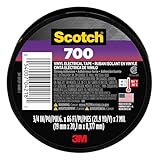
You know that heart-stopping moment when you find your beloved pet’s teeth marks all over a vital power cord? Mine usually comes with a side of profanity and a frantic mental inventory of every extension cord in the house. Suddenly, the question everyone asks themselves, even if they don’t say it out loud, is: can electrical tape fix a chewed cord? It’s a desperate hope, isn’t it? That a cheap roll of sticky stuff can save you from a costly replacement or, worse, a potential fire hazard. I’ve been there, staring at a frayed mess, wondering if I was about to pull off a DIY miracle or just make things worse.
For years, the internet has been awash with quick fixes and ‘life hacks’ that promise the moon. But when it comes to electrical safety, cutting corners can have serious consequences. So, let’s cut to the chase: is electrical tape the superhero we need, or just another overhyped band-aid?
The Myth of the Mighty Electrical Tape Repair
Look, I’ve seen it all. Dogs, cats, hamsters with tiny, sharp incisors – they all seem to have a vendetta against power cords. My first dog, a terrier named Buster, once went through the power cord of my top-of-the-line gaming console. I was furious, mostly at myself for leaving it accessible.
In a panic, I grabbed the roll of black electrical tape I always kept in my junk drawer. It felt like a legitimate, if slightly amateur, fix. I wrapped it around the exposed wires, feeling a fleeting sense of accomplishment. Did it look okay?
For a minute, yes. Did it work? Technically, the device powered on.
Was it safe? Absolutely not, and I’m kicking myself now for even considering it a viable solution back then. This initial thought process, the desperate ‘can electrical tape fix a chewed cord’ impulse, is what leads so many of us down the wrong path. It’s the allure of a quick, cheap fix that overrides common sense when we’re stressed about a damaged appliance.
The truth is, electrical tape is designed for insulation, not structural repair. It’s made of vinyl and is great for covering up bare wire ends to prevent short circuits or accidental shocks when you’re dealing with minor nicks, not deep gouges. When a cord is ‘chewed,’ you’re usually looking at more than just a surface scratch. You’ve got insulation stripped away, potentially exposing the conductive metal strands within.
Wrapping that with electrical tape is like putting a flimsy sticker over a deep cut – it might cover it up, but it’s not actually healing anything. In fact, the stretchy nature of electrical tape means it can pull away or lose its grip over time, especially if the cord bends or moves.
This can expose the wires again, or worse, create a situation where the tape itself overheats if there’s a partial short circuit occurring underneath. I learned this the hard way when a repaired extension cord started feeling warm to the touch after a few weeks of use.
Thankfully, I unplugged it before anything serious happened. That’s the kind of surprise you don’t want.
Many DIY articles will tell you it’s fine for temporary fixes, but that’s a dangerous generalization. What’s ‘temporary’ to one person might be ‘long enough to cause a fire’ to another.
The common advice often simplifies the issue to ‘just wrap it tightly.’ This completely ignores the underlying problem: the integrity of the cord’s insulation is compromised. Electrical tape can’t magically restore the protective layer that was ripped away by teeth.
It’s a superficial cover-up, a placebo for a problem that needs a real solution. The very nature of electrical tape – its flexibility and adhesive properties – is its downfall when it comes to significant cord damage.
It’s not designed to withstand the stress and strain that a repaired cord will inevitably endure.
When Does ‘good Enough’ Become Dangerous?
Let’s be brutally honest: for a tiny, superficial nick where the outer jacket is barely scratched and no metal is exposed, electrical tape might suffice as a very temporary measure. Think of it like a tiny scratch on your car’s paint job that you slap a piece of clear tape on to prevent rust. It’s not ideal, but it might hold off the inevitable for a little while. However, with cords, the stakes are exponentially higher. If you can see the shiny metal strands of the wire itself, or if the damage is more than a millimeter or two deep, you’re playing with fire. Literally.
I remember a time I tried to ‘fix’ a phone charger that had been gnawed on by my sister’s rabbit. It was a small gap, I thought. I wrapped it meticulously with good quality electrical tape, the kind that feels thicker and stickier.
It held for about two days. Then, one afternoon, my phone refused to charge.
I pulled the charger out, and the tape was warm, slightly melty, and smelled faintly of burnt plastic. The wires underneath looked worse, almost fused in places. That’s the thing about electrical faults – they don’t usually announce themselves politely. (See Also: Can I Use Electrical Tape To Connect Wires )
They just happen. That experience taught me a valuable lesson: ‘good enough’ in electrical repairs is an illusion. There’s safe, and there’s unsafe. There’s no middle ground when it comes to exposed wires.
The common advice often leans into the ‘temporary fix’ angle, which is a slippery slope. People think, ‘Oh, I’ll just use it until I can buy a new one.’ But ‘until’ can be a long time when you’re used to having a functional appliance.
The cord keeps getting plugged and unplugged, moved around, maybe even jostled. The tape can loosen, shift, or degrade, especially with heat from the motor or charger. This is where the real danger lies.
A seemingly ‘fixed’ cord can become a hidden hazard, waiting for the right moment to short circuit, cause a fire, or deliver a nasty shock. The physical integrity of the wire is compromised, and no amount of vinyl tape can restore that. You’re basically masking a serious problem, which is far more dangerous than acknowledging it and taking proper action.
Consider the pressure and flexing a cord undergoes. It’s not static.
Every time you plug it in, unplug it, or even just move the appliance, that chewed section is stressed. Electrical tape, by its nature, is flexible.
It’s not meant to be a rigid splint. It’s a flexible insulator. When that flexibility is subjected to the constant tugging and bending at a damaged point, the adhesive can fail, the tape can stretch and tear, and the underlying issue is exposed.
The common misconception is that the stickiness of the tape is the primary function. While important, its insulating properties are also key, and those properties are compromised when the tape is stretched thin over damaged wire, or when it starts to peel away due to mechanical stress.
The Science (or Lack Thereof) Behind the Tape
Let’s talk about what electrical tape actually is. It’s primarily made of polyvinyl chloride (PVC) – that’s the ‘vinyl’ part. It’s then coated with an adhesive, usually a rubber-based or acrylic one. The key properties that make it useful for electricians are its flexibility, its ability to stretch and conform to irregular shapes, and its dielectric strength. Dielectric strength is basically how well it can resist electrical current. For standard electrical tape, this is usually rated around 10 kilovolts per millimeter (kV/mm). That sounds impressive, right? Well, it is, for a thin layer of plastic. But here’s the catch: that rating is for undamaged, properly applied tape.
When a cord is chewed, especially if the metal conductors are exposed, you’re dealing with a situation far beyond what electrical tape is designed for. The tape itself isn’t designed to be the primary structural component holding wires together. It’s an insulator applied over intact insulation or conductors. If you’ve got gaps, frayed strands, or outright missing insulation, you’re asking the tape to do more than it’s capable of. The adhesive might hold the tape together, but it doesn’t bond the underlying wires or magically re-insulate them. Think of it like trying to patch a leaky pipe with duct tape. It might slow the drip for a bit, but it’s not a permanent fix, and the pressure will eventually win.
A common mistake people make is not using enough tape, or not wrapping it tightly enough. They might do one or two layers, thinking that’s sufficient. But to even approach the original insulation’s protective capability, you’d need multiple, thick layers, applied with consistent tension. Even then, you’re relying on the tape’s adhesive to maintain pressure and continuity.
Over time, especially with heat cycles from the appliance, that adhesive can weaken. Furthermore, many chewed cords aren’t clean breaks.
There are often jagged edges of plastic insulation and frayed metal strands. Wrapping tape over these irregularities creates air pockets and weak points, reducing the effective dielectric strength and making the repair less reliable. According to 3M, a leading manufacturer of electrical tape, their Super 33+™ Vinyl Electrical Tape is designed for use on conductors rated up to 600V and operating temperatures up to 176°F (80°C). This is for proper application on intact wires, not for repairing significant damage where you have exposed conductors and compromised structural integrity.
The real danger isn’t just the immediate risk of a shock or short. It’s the insidious nature of a faulty repair. The tape might hold for a while, giving you a false sense of security. But as the cord flexes, heats up, and cools down, the adhesive can degrade, and the insulation can separate. This creates an intermittent connection, which can cause arcing – tiny electrical sparks that can generate a lot of heat. Over time, this heat can melt the tape and surrounding plastic, potentially igniting nearby materials. So, while you might think you’ve saved a few bucks, you could be setting yourself up for a much more expensive and dangerous problem down the line.
Real-World Scenarios: When It Fails Miserably
I once had a friend, let’s call him Dave, who was adamant that electrical tape was the ultimate fix-all. He’d ‘repaired’ the frayed end of a lamp cord with a liberal amount of tape. It looked a bit messy, like a black bandage, but he swore it was fine.
A few weeks later, his living room filled with smoke. Turns out, the tape had slipped, exposing a few strands of copper. These strands then shorted against each other, creating a significant arc that ignited the dust bunnies under the couch. The fire department put it out, but the damage was extensive.
Dave lost a couch, a TV, and nearly his entire apartment. All because he thought electrical tape could magically fix a fundamentally damaged cord. His story is a stark reminder that when we ask ‘can electrical tape fix a chewed cord?’, the answer is almost always a resounding ‘no’ when the damage is significant. (See Also: Can Electrica Tape Catch On Fire )
Another scenario I’ve encountered firsthand involved a power strip that had been attacked by a family of mice. They’d nibbled at the cord leading into the strip itself. My initial thought was the same as everyone else’s: ‘grab the tape!’
I wrapped it up, feeling smug about my resourcefulness. The power strip seemed to work for a bit. Then, randomly, it would cut out. Sometimes it would flicker.
I’d wiggle the cord, and it would come back on. This intermittent connection was incredibly frustrating and, looking back, incredibly dangerous. The ‘fix’ was creating unstable power flow, which can damage the connected devices and, more importantly, pose a fire risk due to arcing.
The tape wasn’t providing a solid, reliable connection; it was just a loose cover over a damaged internal structure. Eventually, the entire power strip fried itself, taking a couple of my chargers with it.
The cost of replacing those chargers and the power strip far outweighed the cost of a new cord.
The common advice often neglects the physical realities of cord construction. Most appliance cords aren’t just single wires.
They are made of multiple strands of copper, insulated individually, and then bundled together within an outer jacket. When a cord is chewed, it’s not just the outer jacket that’s damaged; the individual wire insulation can be compromised, and the metal strands can be frayed or broken. Electrical tape, being a simple sheet of vinyl, cannot recreate that complex, layered insulation.
It can’t rejoin broken strands of copper or re-insulate them individually. It’s a single, relatively thin layer applied externally.
This is why, even if it looks like you’ve covered the damage, the underlying electrical integrity is gone. The risk isn’t just a shock; it’s a fire hazard caused by overheating and arcing within the damaged section, especially if the tape starts to melt or peel away.
I also remember helping a neighbor who had a ‘repaired’ extension cord. The plug end had been partially chewed. She’d wrapped it with electrical tape. It looked surprisingly neat.
However, the plug itself was a bit loose in the socket. When she plugged in a vacuum cleaner, the connection wasn’t solid. The current draw was high, and the loose connection started to arc. The tape, being flammable plastic, caught fire.
Thankfully, she was right there and quickly unplugged it, but the plug end was melted and charred. The tape had failed not because it wasn’t sticky, but because the underlying physical connection it was supposed to protect was inherently unstable and generating heat. This highlights that even if the wires inside aren’t directly exposed, a damaged plug or connector can be just as dangerous, and tape is definitely not the answer there either.
The Only ‘fix’ That Actually Works
So, if electrical tape isn’t the answer, what is? When it comes to a chewed cord, there are really only two safe and reliable options. Option one: replace the entire cord. If the cord is detachable from the appliance (like a laptop charger or a power strip), this is usually the easiest and safest route.
You can often buy a direct replacement from the manufacturer or a reputable third-party supplier. Make sure the connector type and gauge of the wire match exactly. Using a cord with the wrong specifications can be just as dangerous as using a damaged one. This is what I ended up doing for my gaming console after Buster’s little incident.
It cost me about $40, which felt like a bargain compared to the potential cost of a fire or a new console.
Option two: replace the entire appliance. If the cord is permanently attached to the appliance (like a toaster, a blender, or a lamp), and you’re not comfortable or capable of safely replacing the cord assembly, then the safest bet is to get rid of the appliance entirely. I know that sounds drastic, and it’s incredibly wasteful, but safety has to come first. I once had a beloved vintage fan with a permanently attached cord that had seen better days – frayed and cracked from years of use.
I considered getting the cord replaced by an electrician, but the quotes I got were upwards of $150. For a fan that was probably only worth $50 at its prime, it just didn’t make financial sense. (See Also: Can I Substitute Duct Tape For Electrical Tape )
So, reluctantly, it went to the recycling center. This is a tough pill to swallow, especially with older or sentimental items, but it’s the responsible choice.
There’s a middle ground, which is hiring a qualified electrician to replace a permanently attached cord. For high-value appliances or items where sentimental value outweighs the cost of repair, this can be a viable option. An electrician has the tools, knowledge, and experience to safely detach the old cord and install a new one that meets all safety standards. This is the best approach if you want to save the appliance and make sure it’s done right.
I’ve only done this once, for a high-end sewing machine I inherited. The electrician charged me about $120, but he did a fantastic job, and the machine is now safe to use.
It’s definitely more expensive than a DIY attempt with tape, but the peace of mind is invaluable. It’s important to get a quote beforehand, as the cost can vary significantly based on the appliance and the complexity of the job.
For the sake of completeness, let me address the very specific scenario where someone might consider splicing wires and using tape. This involves cutting the damaged section out entirely, stripping the wires, joining them with proper wire nuts or crimp connectors, and then insulating the connections.
This is not a simple tape job. If you’re not trained in electrical work, this is incredibly risky.
Even with wire nuts, the external insulation needs to be solid. The common advice for ‘can electrical tape fix a chewed cord’ often glosses over the fact that you’d need to cut out the damaged section, which is rarely a clean break. You’re left with two ends of wire that need to be joined securely and then insulated.
Electrical tape alone is not sufficient for this kind of repair. Proper connectors and heat-shrink tubing are usually required for a safe, lasting fix.
This is why professionals do it; they have the right materials and techniques.
| Repair Method | Pros | Cons | My Verdict |
|---|---|---|---|
| Electrical Tape | Cheap, readily available, looks like a quick fix. | Does not restore structural integrity, can fail due to heat/flexing, fire/shock hazard. | Absolutely NOT for chewed cords. A dangerous illusion of a fix. |
| Replacing the Cord (detachable) | Relatively inexpensive, restores original safety, easy DIY for many. | Requires finding the correct replacement part, may involve minor disassembly. | The best DIY option for detachable cords. Safe and effective. |
| Replacing the Appliance | Guarantees safety, eliminates risk entirely. | Can be expensive, wasteful if appliance is otherwise fine. | Safest option for permanently attached cords if DIY replacement isn’t feasible. |
| Professional Cord Replacement | Highest safety assurance, preserves valuable/sentimental items. | Can be expensive, requires finding a qualified technician. | Excellent option for high-value or permanently attached cords when DIY isn’t an option. |
People Also Ask
Is It Safe to Tape a Chewed Electrical Cord?
No, it is generally not safe to simply tape a chewed electrical cord. While electrical tape provides insulation, it cannot restore the structural integrity of the cord’s internal wires or its protective outer jacket. A chewed cord often has exposed metal conductors or damaged insulation, which tape cannot reliably repair. This can lead to short circuits, overheating, fire hazards, and electric shock.
What Can I Use Instead of Electrical Tape for a Cord Repair?
For a chewed cord, electrical tape is not a suitable replacement. Instead, you should replace the damaged cord entirely if it is detachable from the appliance. If the cord is permanently attached and you are not comfortable replacing it, the safest option is to replace the entire appliance. For specific types of repairs that involve splicing wires (which is highly discouraged for DIYers on power cords), professionals use wire nuts, crimp connectors, and heat-shrink tubing, not just tape.
How Much Does It Cost to Fix a Chewed Power Cord?
The cost to ‘fix’ a chewed power cord ranges from very little to a lot, depending on the actual solution. Simply taping it is cheap but dangerous. Replacing a detachable cord can cost anywhere from $10 to $50, depending on the appliance and cord type. Having a professional replace a permanently attached cord can cost $100 to $300 or more. In many cases, replacing the entire appliance is the most cost-effective and safest solution, costing whatever a new appliance would.
Can a Frayed Cord Cause a Fire?
Yes, a frayed electrical cord can absolutely cause a fire. Fraying means the protective insulation is worn away, exposing the conductive wires. If these wires come into contact with each other, or with a conductive surface, a short circuit can occur. This short circuit can generate intense heat, leading to arcing (electrical sparks) that can ignite nearby flammable materials like dust, carpet, or wood. Damaged cords are a significant fire hazard.
Verdict
So, to circle back to the burning question: can electrical tape fix a chewed cord? The short, blunt answer is: no, not safely or reliably. It’s a tempting quick fix, a little black strip of hope against a chewed-up mess, but it’s a false economy. You might save a few bucks in the short term, but you’re gambling with your safety and potentially your entire home. I’ve learned this through experience, and I’ve seen the disastrous consequences for others.
The reality is, electrical cords are not designed to be ‘healed’ with adhesive tape. The damage from chewing compromises the internal structure in ways that a flimsy vinyl strip can’t rectify. You’re left with an unstable, dangerous situation that’s just waiting to spark. It’s a hard lesson, but one worth learning before you find yourself in a smoky, dangerous situation.
If you find a chewed cord, don’t reach for the tape. Reach for your wallet to buy a replacement cord or appliance, or for your phone to call a qualified electrician if it’s a complex situation. Your peace of mind, and the safety of everyone around you, is worth far more than the price of a new cord.