I remember standing in my dimly lit garage, a tangle of wires from a project that had gone sideways. I needed to secure a few connections temporarily, and all I had within arm’s reach was a roll of that trusty black gaffer tape. “Can gaffer tape be used as electrical tape?” flashed through my mind. I’d seen it used for everything else, from holding down cables on stage to patching up a leaky tent. Surely, it could handle a bit of low-voltage wire.
So, I went for it. Fast forward a few hours, and a faint smell of ozone started creeping into the air. Not good. That little experiment taught me a valuable, albeit slightly smoky, lesson about the difference between tapes that stick and tapes that actually insulate.
Gaffer Tape: The Stagehand’s Best Friend, but What About Sparks?
Let’s get this straight right off the bat: Gaffer tape is a miracle for live production, film sets, and general-purpose repairs where you need something strong, residue-free, and easy to tear. It’s got this fabric backing, usually cotton or a blend, coated with a surprisingly strong adhesive that doesn’t leave a sticky mess behind when you peel it off, even after weeks or months. This is its superpower. For rigging cables, marking spots, or even holding a prop together in a pinch, it’s fantastic.
I’ve pulled off gaff tape that’s been baking in the sun for a summer, and while it was a bit stiff, the surface underneath was usually clean. That’s a huge deal when you’re working on a set where you can’t afford to spend hours cleaning adhesive residue.
The adhesive itself is rubber-based, designed for flexibility and a strong initial tack without being permanent. It conforms well to surfaces, which is why it’s so good at keeping cables neat and tidy on the floor. It’s also relatively abrasion-resistant, which is important when cables are getting stepped on all day. I’ve seen gaffer tape hold up under conditions that would make duct tape curl up and die.
But here’s the kicker: its primary function isn’t insulation. It’s about adhesion, security, and clean removal.
The fabric weave, while great for tearing, isn’t inherently designed to prevent electrical current from passing through it. Think of it like using a strong handkerchief to stop a water leak – it might hold for a bit, but it’s not what it was built for.
The tactile feel of gaffer tape is also distinct. It has a matte finish, so it doesn’t reflect light on camera, which is why it’s a staple in the film industry. It feels substantial in your hand, not flimsy like some other fabric tapes. When you tear it, it makes a satisfying ripping sound, and you get a clean edge. This is a far cry from trying to cut duct tape cleanly, which often leaves you with raggedy edges that snag on everything. So, while its strengths are undeniable in its intended applications, we need to think critically about its suitability for electrical work.
Electrical Tape: Built for the Job, No Compromises
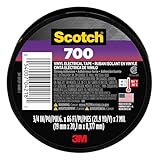
Electrical tape, on the other hand, is engineered with a singular, vital purpose: to insulate and protect electrical connections. It’s typically made from vinyl (PVC) or a rubber-based compound, and its primary characteristic is its dielectric strength. This means it’s designed to resist electrical current. The adhesive is also formulated differently – it’s sticky, yes, but in a way that makes sure a tight, long-lasting seal that won’t degrade or conduct electricity. When you wrap electrical tape around a wire, you’re not just securing it; you’re creating a barrier. This barrier needs to withstand voltage, temperature fluctuations, and environmental exposure without failing. (See Also: Can I Use Electrical Tape To Connect Wires )
I remember a time I was helping a buddy rewire a vintage amplifier. He tried to use some generic cloth tape I had lying around, and within a week, he was getting static shocks just touching the chassis. We had to pull it all off and re-wrap it with proper vinyl electrical tape. The difference was night and day. The vinyl tape stretched slightly as you applied it, allowing for a smooth, overlapping layer that sealed out moisture and prevented arcing. It felt thin but incredibly tough, and the adhesive became almost part of the tape itself once it set.
The common advice you’ll find everywhere is that you must use electrical tape for electrical work, and honestly, it’s sound advice. It’s relatively inexpensive, readily available, and explicitly designed for the job. Trying to cut corners here is just asking for trouble down the line. The common advice is right for once: don’t mess around with the wrong tape for electrical applications. The tape’s ability to stretch is also a key feature. When you wrap it, it conforms tightly to the wire and the connector, creating a uniform, gap-free layer. This prevents any potential paths for electricity to escape. Gaffer tape, with its fabric weave, just doesn’t offer that level of protection.
My Stumble: The ‘close Enough’ Gaffer Tape Incident
Okay, confession time. There was this one project – a DIY LED strip light installation under my kitchen cabinets. Everything was going swimmingly until I realized I’d run out of the proper low-voltage wire connectors. I had a roll of high-quality, black gaffer tape sitting right there. The wires were low voltage, maybe 12 volts, nothing that would fry a toaster. I figured, “What’s the harm? Gaffer tape is super strong, it’ll hold these connections together and keep them from touching anything.” I wrapped it up, feeling pretty clever about my on-the-fly solution. It looked neat, too, with the black tape blending in.
For about two weeks, it was fine. Then, one evening, while I was making dinner, I noticed a faint, acrid smell. A quick investigation led me to the cabinet strip lights. One of the connections, where I’d used the gaffer tape, was warm to the touch. Not just warm, but hot. The gaffer tape had started to melt, and the adhesive was goo. The fabric fibers, which I had assumed would just hold things in place, were now conducting heat and probably a bit of stray current. I yanked the power immediately, terrified of a fire hazard. Thankfully, nothing caught fire, but it was a stark reminder of why electrical tape exists.
The heat generated by even low-voltage current, especially if there’s a slightly imperfect connection causing resistance, can be significant. Gaffer tape’s adhesive, while strong for its intended uses, isn’t designed to handle that kind of thermal stress. It softened, the fabric lost its integrity, and the connection became exposed. That was the moment I learned that “close enough” in electrical work is a dangerous gamble. The $5 roll of proper electrical tape would have been a much cheaper and safer solution than the potential headache, or worse, that I narrowly avoided.
When Gaffer Tape Might seem Okay (but Still Isn’t)
People often ask if gaffer tape can be used for temporary fixes on low-voltage wiring, or for bundling wires together. And to be blunt, yes, you can physically wrap gaffer tape around wires. It will stick. It will hold them together. On a 12V landscape lighting wire that’s not under any stress, or just tidying up a bundle of speaker wires in a closet where they’ll never be touched or exposed to heat, it might seem to work. It won’t leave a residue, and it’s easy to remove later if you need to. This is where the confusion often arises – it performs adequately in some very limited scenarios where the stakes are extremely low.
However, the problem isn’t always immediate failure. It’s the long-term reliability and the inherent risks. Gaffer tape’s fabric construction means it can absorb moisture, which is a big no-no for electrical insulation. It’s also not designed to withstand the flexing or vibrations that electrical connections often endure. Over time, the adhesive can break down, or the fabric can become brittle, compromising any ‘insulation’ it might offer. Furthermore, electrical tape is specifically tested for its dielectric strength – its ability to withstand a certain voltage before breaking down. Gaffer tape is not. You’re basically guessing at its insulating properties, and that’s a gamble I’m not willing to take.
The common advice is that electrical tape is rated for specific voltages and temperatures. Gaffer tape has no such ratings for electrical use. So, while you might get away with it for a day, a week, or even a month in a perfectly controlled environment, you’re setting yourself up for potential failure. The risk of short circuits, overheating, or even fire is significantly higher. It’s the difference between a temporary patch and a safe, reliable connection. For anything that carries household current (120V or 240V), using gaffer tape is simply out of the question. It’s like using a band-aid to fix a leaky pipe – it might cover the hole for a minute, but it’s not a solution. (See Also: Can Electrica Tape Catch On Fire )
Comparing the Two: Gaffer vs. Electrical Tape
To make it crystal clear, let’s break down what each tape is good for. This isn’t just about what they can do, but what they are designed to do, and where they excel. When you look at the core properties, the distinction becomes obvious. I’ve put together a quick rundown to highlight the key differences:
| Feature | Gaffer Tape | Electrical Tape (Vinyl) | Verdict |
|---|---|---|---|
| Primary Use | Cable management, securing gear, marking stages, temporary fixes | Insulating electrical wires, protecting connections, sealing splices | Clear winner for electrical jobs |
| Material | Cotton or fabric blend with rubber-based adhesive | Vinyl (PVC) or rubber, with electrical-grade adhesive | Vinyl/rubber is designed for insulation |
| Insulation Properties | None specified, fabric can conduct/absorb | High dielectric strength (rated voltage resistance) | Electrical tape is the only safe option |
| Adhesive Residue | Minimal to none, clean removal | Can leave residue if left on too long or exposed to heat | Gaffer tape wins for clean removal, but not for safety |
| Flexibility & Conformity | Good, conforms well but fabric can bunch | Excellent, stretches to form a tight, smooth layer | Electrical tape provides superior sealing |
| Durability | Good abrasion resistance, tears easily by hand | Good abrasion resistance, resistant to chemicals and moisture | Electrical tape handles harsher conditions |
| Cost | Moderately expensive | Inexpensive | Electrical tape is more economical for its purpose |
As you can see, while gaffer tape is a phenomenal tool, it’s in a different category altogether. Its strengths lie in its fabric build, clean removal, and strength for physical applications. Electrical tape’s strengths are its insulating capabilities, flexibility, and suitability for electrical environments. The common advice is to use the right tool for the job, and when it comes to electrical work, that tool is electrical tape.
Real-World Scenarios and What Not to Do
Let’s talk about real-life situations where you might be tempted to substitute gaffer tape for electrical tape and why you absolutely shouldn’t. Imagine you’re wiring up a new appliance, and a section of the cord needs a bit of reinforcement, or maybe a splice needs covering. This is prime territory for electrical tape.
It’s designed to create a secure, insulated barrier that prevents shocks and protects the connection from damage. If you use gaffer tape here, you’re creating a potential hazard.
The fabric can fray, the adhesive can degrade, and the whole connection could become a fire risk or shock hazard. I’ve seen it happen – sparks flying from a seemingly innocent junction box because the wrong tape was used for a repair.
Another common scenario is bundling wires together. While gaffer tape is fantastic for organizing cables on a stage or in a studio because it holds firm and removes cleanly, it’s NOT for the wires themselves. You might bundle a bunch of speaker cables with gaffer tape, which is fine. But if those cables have any exposed connectors or splices within the bundle that need insulation, gaffer tape is the wrong choice. You need to insulate each connection first with electrical tape, and then you can bundle them with gaffer tape if you want that clean, non-reflective look and easy removal for later access.
The temptation to use what’s handy is strong, especially when you’re in the middle of a project and running to the store isn’t an option. However, when it comes to anything involving electricity, especially household voltages, the risk isn’t worth the convenience.
Electrical tape is specifically formulated with dielectric properties that gaffer tape simply does not possess. Think about it: the primary function of electrical tape is to stop electricity. Gaffer tape’s primary function is to stick things together without leaving a mess. They are fundamentally different purposes. (See Also: Can I Substitute Duct Tape For Electrical Tape )
So, if you find yourself asking if gaffer tape can be used as electrical tape for a important connection, the answer is almost always a resounding no. Save the gaffer tape for the stages and studios; grab the proper electrical tape for the wires.
Can Gaffer Tape Insulate Wires?
No, gaffer tape is not designed to insulate wires. While it can physically cover them, its fabric construction and adhesive are not rated for dielectric strength. This means it does not reliably prevent electrical current from passing through it, especially under load or in the presence of moisture. Using it for insulation creates a significant safety risk.
Is Gaffer Tape Safe for Temporary Electrical Fixes?
For very low-voltage applications (like some battery-powered LEDs) in a completely dry and non-important environment, it might hold temporarily. However, it’s still not recommended. The risks of overheating, short circuits, or the adhesive degrading are present. For any household or mains voltage, it is absolutely not safe, even for temporary fixes.
Why Is Electrical Tape Better Than Gaffer Tape for Wires?
Electrical tape is made from vinyl or rubber compounds specifically engineered to resist electrical current (high dielectric strength). It stretches to form a tight, smooth seal that protects connections from moisture and prevents arcing. Gaffer tape, being fabric-based, can absorb moisture and its adhesive isn’t designed for electrical insulation, making it a poor and dangerous substitute.
Can I Use Gaffer Tape to Bundle Electrical Cords?
Yes, you can use gaffer tape to bundle electrical cords together for organization, as long as the individual wires and splices within the bundle are already properly insulated with electrical tape. Gaffer tape is good for keeping groups of cables tidy, but it should not be used as the primary insulation for any individual wire or connection.
Final Thoughts
So, to circle back to that question that started it all: can gaffer tape be used as electrical tape? The short, blunt answer is no. While it’s an amazing tape for a million other things – keeping your gear secure, tidying up your workspace, or even a quick fix on a shoe – it’s just not built for the important job of electrical insulation. My smoky kitchen incident was a wake-up call, and I’ve stuck to the proper stuff ever since.
When you’re dealing with electricity, safety has to be the absolute top priority. That means using products designed specifically for the task. Electrical tape is cheap, it’s readily available, and it does exactly what it’s supposed to do without turning into goo or conducting stray current when things get warm. Don’t gamble with your safety or your property to avoid a quick trip to the hardware store.
Next time you’re working on any electrical project, big or small, make sure you have a roll of proper electrical tape. Keep your gaffer tape for the cables on stage, the props on set, or wherever else its unique properties shine. Stick to the right tool for the job, and you’ll sleep a lot better at night.