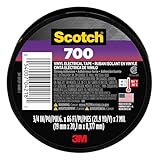
I remember staring at a frayed cord on my old shop vac, the fuzzy insulation looking like a tiny, unraveling sweater. My first instinct, like many people, was to grab the nearest heavy-duty tape I had – which, in my case, was a roll of Gorilla Tape. It’s strong, right? It sticks to damn near anything. So, the question naturally pops up: can Gorilla Tape be used as electrical tape? I’ve wasted enough money on products that promise the moon and deliver a pebble, so let’s cut to the chase.
The short, blunt answer is: not really, and definitely not for anything important. While that instinct to reach for the ‘super strong’ tape is understandable, when it comes to electrical work, safety and specific properties matter more than sheer stickiness.
Why You Should Think Twice About Gorilla Tape for Electrical Jobs
Look, I’m a big fan of Gorilla Tape. For patching holes in tarps, securing loose car trim, or even holding together a broken tool handle in a pinch, it’s my go-to. That fabric reinforcement and aggressive adhesive are no joke.
I once used it to temporarily fix a cracked exhaust pipe on my ancient pickup, and that thing held for nearly six months through rain, sun, and highway speeds. It’s a beast.
But when the sparks start flying, or more accurately, when you’re trying to prevent sparks from flying, that brute force approach can be a problem. Electrical tape isn’t just about sticking things together; it’s about insulation, flexibility, and heat resistance – properties that Gorilla Tape, for all its might, just doesn’t prioritize.
The primary reason Gorilla Tape isn’t a good substitute for electrical tape comes down to its material composition. It’s a cloth-backed tape with a strong, rubber-based adhesive.
While it offers some resistance to moisture and abrasion, it’s not designed to be an electrical insulator. The fabric backing can potentially conduct electricity, especially if it gets damp or if there are nicks and cuts in the wiring that the tape doesn’t fully cover. This is a huge safety hazard. You might think you’re safely wrapping a wire, but if the tape itself is compromised or not a good insulator, you’re leaving yourself wide open to shocks, short circuits, and even fires.
I learned this the hard way when a jury-rigged repair I did with what I thought was tough duct tape (similar concept to Gorilla Tape’s strength) on a low-voltage landscape light transformer actually caused the wiring to corrode faster due to moisture wicking through the fabric. Lesson learned: strength isn’t everything.
The flexibility is another major issue. Electrical tape is designed to be thin and pliable, allowing it to wrap snugly around wires and connectors, conforming to irregular shapes and providing a smooth, continuous layer of insulation. Gorilla Tape, on the other hand, is thick and rigid. Trying to wrap it around intricate wiring or tight corners is a pain, and it’s likely to leave gaps or bulges where moisture and air can get in, compromising the connection and any insulating properties. This lack of conformability means you’re not getting a reliable seal, which is the whole point of electrical tape. For anything more than a temporary, low-risk fix on something non-important, you’re asking for trouble.
What Electrical Tape Actually Does (and Why It Matters)
So, if Gorilla Tape isn’t the answer, what makes proper electrical tape the right tool for the job? It all comes down to its specific design and material science. Electrical tape, often made from PVC (polyvinyl chloride), is engineered with several key properties in mind that Gorilla Tape simply doesn’t possess. The primary function, and frankly the most important one, is insulation. It needs to create a barrier that prevents electricity from flowing where it shouldn’t. This means it has a high dielectric strength, which is a measure of how much electrical field it can withstand before breaking down. You won’t find this spec listed on a Gorilla Tape product page because it’s not what they’re built for.
Think about it: you’re dealing with potentially lethal voltages in many household applications. A cheap roll of electrical tape, designed for this purpose, will give you a much higher degree of safety than a super-strength utility tape. This insulation needs to be reliable even under stress. Electrical tape is also designed to be somewhat self-amalgamating, meaning layers of the tape fuse together over time, creating a solid, smooth insulating sheath. This is especially true for higher-end, professional-grade tapes.
Beyond insulation, electrical tape needs to be flexible. Wires twist, bend, and connect in all sorts of awkward places. The tape needs to stretch and conform without tearing or losing its integrity. This is where Gorilla Tape’s rigidity becomes a serious drawback.
You can’t get that smooth, tight wrap that makes sure complete coverage and protection. Plus, electrical tape is designed to withstand a range of temperatures, from the cold of a utility box in winter to the heat generated by electrical current. While Gorilla Tape is pretty tough, it’s not specifically tested or rated for these thermal fluctuations in the same way. (See Also: Can I Use Electrical Tape To Connect Wires )
I’ve seen standard electrical tape hold up in engine bays (though not ideal, it’s better than nothing in a pinch), but I wouldn’t trust Gorilla Tape in that kind of heat-generating environment long-term.
Finally, electrical tape is designed to be resistant to common environmental factors like moisture, oil, and solvents that you might encounter in an electrical setting. While Gorilla Tape is pretty water-resistant, its adhesive can break down when exposed to certain chemicals, and the fabric can wick moisture. When you’re dealing with electrical connections, keeping moisture out is most important to preventing corrosion and short circuits. It’s this combination of factors – insulation, flexibility, temperature resistance, and environmental protection – that makes dedicated electrical tape the only sensible choice.
Gorilla Tape vs. Electrical Tape: A Direct Comparison
Let’s break down how these two tapes stack up against each other. It’s not just about which one is stronger; it’s about which one is appropriate for the job. I’ve put together a little table here to show you the key differences. Remember, this isn’t about saying one is ‘bad’ and the other is ‘good’ in a general sense, but rather about their intended uses and performance in specific scenarios. My experience tells me that trying to force a tape into a role it wasn’t designed for usually ends up costing more time and money in the long run, not to mention potential safety issues.
| Feature | Gorilla Tape | Standard Electrical Tape (PVC) | My Verdict |
|---|---|---|---|
| Adhesive Strength | Very High | Moderate to High | Gorilla Tape wins on sheer tackiness, but it’s overkill for electrical. |
| Insulation Properties | Poor/None | Excellent | Electrical tape is the clear winner; this is its primary job. |
| Flexibility/Conformability | Low to Moderate | Very High | Electrical tape wraps smoothly; Gorilla Tape is stiff and bulky. |
| Temperature Resistance | Moderate | Good (Specific ratings vary) | Electrical tape is formulated for electrical heat. |
| Durability (Abrasion/Tear) | Very High | Moderate | Gorilla Tape is tougher, but this isn’t the main requirement for wiring. |
| Water/Moisture Resistance | Good | Good (Varies by type) | Both are decent, but the fabric on Gorilla Tape can wick moisture. |
| Application Suitability | General purpose, heavy-duty repairs, sealing | Electrical wiring insulation, splicing, bundling wires | Use the right tool for the job. They are not interchangeable. |
Now, you might see the ‘Durability’ row and think, ‘Aha! Gorilla Tape is tougher, so it must be better.’ And I get that thinking. We often equate ‘tough’ with ‘good.’
But in the electrical world, ‘tough’ isn’t the most important quality. What you need is reliable insulation that won’t fail, even if it’s a bit thinner or less resistant to a knife edge.
The aggressive adhesive on Gorilla Tape can also be a problem. While it’s great for sticking to rough surfaces, it can leave a sticky residue that’s hard to remove from wires, potentially interfering with future repairs or connections. Standard electrical tape is designed to stick well but also to be removed without leaving a mess, which is a practical consideration for electricians and DIYers alike.
Also, consider the thickness. Gorilla Tape is significantly thicker than electrical tape. This bulk can make it difficult to work with in tight spaces or when making multiple connections. It can prevent junction boxes from closing properly or create strain on the wires themselves. Electrical tape, being thin, allows for neat, compact insulating wraps. The self-amalgamating nature of some electrical tapes is another point where Gorilla Tape falls short. This property allows layers of tape to fuse together, creating a single, unified insulating barrier that’s much more secure than just stacked layers of adhesive. Gorilla Tape doesn’t do this; it remains distinct layers. It’s a subtle but important difference for long-term electrical safety.
Common Mistakes and What to Watch Out For
The biggest mistake, hands down, is thinking that any strong tape can be a substitute for proper electrical tape. People see the shiny, tough roll of Gorilla Tape and think, “This will hold better!” It’s a tempting shortcut, but it’s one that can lead to serious problems. I’ve seen folks try to patch up a damaged cord with duct tape, packing tape, or yes, even Gorilla Tape, especially in a DIY or emergency situation. The immediate thought is, “It’s covered, it’s stuck, good to go.” But that’s where the real trouble starts. You’re not just insulating; you’re potentially creating a fire hazard or setting yourself up for a nasty shock down the line.
Another common pitfall is not using enough tape. Even with proper electrical tape, if you only wrap a tiny bit around a damaged section, you’re not providing adequate insulation. You need to overlap the tape generously, extending it well beyond the damaged area onto the undamaged cable sheath. This creates a secure, continuous barrier. With Gorilla Tape, this problem is amplified because it’s so stiff. You’re less likely to achieve that smooth, overlapping wrap, and more likely to end up with gaps or a lumpy, uneven repair that offers poor protection. It’s the difference between a carefully applied bandage and just slapping a patch on a wound; one is effective, the other is a gesture.
People also often underestimate the importance of the type of electrical tape. There are different grades and types of electrical tape for different applications. A cheap, generic roll might be fine for bundling some low-voltage wires in a neat way, but for higher voltage or exposed wiring, you’ll want a higher-quality tape with better dielectric strength and temperature resistance. You might be tempted to grab the Gorilla Tape because it seems more ‘heavy-duty,’ but in this case, ‘heavy-duty’ translates to ‘wrong tool for the job.’ Always check the specifications if you can, especially for anything beyond basic low-voltage projects. For instance, some tapes are rated for up to 1000V, while others are for lower voltages.
Finally, a mistake I see even with proper electrical tape is not preparing the surface. If you’re trying to tape over a dirty, oily, or wet wire, nothing will stick properly, regardless of the tape. Clean the wire thoroughly with an appropriate solvent if necessary, make sure it’s dry, and then apply the tape. Gorilla Tape’s adhesive is strong, but even it can be defeated by a dirty surface. When you’re dealing with electrical work, every step matters. Don’t cut corners on preparation or material choice. It’s like building a house on a faulty foundation; it’s only a matter of time before something collapses.
Can Gorilla Tape Be Used as Electrical Tape for Temporary Repairs?
For extremely low-voltage, non-important applications where safety is not a major concern and the repair is truly temporary (like holding a loose wire in place for a few hours until you can get the right tape), maybe. However, it is still not recommended. The risk of conductive paths, moisture ingress, or the adhesive failing under heat is too high. Standard electrical tape is inexpensive and readily available; it’s always the safer and more responsible choice, even for temporary fixes. (See Also: Can Electrica Tape Catch On Fire )
Real-World Scenarios: When It might Seem Okay (but Isn’t)
Let’s talk about those situations where you might be tempted to use Gorilla Tape on electrical wires. Picture this: you’re camping, and your lantern’s power cord has a small nick in it.
You’ve got Gorilla Tape in your kit, but no actual electrical tape. The lantern is low voltage, right? It’s probably fine.
WRONG. Even low voltage can cause issues if the insulation is compromised. Moisture from dew or rain could get into that nick, and while Gorilla Tape might keep the bulk of it out, the fabric backing can still act like a wick.
Plus, if you accidentally touch that exposed wire while fiddling with something else, even low voltage can give you a jolt. The risk isn’t worth the convenience. I learned this when a small nick on my portable fridge cord, taped with something similar to Gorilla Tape, got damp and caused the fridge to intermittently shut off.
Frustrating, and a bit alarming.
Another common one: bundling wires behind your entertainment center or computer desk. You want to tidy up those spaghetti-like cords. You grab Gorilla Tape because it’s strong and will hold them tight.
Sure, it might look neater for a while. But here’s the catch: electrical tape is designed to be flexible and not leave residue. If you ever need to move those components or add another cable, peeling off Gorilla Tape can be a nightmare. It leaves that gummy, sticky residue that’s a pain to clean, and the rigidity of the tape might actually put stress on the individual wires you’re trying to protect.
Proper cable ties or even a few wraps of actual electrical tape are far better for this because they are designed for repeated use and removal without damage.
Consider a car repair. Maybe a wire has chafed through slightly in the engine bay. Your instinct is to reach for the toughest tape you have.
But the engine bay is a harsh environment – it gets hot, it gets greasy, and there’s vibration. While Gorilla Tape is tough, its adhesive isn’t formulated for the constant thermal cycling and oil exposure you get under the hood.
A proper automotive-grade electrical tape or, better yet, a heat-shrink tubing solution would be far more reliable and safer long-term. I once used Gorilla Tape to temporarily secure some loose wiring on a trailer hitch. It held up for a few weeks, but then the heat from the exhaust pipe nearby started to degrade the adhesive, and the tape started to sag and peel. Had it been a important brake light wire, that could have been a serious problem.
The core issue in all these scenarios is that Gorilla Tape is a general-purpose, heavy-duty adhesive. It’s like using a sledgehammer to crack a nut. It can do the job, but it’s inefficient, potentially damaging, and far less safe than using the tool specifically designed for the task. Electrical tape’s specialized properties are there for a reason. They make sure safety, longevity, and reliability for electrical connections, which are often the most important and dangerous parts of any system. So, even when it seems like a quick fix, resist the urge. Grab the right tape. (See Also: Can I Substitute Duct Tape For Electrical Tape )
Practical Tips for Using Electrical Tape (the Right Way)
Alright, so we’ve established that Gorilla Tape isn’t the magical electrical solution many might hope for. But when you do need to work with electrical tape, how do you get it right? It’s not rocket science, but there are a few pointers that can make a big difference in safety and effectiveness. First off, always start with clean, dry wires. If there’s any grease, dirt, or moisture on the cable, the tape won’t adhere properly, and your insulation job will be weak from the start. I usually give the area a quick wipe with isopropyl alcohol and let it dry completely. It takes an extra minute, but it’s worth it.
When you’re applying the tape, don’t just wrap it around once or twice. You need to overlap each layer by at least half the width of the tape. Start a good inch or two before the damaged section and extend at least an inch or two past it. This creates a solid, smooth barrier. Stretch the tape slightly as you wrap. This helps it conform to the wire and activates the adhesive. You’ll feel it grip better. Don’t overstretch, though, or you’ll thin it out too much and risk tearing it. The goal is a smooth, snug wrap with no wrinkles or gaps.
For splices, where you’re joining two wires, the process is similar, but you need to pay extra attention to building up the layers. After insulating the individual wires, you’ll wrap over the entire splice, creating a uniformly insulated cable. Some people like to finish off with a wrap of black vinyl tape and then maybe a layer of colored tape for identification (like red for positive, black for negative, though colors vary by system). This adds an extra layer of protection and makes it easy to identify the connection later.
Another tip: keep your electrical tape in a cool, dry place. Heat can cause the adhesive to soften and the tape to stick to itself in the roll, making it difficult to unroll cleanly. If your tape feels sticky or gummy when you try to use it, it’s probably old and degraded and should be replaced. A good quality roll of electrical tape isn’t expensive, and it’s a vital tool for any toolbox. I always keep a fresh roll in my car and my workshop. It’s better to have it and not need it than to need it and be stuck with something inadequate, like trying to use Gorilla Tape where it doesn’t belong.
Can Gorilla Tape Be Used to Hold Wires Together?
Yes, Gorilla Tape can physically hold wires together due to its strong adhesive. However, it should NOT be used as a substitute for electrical tape when insulation is required. Its primary function is mechanical fastening, not electrical insulation. For simply bundling wires neatly where no insulation is needed, it can work, but proper cable management solutions like zip ties or Velcro straps are generally more suitable and less likely to leave residue.
What Is the Difference Between Gorilla Tape and Electrical Tape?
The main difference lies in their intended purpose and material composition. Gorilla Tape is a heavy-duty, general-purpose adhesive tape known for its extreme strength and durability, typically made with a reinforced fabric backing and a strong rubber-based adhesive. Electrical tape, usually made from PVC, is specifically designed for electrical insulation, offering high dielectric strength, flexibility, and resistance to heat and chemicals encountered in electrical applications. Gorilla Tape lacks the important insulating properties needed for safe electrical work.
Is Gorilla Tape Waterproof?
Gorilla Tape is highly water-resistant and can withstand exposure to water and moisture. The adhesive is designed to bond strongly even in damp conditions and the backing provides a good barrier against water penetration. However, it is not completely waterproof in the sense that prolonged submersion might eventually affect its adhesive properties or allow moisture to wick through the fabric backing over extended periods. It’s suitable for many outdoor and wet applications but shouldn’t be relied upon for complete, long-term submersion sealing.
The Final Word on Gorilla Tape and Electrical Work
After years of tinkering, repairing, and generally making a mess with tools and materials, I’ve learned a few hard truths. One of them is that products are designed for specific jobs for a reason. Gorilla Tape is a fantastic product for what it’s meant to do: stick things together with brute force and stand up to abuse. It’s saved my bacon on countless occasions when I needed something strong and reliable for mechanical fixes or general repairs. I’ve even used it to secure tarps in hurricane-force winds, and it held like a champ. It’s the duct tape of the future, in my opinion, for all non-electrical, heavy-duty tasks.
However, when it comes to electricity, you’re playing with a different kind of power. Safety isn’t just about making something look fixed; it’s about making sure it won’t cause harm. The lack of proper insulation, the potential for moisture wicking through the fabric, and the rigidity that prevents a proper seal are all massive red flags. I’ve seen sparks fly, smelled burning insulation, and heard the tell-tale pop of a short circuit, and frankly, I don’t want to see anyone else go through that because they thought a strong tape was a good substitute. It’s just not worth the risk, the potential damage to your electronics, or the danger to yourself. Stick to the tools designed for the job.
So, can Gorilla Tape be used as electrical tape? The honest, no-nonsense answer is a resounding no. For anything involving electrical wiring where insulation is required, you need actual electrical tape. It’s cheap, it’s effective, and it’s designed for safety. Don’t let the temptation of its strength blind you to its limitations. Your wires, your appliances, and your personal safety will thank you for using the right product.
Verdict
Look, I’m all for ingenuity and making do with what you have. I’ve certainly been in situations where I wished I had the ‘right’ tool and had to improvise. But when it comes to electrical work, especially anything beyond simple low-voltage connections, the risks associated with using a tape like Gorilla Tape instead of proper electrical tape are just too high. The strength of Gorilla Tape is in its adhesion and durability for mechanical tasks, not in its ability to safely insulate electrical currents.
If you’re looking at a frayed wire, your first thought should be about insulation and preventing shocks or shorts. Electrical tape is specifically engineered for this, offering the dielectric strength and flexibility needed. Gorilla Tape, with its fabric backing and different adhesive formulation, simply doesn’t meet those safety standards. I’ve seen firsthand how moisture can be wicked into connections or how rigid tape can put stress on wires. It’s a tempting shortcut, but it’s a shortcut that often leads to bigger problems down the line.
My advice? Keep a roll of good quality electrical tape in your toolbox. It’s inexpensive, takes up very little space, and it’s the only reliable way to make sure safety when dealing with electrical insulation. Save the Gorilla Tape for patching up tarps, securing garden hoses, or whatever other heavy-duty, non-electrical tasks it excels at. Don’t try to make it do a job it was never designed for. The question ‘can Gorilla Tape be used as electrical tape’ deserves a clear and firm ‘no’ for anyone who values safety and reliability.