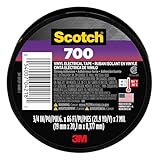
Look, we’ve all been there. You’ve got a wire fraying, a split in a cable, or maybe a temporary fix needed on some outdoor lighting. Your toolbox is staring back at you, and you spy that roll of burly, black Gorilla Tape. It’s supposed to be the stuff of legend, right? It can fix anything, from a leaky boat to a broken… well, anything. But the nagging question lingers: can Gorilla Tape be used for electrical applications? I’ve definitely grabbed for it in a pinch, and I’m here to tell you my honest, no-BS experience.
Let’s cut to the chase: while it’s tempting to think that super-strong tape can handle any job, when it comes to electrical work, things get a bit more nuanced. This isn’t the place for a ‘one-size-fits-all’ solution, and using the wrong thing can be more than just annoying – it can be downright dangerous.
Gorilla Tape vs. Actual Electrical Tape: What’s the Real Difference?
Alright, let’s get down to brass tacks. Gorilla Tape is a beast. It’s thick, it’s sticky, and it feels like it could hold a car together. I remember the first time I used it, trying to patch a split in a garden hose that was more hole than hose. It worked like a charm, held strong through sun and rain, and I honestly thought I’d found the magical solution to all my DIY woes. Then, inevitably, the question pops up: can Gorilla Tape be used for electrical purposes? The simple answer, for most situations, is a resounding ‘no.’ And here’s why:
Gorilla Tape is designed for brute strength and adhesion. It’s made from a strong cloth backing coated with a rubber-based adhesive. This makes it fantastic for sealing, patching, and general repairs where you need something that’s going to stick and resist the elements. It’s waterproof, it holds on to rough surfaces, and it’s tough as nails. Sounds good for electrical, right? Not so fast.
Electrical tape, on the other hand, is a specialized product. It’s typically made from PVC (polyvinyl chloride) or rubber. The key differences lie in its properties: it’s highly flexible, it’s designed to stretch, and importantly, it’s an insulator. This insulation property is most important. Electrical tape is rated for specific voltage levels and is designed to prevent short circuits and protect exposed wires from contact with anything conductive. It also has a specific type of adhesive that won’t degrade or become brittle over time when exposed to the voltages and temperatures found in electrical systems.
Think about it this way: Gorilla Tape’s adhesive is strong, yes, but it’s not designed for the potential heat generated by electrical currents. It can soften, melt, or even become conductive under certain conditions.
And while it’s tough, it’s not necessarily designed to prevent electrical conductivity. In a pinch, for a very low-voltage, non-important application, you might get away with it, but it’s like using a sledgehammer to crack a nut – overkill and likely to cause more problems than it solves. I once tried to wrap a frayed cord on a low-power fan with Gorilla Tape.
It looked okay for a week, but then I noticed the tape felt a bit sticky and warm. I yanked it off and immediately went to the hardware store for proper electrical tape.
That sticky residue and heat concern are real. It’s just not built for the job, and that’s the blunt truth.
When Is ‘temporary’ Actually Just a Bad Idea?
Let’s talk about that feeling of desperation. You’re halfway through a project, maybe wiring up some outdoor lights or fixing a lamp cord, and something goes wrong. A wire splits, a connection feels loose, and you think, ‘Gorilla Tape can fix this.’ I’ve been there. I recall a particularly frustrating evening trying to get a string of fairy lights to work for a patio party. One of the tiny wires had a nick, and I just wanted it to hold until the party was over. My brain immediately went to that super-strong black tape. It felt like a genius move at the time – quick, easy, and it looked… well, it looked like tape.
The problem with using Gorilla Tape for electrical work, even for what seems like a temporary fix, is that the ‘temporary’ can easily become ‘permanent’ in the worst way. Electrical tape is designed to insulate and protect. It’s got specific dielectric strength, meaning it can withstand a certain electrical voltage without breaking down.
Gorilla Tape? Not so much. Its primary job is to stick like mad and resist physical damage.
If that nicked wire or split cable is carrying even a modest current, the heat generated can start to break down Gorilla Tape’s adhesive. It might soften, become gummy, and then you’ve got a sticky mess that’s potentially conductive. This is a recipe for a short circuit, a fire hazard, or just a failed repair that’s now harder to fix properly because you’ve got gooey adhesive everywhere. (See Also: Can I Use Electrical Tape To Connect Wires )
I learned this the hard way when I tried to use it to secure a loose wire on an old extension cord. I figured it was just a visual thing, no big deal. A few weeks later, during a thunderstorm, I noticed a faint smell of ozone. Turns out, the Gorilla Tape had started to degrade from the moisture and the slight heat build-up.
The wire was exposed again, and it was a miracle I didn’t have a much bigger problem. That experience cemented my opinion: if it’s got electricity flowing through it, you need tape designed for electricity.
The common advice to always use proper electrical tape isn’t just corporate speak; it’s genuinely about safety. I’ve seen enough dodgy repairs to know that what looks like a quick fix often leads to a bigger, more expensive, and scarier problem down the line. Trying to save a few bucks or a few minutes by using the wrong tape is just not worth the risk of a fire or electrocution.
Common Mistakes When Using Tape for Electrical Work
People often grab the nearest roll of tape when faced with a wire issue, and this is where things go sideways, fast. One of the biggest blunders is assuming that because a tape is “strong” or “waterproof,” it’s automatically suitable for electrical jobs. Gorilla Tape is a prime example. It’s incredibly strong for physical repairs, but that strength doesn’t translate to electrical insulation. It’s like using a tire patch to fix a leaky gas line – it might hold for a bit, but it’s not designed for the pressures and chemical interactions involved.
Another huge mistake is not understanding the difference between insulating tape and other types of tape. Electrical tape is specifically formulated to be non-conductive. It needs to stretch and conform tightly around wires without leaving gaps where moisture or debris can get in.
It also needs to maintain its integrity under varying temperatures, which can fluctuate significantly in electrical systems. Gorilla Tape, while tough, doesn’t have these properties. Its adhesive can break down with heat, and the tape itself isn’t an insulator in the way proper electrical tape is.
I’ve seen DIYers use duct tape, packing tape, and yes, even Gorilla Tape, on electrical connections. Honestly, it’s baffling.
It looks sloppy and feels inherently wrong the moment you do it. I once saw a friend try to wrap a live wire with duct tape. I nearly had a heart attack. He argued it would ‘hold it together.’
That’s not how electricity works, my friend. It needs to be contained and insulated, not just physically held.
A third common pitfall is thinking that if the wire isn’t carrying high voltage, it’s okay to use something less than ideal. While low-voltage DC circuits (like those in some toys or landscape lighting) might be less immediately dangerous, they still require proper insulation. A short circuit on a low-voltage line can still damage components or, in extreme cases, cause a small fire. Furthermore, a temporary fix with the wrong tape can easily be forgotten, and that wire might later be incorporated into a higher-voltage system or subjected to conditions that make the weak repair fail catastrophically.
The best practice, and the only truly safe practice, is to use tape specifically rated and designed for electrical applications. It’s a small investment for significant peace of mind and safety. Don’t be that person who learns the hard way; always opt for the right tool for the job, especially when electricity is involved.
| Tape Type | Primary Use | Electrical Suitability | Verdict |
|---|---|---|---|
| Gorilla Tape | Heavy-duty general repairs, patching, sealing. | Generally NO. Not an insulator, adhesive can degrade with heat. |
Avoid for electrical. (See Also: Can Electrica Tape Catch On Fire ) |
| Standard Electrical Tape (PVC) | Insulating wires, splicing, bundling cables. | YES. Designed as an insulator, flexible, weather-resistant. |
Recommended. |
| Rubber Splicing Tape | Creating waterproof, insulated splices, high-voltage applications. | YES. Excellent insulation and self-amalgamating properties. |
Excellent for important splices. |
| Duct Tape | Temporary fixes, sealing, bundling (non-important). | NO. Not an insulator, adhesive is not temperature stable. |
Never for electrical. |
Real-World Scenarios: Where Electrical Tape Shines
So, if Gorilla Tape isn’t the answer, what is? Proper electrical tape is your go-to. I’ve got a roll of the standard black vinyl electrical tape in my car kit, my garage, and even my backpacking pack (you never know!). It’s surprisingly versatile for what it is. For instance, I recently had a wire on my bike’s dynamo light start to fray where it entered the housing. It wasn’t a complete break, but it was exposed and could have easily shorted out or let water in.
My first thought wasn’t Gorilla Tape, but rather that trusty roll of electrical tape. I carefully cleaned the area, made sure it was dry, and then stretched the tape as I wrapped it around the damaged section, overlapping each turn by about half. The stretchiness is key here; it allows the tape to conform tightly to the wire, creating a smooth, sealed surface. It looked clean, professional, and most importantly, it provided the necessary insulation and protection against the elements. This kind of repair is where electrical tape truly excels. It’s designed to be flexible enough to wrap around irregular shapes and tight bends without cracking or losing adhesion, and its electrical properties are specifically engineered for safety.
Another scenario where specialized tape matters is repairing damaged insulation on appliance cords. Think about the cord on your vacuum cleaner or a power tool.
If the outer sheath gets nicked or scraped, exposing the inner wires, it’s a serious hazard. You absolutely need to use electrical tape here. You’d wrap it tightly, building up several layers to create a solid, insulated barrier.
For more important or permanent splices, especially in areas that might be exposed to moisture or higher temperatures, rubber splicing tape (often called self-amalgamating tape) is the king. It’s a stretchy, rubbery tape that, when wrapped tightly, fuses to itself, creating a smooth, waterproof, and highly insulated joint.
I used it once to repair a splice on an outdoor power cable that had been damaged by a lawnmower. It was a bit trickier to work with than standard tape, but the resulting connection was incredibly solid and has held up perfectly for years.
This is the kind of reliability you get when you use products designed for the specific job.
The Contrarian View: When might Gorilla Tape Be Okayish?
Now, I know what some of you might be thinking. ‘But I’ve used Gorilla Tape for XYZ electrical thing, and it worked fine!’ And you know what? For certain very specific, low-risk situations, you might be right. My contrarian take is this: everyone says ‘never use Gorilla Tape for electrical,’ and while that’s generally good advice, there are edge cases. I’m talking about situations where the voltage is incredibly low, there’s no risk of significant heat, and the primary goal is simply to prevent a physical part from snagging or looking messy, rather than true electrical insulation.
For example, imagine you have a very low-voltage LED string light, the kind that runs on batteries or a tiny USB power pack. One of the tiny wires, perhaps leading to a single LED, has a minor cosmetic split in its plastic coating. The wire isn’t carrying enough current to generate any noticeable heat, and the risk of a short circuit causing damage is minimal. In that precise scenario, if you absolutely had no electrical tape and just wanted to prevent the wire from snagging on something and breaking completely until you could get to a store, a small, carefully applied strip of Gorilla Tape might serve the purpose of physical protection. It’s not providing insulation; it’s just holding the damaged casing together. (See Also: Can I Substitute Duct Tape For Electrical Tape )
However, and this is a HUGE ‘however,’ this is a slippery slope. It’s incredibly easy to misjudge the voltage, the current, or the potential for heat build-up. What starts as a ‘harmless’ fix on a low-voltage battery-powered device can easily become a habit, leading to truly dangerous applications later on. Furthermore, the adhesive on Gorilla Tape can still degrade over time, even without significant heat, leaving a sticky residue that’s a nightmare to clean up and can attract dirt, potentially creating its own issues.
So, while I admit there might be a microscopic sliver of an exception in the universe where Gorilla Tape could be used for a ‘holding’ function on a truly negligible electrical component, my advice remains firm: always use proper electrical tape. The risk of misjudging the situation and creating a hazard is simply too high.
I’ve seen people use it to wrap around a frayed plug end, thinking they’re saving it. That plug is connected to mains voltage – that’s a fire waiting to happen. Don’t do it.
Get the right tape. It’s cheap, it’s effective, and it’s safe.
Faq: Can Gorilla Tape Be Used for Electrical?
Is Gorilla Tape Safe for Electrical Wires?
No, Gorilla Tape is generally not safe for electrical wires. Its primary function is heavy-duty physical adhesion and sealing, not electrical insulation. The adhesive can break down under heat, and the tape itself is not designed to prevent electrical current from passing through it, which is the main job of electrical tape.
Can I Use Gorilla Tape as a Temporary Fix for an Electrical Cord?
While you might be tempted for a very low-voltage, non-important application, it’s strongly advised against. A temporary fix with Gorilla Tape on an electrical cord can fail due to heat or degradation, leading to short circuits, fire hazards, or further damage. It’s best to use proper electrical tape even for temporary solutions.
What’s the Difference Between Gorilla Tape and Electrical Tape?
Gorilla Tape is a strong, durable, multi-purpose adhesive tape with a cloth backing, designed for heavy-duty repairs. Electrical tape is typically made of PVC or rubber, is highly flexible, and is specifically formulated to be an electrical insulator, capable of withstanding certain voltages and temperatures safely.
Will Gorilla Tape Melt on Electrical Wires?
Gorilla Tape’s adhesive can soften and potentially melt or degrade when exposed to the heat generated by electrical currents, especially in higher-voltage applications. This can compromise its integrity and create a conductive or sticky mess, unlike specialized electrical tape which is designed to handle these conditions.
Conclusion
So, to wrap this up: can Gorilla Tape be used for electrical applications? The overwhelming, no-nonsense answer is no. Its strength lies in holding things together physically, not in safely insulating electrical currents. Think of it like trying to wear a welding glove to perform delicate surgery – it’s overkill for protection but completely wrong for precision and safety.
I’ve seen too many people grab the strongest tape they have, thinking it’s the best solution for a frayed wire, only to create a bigger problem down the line. The risks of fire, short circuits, and even electrocution are simply too high to gamble with. Proper electrical tape, while seemingly less impressive, is engineered for exactly these situations. It stretches, it insulates, and it holds up under conditions that would make Gorilla Tape fail spectacularly.
My advice? Keep a roll of actual electrical tape in your toolbox. It’s cheap, it’s effective, and it’s the only safe choice when you’re dealing with anything that carries a current. Don’t let that tempting roll of heavy-duty tape lead you down a dangerous path.