I remember staring at a frayed wire on my old shop lamp, sparks threatening to fly with every little jostle. My usual go-to electrical tape was nowhere to be found. In a panic, I grabbed the roll of Gorilla Tape sitting nearby. It’s supposed to be this miracle adhesive, right? So, I slapped it on, feeling pretty smug about my resourcefulness. That’s when the real question started nagging at me: can Gorilla Tape work as electrical tape? It’s a question many of us have probably asked when faced with a similar situation. Let’s get down to brass tacks.
Look, I’ve bought my fair share of “miracle” products over the years, only to find they’re mostly hype. Gorilla Tape is one of those products that has built a massive reputation. But when it comes to something as important as electrical insulation, you can’t just wing it. I’ve learned the hard way that not all tapes are created equal, and using the wrong one can be downright dangerous.
Gorilla Tape vs. Electrical Tape: The Raw Differences
Alright, let’s cut to the chase. Can Gorilla Tape work as electrical tape?
My short, blunt answer is: for a very temporary, low-risk fix, maybe. For anything serious, reliable, or permanent?
Absolutely not. And here’s why.
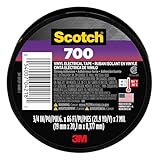
Electrical tape, the stuff you buy specifically for wiring, is designed with a very particular set of properties. It’s typically made from PVC (polyvinyl chloride) and is engineered to be stretchy, conformable, and, most importantly, an insulator.
This insulation rating is key. It means it can withstand certain voltage levels without breaking down. The adhesive on electrical tape is also usually rubber-based, which is designed to stick well to wires and itself but won’t degrade into a sticky mess over time, especially when exposed to moderate heat or sunlight.
Gorilla Tape, on the other hand, is a beast of a different color. It’s a heavy-duty duct tape, reinforced with a mesh fabric and coated with a super-strong, aggressive adhesive. Its primary goal is brute-force adhesion and structural integrity. It’s designed to hold things together, seal gaps, and resist tears. That mesh layer? That’s the biggest giveaway. It’s not designed to be flexible or conformable around tight bends in wiring. It’s rigid. And while it’s incredibly sticky, that aggressive adhesive can become a problem if you ever need to remove it, potentially damaging the wire’s insulation underneath. The material itself isn’t inherently designed for electrical insulation. It’s more about physical strength and bonding power.
I once tried using Gorilla Tape on a garden hose that had a pinhole leak. It held for about three days before the water pressure worked its way under the mesh and peeled it right off. If it can’t handle a garden hose, I’m certainly not trusting it with live electrical current. The material is also thicker and less pliable, making it a nightmare to wrap neatly around splices or connectors.
You end up with bulky, uneven layers that can snag or peel away, exposing the wire underneath. For any DIYer or homeowner, understanding these fundamental differences is a must. Trying to make a square peg fit a round hole here can have serious consequences, from short circuits to fires. So, while the temptation is there to grab the strongest tape you have, remember that ‘strong’ doesn’t always mean ‘safe’ or ‘suitable’.
The Real-World Risks: Why It’s a Gamble
Let’s talk about what can actually go wrong when you decide that Gorilla Tape is going to be your electrical tape. First off, heat. Electrical connections, especially those under load, generate heat.
Regular electrical tape is designed to handle a certain temperature range. Gorilla Tape, with its fabric backing and synthetic adhesive, isn’t. It can soften, melt, or even degrade under sustained heat, compromising its integrity.
Imagine a hot day, a device running for hours, and your Gorilla Tape starts to ooze or lose its grip. That’s a recipe for disaster. I’ve seen cheap duct tapes melt and drip in the summer sun, and while Gorilla Tape is a step up, its fundamental materials aren’t rated for the kind of thermal stress an electrical connection might endure. The adhesive can become gummy, and the fabric can lose its tension, allowing the tape to sag and expose the wire.
Then there’s the issue of insulation breakdown. Electrical tape is rated for a specific dielectric strength – its ability to resist electrical current. Gorilla Tape, while sticky and strong, is not rated for this.
The fabric itself can potentially conduct electricity, or the adhesive might break down and allow current to arc across. This is where the real danger lies. A short circuit isn’t just an inconvenience; it can cause damage to your appliances, trip breakers, and, in the worst-case scenario, start a fire. (See Also: Can I Use Electrical Tape To Connect Wires )
I had a friend who used a heavy-duty duct tape to temporarily fix a wire on his outdoor holiday lights. A bit of moisture got in, and the whole string went dead.
He ended up having to replace half the lights because of a fried circuit board, all thanks to a tape that wasn’t designed for the job. The physical strength of Gorilla Tape might make you feel secure, but it’s a false sense of security when electrical insulation is the priority.
Another thing to consider is flexibility. Electrical wires often need to bend and flex. Gorilla Tape’s fabric reinforcement makes it much stiffer than standard electrical tape. This stiffness means it’s more likely to crack or peel away from the wire when it’s moved, even slightly.
This can create tiny gaps where moisture or debris can enter, leading to corrosion or further insulation breakdown. Think about a cord that gets plugged and unplugged regularly, or a wire that runs through a tight space where it experiences slight movement.
That Gorilla Tape isn’t going to conform and flex like proper electrical tape. It’ll resist, and eventually, it’ll fail.
It’s like trying to wrap a delicate Christmas ornament with a thick blanket – it offers some protection, but it’s clumsy and can cause more problems than it solves. For anything involving moving parts or frequent handling, it’s a definite no-go.
When ‘temporary’ Means ‘really, Really Temporary’
Okay, so we’ve established that Gorilla Tape isn’t your go-to for permanent electrical fixes. But what about those moments of desperation? You know, the ‘it’s 10 PM on a Sunday and I absolutely NEED this appliance to work for one more hour’ kind of situation.
In these extreme cases, and I mean extreme, using Gorilla Tape as a very temporary, low-voltage, non-important insulator might get you out of a pinch. The key words here are ‘very temporary’ and ‘low-voltage’.
We’re talking about something like a lamp cord that’s just started to fray, and you need to finish watching your movie without a full-blown electrical hazard. Or perhaps a battery compartment connection on a toy that’s come loose, where the voltage is negligible.
My own ‘oops’ moment with this involved a portable fan I was using while camping. The power cord developed a small abrasion, nothing major, but enough to make me nervous. I had no electrical tape, but a roll of Gorilla Tape was in my camp box.
I wrapped it tightly around the damaged section. It held perfectly for the rest of the weekend. The fan worked fine, and I didn’t get electrocuted.
But as soon as I got home, that Gorilla Tape came off and was replaced with proper electrical tape. The ‘fix’ lasted maybe 48 hours, and the power draw on that fan was minimal. This is the absolute limit of its utility.
You have to be incredibly judicious about where and how you’d even consider this. If there’s any risk of the wire getting wet, exposed to significant heat, or subjected to any kind of physical stress, forget it. The mesh layer can also be a problem if you’re trying to create a smooth, insulated surface. It’s just not designed for that level of precision or safety in an electrical context.
The real danger here is that people might see it work once, for a short period, and then start relying on it for more significant jobs. That’s how accidents happen. It’s the gateway to using duct tape for plumbing leaks or Gorilla Tape for car repairs that require actual automotive-grade materials. (See Also: Can Electrica Tape Catch On Fire )
It works just well enough to make you think it’s a viable solution, but it’s a ticking time bomb. If you’re in a situation where this is your only option, treat it with extreme caution. It’s like using a butter knife to screw in a screw – it might turn it, but you’re likely to strip the screw head and hurt yourself. The purpose-built tool, in this case, electrical tape, is always the superior and safer choice.
My advice? Always have a roll of proper electrical tape in your toolbox. It costs next to nothing and can save you a world of trouble.
Practical Tips & Common Mistakes
Let’s talk about what you should be doing if you’re dealing with electrical wires, and the mistakes people often make. The biggest mistake, hands down, is thinking that any strong tape will do.
Gorilla Tape is strong. So is packing tape, duct tape, and even masking tape in terms of adhesion for certain surfaces. But none of them are designed for electrical insulation.
Electrical tape is specifically manufactured to be a dielectric insulator. That means it resists electrical current. It’s also designed to be flexible and adhere to itself without losing its grip, creating a smooth, insulated barrier.
When you’re working with electricity, you need materials that are rated for the job. Using Gorilla Tape here is like trying to put out a grease fire with water – it’s the wrong tool for the task and can make things much, much worse.
Another common mistake is not cleaning the wire properly before applying any tape. Whether it’s electrical tape or that emergency Gorilla Tape, the surface needs to be clean and dry.
Dirt, grease, or moisture will prevent the tape from adhering properly, leading to premature failure. If you’re in a bind and using Gorilla Tape, at the very least, wipe down the area with a clean cloth. Even better, use some isopropyl alcohol to degrease it.
But again, this is for that absolute last-ditch effort. When using actual electrical tape, make sure you wrap it in overlapping layers, stretching it slightly as you go.
This creates a tight, smooth seal that prevents moisture ingress and provides consistent insulation. Overlapping by about half the width of the tape is a good rule of thumb. Don’t just wrap it loosely or in a single layer; that’s asking for trouble.
Here’s a quick rundown of what to look for in real electrical tape:
| Feature | Why it Matters | Gorilla Tape Verdict |
|---|---|---|
| Material (PVC) | Provides flexibility, elasticity, and insulation properties. | Fabric-reinforced, not PVC. Lacks flexibility and inherent insulation. |
| Voltage Rating | Specifies the maximum voltage the tape can safely insulate. Important for safety. | Not rated for electrical insulation. Unknown dielectric strength. |
| Temperature Rating | Makes sure the tape won’t degrade, soften, or become brittle in varying temperatures. | Not designed for electrical temperature fluctuations; can soften/melt. |
| Adhesive Type | Designed to stick well to wires and itself, but removable without residue. | Aggressive, strong adhesive that can be difficult to remove cleanly. |
| Flexibility/Conformability | Allows for neat, tight wrapping around irregular shapes and tight bends. | Stiff due to fabric reinforcement; difficult to wrap smoothly. |
The table above really hammers home the point. What makes Gorilla Tape great for household repairs – its sheer strength and aggressive adhesion – makes it a poor choice for electrical work. It’s like using a sledgehammer to crack a nut. You might get the nut open, but you’ll likely smash the shell, the counter, and possibly your hand in the process.
A Contrarian View: When ‘good Enough’ Might Actually Be Good Enough (rarely)
Now, I know what some of you might be thinking: “But I’ve seen people use duct tape for everything, and it works!” And to a degree, you’re not entirely wrong. For very low-voltage, non-important applications, sometimes ‘good enough’ is good enough. This is where my contrarian take comes in.
Everyone says, “Never use anything but electrical tape.” And for the vast majority of situations, they are 100% correct. (See Also: Can I Substitute Duct Tape For Electrical Tape )
But I’m going to play devil’s advocate here for a second. Imagine you’re on a desert island, and you need to temporarily insulate a wire on a solar-powered charging rig for your satellite phone. The voltage is low, the environment is dry, and you have absolutely no other option. In that highly specific, survival-esque scenario, a few layers of Gorilla Tape might provide enough temporary insulation to make it work until you can get to civilization.
It’s not ideal, it’s not safe by normal standards, but it’s better than nothing if your life or communication depends on it.
This is the absolute edge case, the ‘if all else fails’ scenario. I’m talking about something so low-stakes that a failure wouldn’t result in electrocution, fire, or significant damage. Think about insulating a battery terminal on a remote-controlled toy car.
The voltage is minuscule, and if the tape failed, the car would just stop working for a bit. Or maybe you need to temporarily secure a loose wire on a non-powered, purely aesthetic light string that you’re planning to replace entirely in a day or two. Even then, I’d be hesitant. The key is that you understand the inherent risks and limitations.
You’re not using it as a replacement for electrical tape’s function, but as a desperate, stop-gap measure for a situation with extremely low electrical consequences.
The reason the common advice is so strong – and rightly so – is that most people don’t live on desert islands or only work with toy cars. Most of us are dealing with household wiring, car repairs, or projects where electrical safety is most important. In those contexts, Gorilla Tape is simply the wrong tool.
It doesn’t have the dielectric strength, the temperature resistance, or the long-term stability required. So, while I can concoct a scenario where it might seem ‘good enough’ in a pinch, my honest advice remains: stick to what’s designed for the job.
The few bucks you save on a roll of electrical tape are not worth the potential cost of a fire, damaged equipment, or injury. My personal experience is that even in a ‘pinch,’ the worry it causes outweighs the temporary benefit. I’d rather just go without or find the right tape.
The Faq: Busting Myths About Gorilla Tape
Can Gorilla Tape Be Used as a Substitute for Electrical Tape?
No, not for any reliable or safe electrical application. While it might offer temporary insulation in extremely low-voltage, non-important situations, it lacks the proper dielectric strength, heat resistance, and flexibility of dedicated electrical tape. Using it as a substitute carries significant risks of short circuits, fire, and electrical shock.
Is Gorilla Tape Waterproof?
Gorilla Tape is highly water-resistant and can often hold up in damp conditions, which is why it’s popular for many outdoor repairs. However, ‘waterproof’ is a strong claim. Prolonged submersion or constant exposure to high-pressure water can eventually compromise its adhesive and integrity. For electrical work, even water resistance isn’t enough if the tape isn’t also an electrical insulator.
How Long Can Gorilla Tape Last on a Wire?
This depends heavily on the conditions. In a dry, cool, low-stress environment, it might last for weeks or even months. However, if exposed to heat, UV light, moisture, or physical stress, its lifespan can be drastically reduced, potentially failing within hours or days. It is not designed for the long-term stability required for electrical wiring insulation.
What Are the Dangers of Using Gorilla Tape for Electrical Wiring?
The primary dangers include inadequate insulation leading to short circuits and electrical fires, potential degradation and melting due to heat generated by electrical current, and the risk of the adhesive becoming sticky or brittle over time, compromising the connection. The fabric backing itself might also be less insulating than standard PVC electrical tape.
Conclusion
So, to wrap this up plainly: can Gorilla Tape work as electrical tape? My final verdict, after years of messing with all sorts of tapes, is a resounding ‘no’ for anything that truly matters. It’s a tough, sticky tape fantastic for holding things together physically, but electrical insulation is a different ballgame altogether. You wouldn’t use a hammer to drive a screw, and you shouldn’t use Gorilla Tape to insulate wires.
The temptation to grab the ‘strongest’ tape you have when you’re in a pinch is real. I’ve been there. But electrical safety isn’t a place to experiment with ‘good enough.’ The risks – fire, electrocution, damaged property – far outweigh the minor inconvenience of not having the right tape on hand. Always keep a roll of genuine electrical tape in your toolbox. It’s cheap insurance for your home and your safety.
If you find yourself staring down a frayed wire and your electrical tape is missing, take a step back. Assess the voltage, the criticality, and the duration needed. If it’s a truly low-stakes, super-short-term situation where failure means minimal consequence, maybe you can jury-rig something with Gorilla Tape. But the moment you can, replace it with proper electrical tape. Don’t gamble with electricity; it always wins.