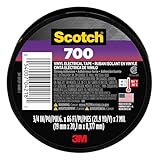
I remember standing in my garage, a tangled mess of wires sprouting from a broken lamp, feeling that familiar dread creep in. The power was out, the lamp was a hazard, and my usual go-to solution, that silver, sticky miracle worker – duct tape – was staring back at me. But could it actually handle the job of electrical tape? It’s a question I’d heard whispered, and one I’d experimented with myself, often with hair-raising results (literally, once). So, can duct tape be electrical tape? Let’s cut through the sticky misinformation.
This isn’t just about a quick fix; it’s about safety and whether you’re about to save yourself a trip to the hardware store or a potential fire hazard. We’ve all been there, staring at two different tapes and wondering if the familiar strength of duct tape can substitute for the specialized properties of electrical tape.
Is Duct Tape Safe for Electrical Work? A Blunt Look
Let’s get straight to the point: Can duct tape be electrical tape? No. Not really.
Not safely. I’ve wasted enough money and countless hours wrestling with projects only to realize the tape I used was fundamentally wrong for the job. Duct tape is designed for sealing, for holding, for rough repairs.
It’s fantastic for patching a leaky hose, securing a wobbly chair leg, or even crafting a DIY wallet. Its adhesive is strong, its backing is tough and generally waterproof.
But its superpower isn’t insulation. Electrical tape, on the other hand, is engineered with a specific purpose: to insulate and protect electrical wires from short circuits, moisture, and abrasion.
Its adhesive is designed to stretch and conform, creating a tight, non-conductive seal. Duct tape, when it gets even slightly warm from electrical current, can start to lose its stickiness and, more importantly, its insulating properties. I learned this the hard way trying to secure some outdoor string lights. The duct tape held them up, sure, but after a few weeks of sun and occasional rain, it started to peel and looked frankly pathetic.
More importantly, I started getting intermittent flickering, which is a big red flag when you’re dealing with electricity, especially outside. A small spark could have been a disaster.
The whole point of wrapping wires is to prevent that spark, and duct tape just doesn’t have the right stuff for it.
The common advice you’ll find is that duct tape is not a substitute for electrical tape, and for good reason. Think about the materials. Duct tape usually has a fabric or plastic film backing with a strong, often rubber-based adhesive.
Electrical tape, typically made from PVC (polyvinyl chloride), is formulated to be flexible, self-extinguishing (meaning it won’t readily catch fire and spread flames), and to maintain its insulating properties over a wide temperature range. Duct tape’s adhesive isn’t designed to be non-conductive, and its backing, while strong, isn’t inherently an insulator in the way that a proper dielectric material is. I’ve seen folks wrap a frayed wire with duct tape and pat themselves on the back for a job well done.
It might hold for a day, maybe even a week, but that’s a gamble I’m no longer willing to take. The potential for a short circuit or, worse, a fire is just too high.
My first real scare was with a toaster oven that had a frayed cord. I used duct tape because it was all I had. It seemed to work. Then, a week later, the breaker tripped, and there was a distinct burning smell.
Thankfully, nothing caught fire, but it was a stark reminder that duct tape is for holding things together, not for keeping electricity safely contained.
What Makes Electrical Tape Different? The Real Deal
So, what’s the big difference? Why can’t that ubiquitous silver tape do the job? (See Also: Can I Use Electrical Tape To Connect Wires )
It boils down to material science and intended purpose. Electrical tape is specifically formulated to be a dielectric – that means it resists electrical current.
The common material is PVC, which, when applied correctly, forms a tight, smooth barrier. This barrier prevents electricity from jumping from one conductor to another (a short circuit) and protects the wire from physical damage that could expose the conductor.
Furthermore, quality electrical tape is designed to be flame-retardant. If a short does occur and generates heat, the tape is less likely to ignite and become a fuel source.
This is a massive safety feature that duct tape simply doesn’t possess. Its adhesive is also designed to remain pliable and sticky across a wider range of temperatures, important for wires that can heat up during use.
I remember a time I was doing some minor electrical work on an old amplifier. The insulation on a couple of wires was cracked, and I, in a moment of misguided thriftiness, grabbed the duct tape. I wrapped it up, feeling smug about my resourcefulness. A few weeks later, I was playing a gig, and halfway through a song, the amp started making a weird buzzing noise and then just died.
Smelling a faint whiff of burnt plastic, I unplugged it immediately. When I took it apart later, the duct tape had started to melt and peel away from the heat generated by the amplifier’s circuits. The adhesive was gooey, and the backing had warped. It hadn’t caused a fire, but it had certainly failed to protect the wires and had become a sticky, useless mess.
That experience solidified my understanding: duct tape is not an insulator. It’s a strong adhesive and a decent patch for many things, but it’s not built to handle the specific demands of electrical insulation. The cost of proper electrical tape, usually just a couple of bucks a roll, is laughably small compared to the potential cost of electrical failure or fire.
My amplifier repair cost me about $50 in new parts and my time, all because I tried to save $2 on tape.
When you’re looking for electrical tape, don’t just grab the cheapest thing. Look for reputable brands and check the specifications. You’ll often see terms like “vinyl electrical tape” or ratings for voltage and temperature. While it might seem like overkill for a simple household repair, these specs mean something. They tell you the tape is designed to handle the electrical environment. I’ve found that brands like 3M, Scotch, and even some of the better-known hardware store brands offer reliable electrical tape that performs as advertised. It stretches well, adheres firmly without leaving a gummy residue, and provides that vital insulating layer. The difference in feel and application is noticeable the moment you start using it.
Common Mistakes When Using Tape on Wires
The biggest mistake, hands down, is thinking duct tape can do the job of electrical tape. It’s like trying to use a hammer to screw in a screw – you might get it done eventually, but it’s inefficient, messy, and likely to cause damage. Another common error is not using enough electrical tape. When you’re insulating a wire, you want to overlap each layer by at least half.
This creates a smooth, continuous barrier. If you just wrap it loosely with a few strips, you leave gaps where moisture or conductive dust can get in, or where the insulation can fail.
I’ve seen people do this on extension cords that are exposed to the elements, and it’s a recipe for disaster. The tape looks okay from a distance, but up close, you can see all these little openings where electricity could wreak havoc.
One time, I was helping a friend patch up an old appliance cord. He’d already wrapped it with a couple of layers of duct tape.
I gently tugged at it, and it just unraveled. The adhesive had failed, and the fabric backing offered zero electrical protection. We ended up redoing the whole section with proper electrical tape, overlapping generously. (See Also: Can Electrica Tape Catch On Fire )
It took maybe five minutes, and the cord looked and felt infinitely more secure. That’s the key: overlap. For a wire that’s just a bit frayed, a few good wraps of electrical tape, overlapping by at least 50% each time, will do the trick.
For more significant damage or joints, you might want to use more layers, making sure you build up a thick, solid insulating sheath. Don’t be stingy with the tape!
It’s cheap insurance.
Another mistake is using the wrong type of tape for specific applications. For instance, there are different grades of electrical tape. Some are designed for low-voltage applications, while others can handle much higher voltages. For general household wiring, a standard vinyl electrical tape is usually sufficient.
However, if you’re working with higher-power equipment or in extreme conditions (like high heat or cold), you might need a specialized tape. Always read the product packaging to make sure it’s suitable for your needs. I once tried to use a cheap, generic brand of electrical tape on a car battery terminal connection. It looked fine, but the vibration and temperature fluctuations in the engine bay caused it to degrade quickly.
Using a tape specifically designed for automotive electrical applications would have been a much better choice and saved me the hassle of having to fix it again a month later. It’s not just about picking ‘electrical tape’ over ‘duct tape’; it’s about picking the right electrical tape.
| Tape Type | Primary Use | Adhesive Strength | Insulating Properties | Temperature Resistance | My Verdict |
|---|---|---|---|---|---|
| Duct Tape | General purpose sealing, repair, holding. | Very High | Poor (not designed for insulation) | Moderate | Never for electrical work. It’s a fire hazard in disguise. |
| Standard Vinyl Electrical Tape | Insulating wire splices, covering exposed wires. | Good | Excellent (designed for dielectric strength) | Good (typically -10°F to 220°F) | The go-to for most household electrical repairs. Reliable and safe. |
| High-Temperature Electrical Tape | Applications involving heat, like engine bays or near heating elements. | Good to Very High | Excellent | Excellent (often rated up to 300°F+) | Worth the extra few dollars for peace of mind in hot environments. |
| Rubber Splicing Tape | Creating waterproof, insulated splices, especially in outdoor or high-moisture areas. | Moderate (forms a self-fusing bond) | Excellent | Good | Best for important outdoor connections; more involved application but superior protection. |
Real-World Scenarios: When and How to Use Electrical Tape
The most common scenario where you’ll reach for electrical tape is when you have a frayed or damaged wire insulation. Think about appliance cords, extension cords, or lamp wiring. If you see any of the plastic coating cracked, exposing the metal wire underneath, that’s your cue. The process is straightforward: first, make sure the power is OFF at the breaker.
Then, clean the area around the damage. Wrap the electrical tape tightly around the damaged section, overlapping each layer by at least half.
Extend the tape a good inch or two beyond the damaged area on both sides to make sure a solid seal. For a more solid repair, you can add a second layer, wrapping in the opposite direction.
This creates a strong, insulated barrier that’s much safer than the original, damaged insulation.
Another frequent use is joining wires together. When you need to connect two wires, you’ll typically use wire nuts or crimp connectors.
However, after making the connection, it’s standard practice to wrap the entire connection, including the ends of the individual wires and the connector, with electrical tape. This reinforces the connection, prevents accidental contact with other wires or conductive surfaces, and adds an extra layer of protection against moisture.
I recently had to replace a section of wire in my backyard shed. After splicing in a new piece of wire and securing it with wire nuts, I meticulously wrapped the entire splice with electrical tape. It looked clean, felt secure, and I knew that any moisture that might seep into the shed wouldn’t compromise the connection. This is where that self-fusing rubber splicing tape can be a real lifesaver if the connection is going to be exposed to dampness.
Beyond basic repairs, electrical tape is invaluable for organizing bundles of wires. Think about the tangle of cables behind your TV or computer. While cable ties are great, electrical tape can provide a more permanent and secure way to group wires. Just wrap sections of the bundle tightly with tape. (See Also: Can I Substitute Duct Tape For Electrical Tape )
This not only tidies things up but also prevents individual wires from snagging or becoming disconnected. I’ve used it to secure wiring harnesses in my car during a DIY repair, and it held up perfectly. It’s also handy for labeling.
You can write on electrical tape with a permanent marker (though it can rub off over time) to identify different circuits or connections, which is a lifesaver when you’re troubleshooting later.
Faq: Your Burning Questions About Tape and Wires
Can I Use Duct Tape to Fix a Frayed Electrical Cord?
Absolutely not. Duct tape is not designed to be an electrical insulator and can become a fire hazard when used on electrical cords. Its adhesive can degrade with heat and its backing is not electrically resistant. Always use proper electrical tape for repairing frayed cords.
What Is the Best Type of Tape for Electrical Repairs?
For most common household electrical repairs, a good quality vinyl electrical tape is the best choice. It’s flexible, insulating, and designed to withstand typical operating temperatures. For higher heat or moisture-prone areas, consider high-temperature or rubber splicing tape.
How Long Should Electrical Tape Last?
When applied correctly to a clean, dry surface and not subjected to extreme conditions, good quality electrical tape can last for many years, often the lifetime of the appliance or wiring it’s used on. However, exposure to heat, UV light, or physical stress can shorten its lifespan.
Does Electrical Tape Stop Electrical Current?
Yes, that’s its primary function. Electrical tape acts as a dielectric, meaning it resists the flow of electrical current, thereby insulating the conductor and preventing short circuits. The effectiveness depends on the quality of the tape and how well it’s applied.
When Is It Okay to Use Duct Tape on Electrical Things?
Honestly, almost never for actual electrical insulation or repair. You might use duct tape to temporarily secure a loose wire after it’s been properly insulated with electrical tape, or to label something non-important, but it should never be the primary means of dealing with exposed wires or connections. The risk is just too high.
The Contrarian View: When Might Duct Tape seem Okay?
Now, I know what some of you might be thinking. ‘But I’ve used duct tape for a quick fix, and it worked fine!’ And you might be right.
For a temporary, low-stakes situation, where there’s absolutely no risk of heat buildup, no moisture, and the wire is only slightly nicked, a quick wrap of duct tape might hold it together for a short while. For example, I once had a tiny split in the insulation of a lamp cord that was purely cosmetic, no exposed wire, and the lamp barely got warm. I slapped some duct tape on it just to keep it from fraying further while I waited to get a replacement cord.
That’s the extent of its ‘usefulness’ in my book. It was a visual patch, not a safety fix.
My contrarian thought here is that the only time duct tape might be considered is for a truly temporary, non-important, purely cosmetic fix on a wire that is not carrying significant current and will not generate heat. Think of it as a bandage for a scratch on a wire’s outer jacket, not a cast for a broken bone. And even then, I’d be biting my tongue, knowing that proper electrical tape is only a few dollars away.
The risk you take with duct tape is that even a small amount of heat from the current can degrade its adhesive and backing, making it brittle or gooey. What seems secure today can become a hazard tomorrow. I’d rather spend a few extra minutes and a couple of bucks to do it right than risk a potential fire or electrical shock.
It’s a false economy that can have real, dangerous consequences.
Conclusion
So, to circle back to the million-dollar question: can duct tape be electrical tape? My answer remains a resounding and emphatic no. While duct tape is an incredibly versatile tool for a thousand other jobs, electrical insulation is not one of them. The materials, the adhesive, and the intended purpose are fundamentally different. Using duct tape for electrical work is a gamble with your safety and property that is simply not worth taking.
Always reach for proper electrical tape when dealing with wires. It’s designed for the job, it’s affordable, and it provides the safety barrier you need. Whether it’s a frayed cord, a wire splice, or just tidying up a cable bundle, the right tool makes all the difference. Don’t let the sticky convenience of duct tape lead you down a dangerous path. Stick to what it’s good for, and trust in specialized tape for your electrical needs.