I’ve spent more than my fair share of weekends elbow-deep in wiring closets, wrestling with extension cords, and generally making a mess of things trying to fix dodgy connections. And I’ll tell you right now, one of the first things every DIYer, including myself, wonders is: can electrical tape go on bare wire? It seems like the obvious, quick fix, right? Grab that stretchy, black tape and wrap it up. But let me tell you, that easy solution can turn into a fiery nightmare if you’re not careful.
It’s a question that pops up when a wire frays, a connector loosens, or you just need something to stay put now. We’ve all been there, staring at exposed copper and thinking, “Surely this tape is good for something.” But the truth is, while electrical tape has its place, using it on bare wire is a massive gamble that most of the time, you’re going to lose.
When Does That Black Tape Actually Hold Up?
Look, I’m not going to lie and say electrical tape is useless. It’s not. I’ve used it myself, sometimes out of necessity, sometimes just because it was the closest thing. The stuff is designed to be a good insulator, stretchy enough to conform to odd shapes, and stick pretty well… to itself. That’s the key. It’s great for bundling cables, wrapping around a pipe to stop a minor leak temporarily, or even for some basic insulation on a wire that’s already properly terminated with a connector.
Think about it: when you’re using it correctly, you’re not applying it directly to the exposed metal of a wire that carries current. You’re usually wrapping it over another piece of tape, or over a splice that’s already secured with a wire nut or a crimp connector. The tape’s job in these situations is to add an extra layer of protection, to keep the splice from snagging on something, or to provide some physical reinforcement. It’s an assist, not the main event.
I once had a garden light extension cord get a nasty nick in the outer sheath, and the wires inside were starting to peek out. I cleaned it up, twisted the wires back together (don’t do that!), and then wrapped it with a few good layers of decent quality electrical tape. It held up for about six months until I could replace the whole cord. That was a situation where it worked, but it was far from ideal, and I knew it was a ticking time bomb.
The real magic of electrical tape is its elasticity and its ability to create a strong bond when overlapped. This makes it perfect for creating a watertight seal on things like coax cable connections outdoors, or for reinforcing the handle of a tool that’s starting to get slippery. It’s also brilliant for the quick-and-dirty fix on a frayed cord on a vacuum cleaner that you know you’re going to replace next week, but need to use tomorrow. The trick is knowing its limits, and frankly, most people push those limits way too far.
Why Sticking Tape Directly to Bare Wire Is a Terrible Idea
Here’s the blunt truth: can electrical tape go on bare wire? Technically, yes, you can. But should you? Absolutely not. This is where I see people making the biggest mistakes, and it’s usually born out of impatience or a lack of understanding of how electricity and materials actually work. When you wrap electrical tape directly around a bare copper wire, you’re creating a false sense of security. The tape might stick for a while, especially if the wire isn’t carrying much current or isn’t flexing.
The problem is that electrical tape isn’t designed to be the sole insulator for a live conductor. It’s porous to some degree, and over time, especially with temperature fluctuations and humidity, it can degrade. The adhesive can break down, allowing moisture to seep in. And what happens when moisture meets electricity? You get corrosion, short circuits, and potentially a fire. I’ve pulled apart old junction boxes where someone, bless their heart, thought they’d fixed a loose connection with just tape. The copper was green with corrosion, the tape was gummy and falling off, and the surrounding wood was scorched. It was a disaster waiting to happen. That’s not a rare occurrence; it’s a common outcome of this shoddy practice.
Think about the rubber insulation that comes on a wire from the factory. That stuff is designed to withstand significant voltage, temperature extremes, and physical abrasion. Electrical tape, even the good stuff, is thin and can easily be nicked or punctured. If that tape gets damaged, even slightly, you’ve got exposed metal. Plus, the adhesive on electrical tape is primarily designed to stick to itself, not to create a permanent, solid bond with a smooth metal surface. It can peel away, leaving the conductor vulnerable. It’s the difference between a temporary bandage and proper stitches. You wouldn’t use a bandage to hold a deep gash closed permanently, would you? (See Also: Can I Use Electrical Tape To Connect Wires )
What to Look for in Decent Electrical Tape
Alright, so if you are going to use electrical tape, and I know some of you will because sometimes you just have to, what makes one roll better than another? I’ve wasted money on cheap, no-name rolls that felt like flimsy plastic and barely stuck to anything. Then I splurged on some fancy stuff that was overkill for bundling a few speaker wires. The sweet spot, for me, is in the mid-range, usually from brands that have been around a while. You want tape that’s thick enough to feel substantial, but still flexible. It should stretch without tearing easily, and the adhesive should be tacky but not so gummy that it leaves a huge mess when you remove it.
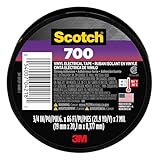
I’ve found that brands like 3M Super 33+ or Scotch 88 are generally reliable. They hold up well to UV exposure (if you’re using them outdoors, though again, not ideal for bare wire) and temperature changes. They stick firmly to themselves and provide a decent layer of insulation when used correctly over a proper connection. When you unroll a good quality tape, it should feel smooth and consistent. There shouldn’t be any lumps or thin spots. The edge should cut cleanly when you use a dispenser or a sharp knife.
Here’s a quick rundown of what I look for:
| Feature | What I Like | Why it Matters | Verdict |
|---|---|---|---|
| Thickness | 0.15mm or more | Provides better insulation and physical protection. Thin tape tears easily. | Key |
| Flexibility | Stretches easily without snapping | Conforms to wires and connectors for a snug fit. | Key |
| Adhesive | Tacky but clean removal | Sticks well to itself, doesn’t leave a sticky residue that attracts dirt. | Very Important |
| Brand Reputation | Established brands (e.g., 3M, Gardner Bender) | Generally means consistent quality and performance. | Helpful |
| Price | Mid-range ($4-$8 per roll) | Cheap tape is often garbage; expensive might be overkill. | Good Value |
You can often find decent rolls for around $5-$7, which is what I’d consider the sweet spot. Anything less and you’re probably buying junk, anything more and you’re likely paying for branding you don’t need for most household fixes. This is where you save yourself headaches down the line.
My Firsthand Experience with Tape-Gone-Wrong
So, I mentioned a story earlier about a garden light cord. That was me being lazy. But the real screw-up, the one that still makes me cringe, happened years ago when I was just starting out. I was trying to rig up some temporary outdoor lighting for a party, and one of the extension cords had a slight fraying near the plug. Instead of swapping it out, I grabbed the roll of electrical tape from my dad’s toolbox. I wrapped it around the frayed bit, feeling pretty proud of my quick fix. The party went off without a hitch, and I forgot all about it.
A few weeks later, we had a pretty heavy rainstorm. I went to check on some outdoor equipment and noticed a weird smell. It was faint at first, then stronger. I traced it back to that extension cord.
The tape had gotten wet, the adhesive had given up the ghost, and a small section of the wire was exposed and starting to corrode. Worse, a tiny spark had jumped from the exposed wire to a metal stake holding up a tent nearby. It wasn’t a big spark, just a little blue flicker, but it was enough to make me realize how incredibly stupid I had been.
I immediately unplugged everything, ripped off the ruined tape, and replaced the cord with a new, properly rated one. That was a wake-up call. I learned that day that while electrical tape can sometimes do a job, it’s never the right tool for direct contact with bare, live wires. (See Also: Can Electrica Tape Catch On Fire )
It’s a temporary patch, not a permanent solution, and even then, it’s risky.
The Right Way: Splices, Connectors, and Proper Insulation
So, if electrical tape isn’t the answer for bare wire, what is? It’s about using the right tools for the job. When you have exposed wires that need connecting, you absolutely must use proper connectors. For most household wiring, this means wire nuts (also called Marrettes in some places) or Wago connectors. Wire nuts screw onto the stripped ends of wires, twisting them together securely and providing insulation. Wago connectors are lever-nuts that you simply push the stripped wire into, and they clamp down.
I personally love Wago connectors for ease of use and reliability. They feel much more secure than wire nuts, especially if you’ve ever had a wire nut come loose. After you’ve made your splice with a connector, then you can use electrical tape. Wrap several tight layers of tape over the connector and a bit of the wire on either side. This adds a protective outer layer, keeps dirt and moisture out, and prevents the connector from snagging on anything. It’s an extra layer of safety, not the primary insulation.
For more permanent or high-stress applications, like connecting thicker gauge wires or in environments where things might get jostled, you might need heat shrink tubing or specialized splice kits. Heat shrink tubing is a plastic sleeve that you slide over the splice and then heat with a heat gun. It shrinks down tightly, creating a solid, insulated connection. Splice kits often contain a metal crimp sleeve and a molded outer jacket, offering a very secure and professional finish. The key is that the bare wire is completely enclosed within the connector or tubing before any tape is applied.
The Unspoken Truth: When and How to Use Tape (safely)
Let’s talk about the practical side. When can electrical tape go on bare wire in a way that’s not a complete disaster? The answer is, honestly, it shouldn’t. But since we all bend the rules sometimes, let’s talk about the least bad way to do it. If you absolutely, positively have no other option, and this is a low-voltage, non-important situation (like a temporary fix on a very low-power DC circuit, not mains AC power), you can use it. But you need to be methodical.
First, make sure the power is OFF. I can’t stress this enough. If you’re not sure, flip the breaker or remove the fuse. Second, clean the wire ends.
Remove any dirt, oil, or corrosion. Third, use multiple, thin layers of good quality electrical tape. Stretch the tape as you wrap it so it adheres tightly and overlaps generously.
Wrap in one direction, then in the opposite direction to create a strong, smooth barrier. Go well past the exposed section onto the insulated part of the wire on both sides. The goal is to completely encapsulate the bare metal. This is still a temporary fix, and you should plan to replace the damaged wire or component as soon as possible. (See Also: Can I Substitute Duct Tape For Electrical Tape )
I’ve used this method for very low-voltage garden path lights when a wire got a tiny nick and I couldn’t get a new one delivered for a few days. It held, but I replaced it the moment a new cord arrived.
It felt like a dental filling for a chipped tooth – it works, but you know it’s not ideal.
People Also Ask: Common Questions About Electrical Tape
Is Electrical Tape Rated for 120v or 240v?
Standard electrical tape is generally rated for use on low-voltage applications, typically up to 600 volts, but this rating applies when it’s used as an overwrap on a properly insulated and terminated connection, not as the sole insulator for bare wire. Its dielectric strength can be compromised over time and by environmental factors, making it unreliable as the primary insulation for mains voltage.
Can I Use Electrical Tape on a Frayed Extension Cord?
You can use electrical tape as a temporary wrap over a frayed section of an extension cord after making sure the cord is unplugged and the wires are not exposed. However, this is not a permanent fix. The tape can degrade, allowing moisture to enter and potentially causing shorts or hazards. It’s best to replace the damaged extension cord entirely for safety.
What Is the Best Alternative to Electrical Tape for Bare Wires?
The best alternatives for insulating bare wires are proper wire connectors like wire nuts or Wago connectors, followed by heat shrink tubing for a more solid seal. Electrical tape should only be used as an additional protective layer over these primary insulation methods, never as the sole insulator for bare conductors.
How Many Layers of Electrical Tape Are Needed for a Secure Connection?
When used as a protective overwrap on a proper splice, at least 3-4 layers of good quality electrical tape, stretched and overlapped generously, are recommended. Each layer should be applied tightly to make sure good adhesion and create a smooth barrier, extending onto the existing insulation of the wires on either side of the splice.
Can Gorilla Tape Be Used as Electrical Tape?
No, Gorilla Tape is not a substitute for electrical tape. While it’s a strong adhesive tape, it is not designed for electrical insulation and does not have the required dielectric strength or flexibility for electrical applications. Using it on wires can be extremely dangerous and lead to short circuits, fires, or electric shock.
Conclusion
So, to cut to the chase: can electrical tape go on bare wire? The answer is a resounding no, if you want a safe and reliable connection. While it might seem like a quick fix, it’s a gamble with your safety and your home. I’ve learned the hard way that cutting corners with electrical work, especially when it comes to insulation, is asking for trouble. Always opt for proper wire connectors and insulation methods first.
Think of electrical tape as the bodyguard, not the main act. It can protect a good connection, but it can’t create one on its own. If you find yourself needing to patch up a wire, take the extra few minutes, spend the few dollars on the right connectors, and do it properly. Your future self, and anyone else who might encounter that wiring, will thank you.