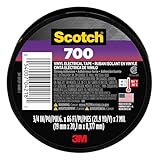
I used to think electrical tape was some sort of magic bullet for every minor mishap around the house. Got a wobbly chair leg? Slap some tape on it. Leaky hose bib?
Electrical tape to the rescue. Then came that fateful weekend I tried to fix a perpetually dripping faucet with what I thought was the best roll of black electrical tape money could buy.
Fast forward a week, and I was standing ankle-deep in water, the tape having surrendered its grip like a wet noodle. It was a humbling, soggy lesson.
So, can I use black electrical tape for more than just electrical wires? The answer is a resounding ‘sometimes,’ and that’s what we’re going to break down, no BS.
So, What’s the Big Deal with Electrical Tape Anyway?
Look, the name gives you a clue, right? Electrical tape is designed to insulate and protect electrical wires, usually in low-voltage situations. It’s usually made of vinyl, which gives it some stretch and flexibility. This stretch is key. It allows you to wrap it tightly around odd shapes, creating a snug, protective layer. The adhesive is typically rubber-based, which is supposed to stick well but also be somewhat removable without leaving a greasy mess behind – though, spoiler alert, that’s not always the case. It’s supposed to resist abrasion, moisture, and UV light to a certain degree, which is why it’s the go-to for splicing wires or bundling them together neatly.
The magic isn’t really magic; it’s chemistry. Vinyl’s dielectric strength means it can withstand a certain amount of electrical voltage before it breaks down. This is its primary job.
Think of it as a thin, flexible, temporary insulator. It’s not meant to be structural.
It’s not meant to hold heavy things together. It’s not meant to be a permanent fix for anything other than a securely fastened electrical connection. I’ve seen folks wrap it around garden hose leaks, tool handles, and even car parts. Some of those might hold for a little while, but you’re basically asking it to do a job it wasn’t engineered for.
It’s like using a spoon to hammer a nail – you might get it in eventually, but it’s not going to end well for the spoon, or the nail, or your thumb.
The common advice out there often paints electrical tape as a universal repair product. I’ve heard people say, ‘Oh, just slap some electrical tape on it!’
That’s the kind of advice that leads to leaky pipes and frayed nerves. It’s the lazy answer. And while I appreciate a quick fix as much as the next person who’s tired after a long day, I’ve learned the hard way that a quick fix that fails is just a delayed, and often more expensive, full fix. The properties that make it good for electrical work – flexibility, adhesion, some insulation – are also what make it tempting for other things.
But those same properties can be its downfall when pushed outside its intended use. We’ll get into what it can handle, but first, let’s talk about what you should be looking for when you actually need it for its intended purpose, or when you’re tempted to use it for something else.
What to Look for (and What to Avoid)
When you’re actually buying electrical tape for, you know, electrical stuff, there are a few things that matter. First off, don’t just grab the cheapest pack you see.
I learned this lesson after a particularly frustrating wiring job on my old motorcycle. The cheap stuff felt brittle, even when new, and the adhesive was practically non-existent.
It left this gummy residue that was a nightmare to clean off. So, what should you be looking for?
Look for reputable brands. Think 3M, Scotch Super 33+ (that’s a classic for a reason), or Panduit.
These brands generally offer consistent quality, good adhesion, and decent stretch without cracking. They’re designed to perform in a range of temperatures and humidity levels, which is important when you’re dealing with live circuits, even low-voltage ones.
The thickness and tack of the adhesive are also important. You want tape that feels pliable and slightly tacky to the touch, but not so sticky that it’s impossible to reposition slightly if you mess up the first wrap. It needs to conform to irregular surfaces without leaving gaps. I’ve found that thicker tapes offer better insulation and are more forgiving if you accidentally nick them during application. Speaking of nicking, that’s a big one. Even good electrical tape can be compromised if you tear it or stretch it too thin in places. You want even tension all the way around. (See Also: Can I Use Electrical Tape To Connect Wires )
Now, when you’re eyeing that roll of black tape for non-electrical tasks, here’s where the real advice comes in. Most generic, no-name electrical tapes are probably not going to be worth your time for anything serious. They might work for bundling cables temporarily or marking something, but if you’re thinking of using them for structural repairs, water sealing, or anything exposed to the elements, you’re setting yourself up for disappointment.
The adhesive degrades faster, the vinyl gets brittle in the sun, and it loses its stretch. I’ve seen it happen. That drip from the faucet I mentioned earlier? It started as a small trickle a week after I applied the tape.
Then, over the next few days, it became a steady stream, and the tape just peeled away like sunburnt skin. It was a mess, and I ended up having to call a plumber anyway.
Here’s a little comparison table I put together based on my experience:
| Application Type | Black Electrical Tape Verdict | Why |
|---|---|---|
| Actual Electrical Insulation | Excellent | Designed for it, good dielectric strength and adhesion. |
| Temporary Wire Bundling | Good | Flexible, sticks well enough for short-term use. |
| Tool Handle Grips (non-slip) | Okay (Short-term) | Adds some cushion and grip, but wears out quickly. |
| Sealing minor, low-pressure drips (e.g., outdoor faucet) | Poor | Adhesive fails with moisture and temperature changes; not durable. |
| Temporary patch on a cracked plastic container | Poor | Doesn’t hold under pressure, cracks with temperature swings. |
| Protecting exposed wires from dust/dirt (indoors) | Good | Keeps contaminants out, doesn’t need to withstand stress. |
Common Mistakes People Make
The biggest mistake, by far, is thinking black electrical tape is a substitute for proper repair materials. People see that stretchy, black, sticky stuff and their brain jumps to ‘fix-it-all.’ It’s like using duct tape – everyone knows duct tape can fix anything, right?
Well, sometimes. But electrical tape is more specialized. Using it for plumbing, for instance, is a recipe for disaster. Water pressure, temperature fluctuations, and the general damp environment are a death sentence for electrical tape’s adhesive.
It’ll hold for a bit, maybe, but then you’re dealing with a bigger mess than you started with. I learned this the hard way with a leaky garden hose connection. I thought, ‘Hey, it’s flexible, it’ll seal that gap.’
Nope. Within two days, the water pressure had pushed it right off, soaking my boots and my ego.
Another common blunder is not cleaning the surface properly before applying the tape. If you’re trying to tape a wire that’s covered in grease, dirt, or old adhesive residue, the tape isn’t going to stick. It’ll look like it’s stuck at first, but give it a day, or a bit of stress, and it’ll peel right off. This applies to electrical work too, but it’s even more important when you’re trying to make it stick to something it wasn’t designed for. Always clean the area with isopropyl alcohol or a degreaser and let it dry completely before you even think about applying tape.
Stretching the tape too much or not enough is also a common issue. If you stretch it too thin, you can weaken its insulating properties and make it prone to tearing. If you don’t stretch it enough, it won’t conform to the shape, leaving gaps where moisture or dirt can get in. The sweet spot is that gentle, even tension that allows it to hug the surface without becoming brittle or weak. It takes a little practice, honestly. I remember my first few attempts at wrapping a stripped wire felt like I was trying to wrap a sausage with Saran Wrap – bunchy and uneven. But after doing it a few hundred times, you get a feel for it.
Finally, people often leave it on for far too long. Electrical tape is often considered a temporary or semi-permanent solution, even for its intended purpose. The adhesive can degrade over time, especially with exposure to heat or sunlight.
If you’ve used it as a quick fix for something non-electrical, don’t expect it to last forever. It’s a temporary band-aid, not a permanent cure.
My buddy once used it to hold a cracked car mirror on. Looked okay for a month, then it sagged, and the tape started to peel, leaving a sticky, gooey mess that was a nightmare to clean off the paint.
He ended up having to replace the whole mirror assembly. Lesson learned: know when a temporary fix is just delaying the inevitable, and often making it worse.
Real-World Uses (where It Actually Works)
So, where can you reliably use black electrical tape? Obviously, its primary function: insulating and protecting electrical connections. This means splicing wires, covering exposed conductors, or bundling wires together neatly in junction boxes or control panels. I’ve used it countless times on everything from household appliances to my car’s wiring harness. It’s great for securing wires along a frame, preventing them from rubbing against something and shorting out. The flexibility allows it to wrap around connectors and wires smoothly, creating a clean, protected finish. For any low-voltage electrical work, it’s still my go-to choice, assuming I’ve got a good quality roll from a reputable brand.
Beyond the strictly electrical, it has a few other niche uses that I’ve found surprisingly effective. One is for adding a bit of grip to tool handles. If a hammer or screwdriver handle feels a bit slick, a few wraps of electrical tape can make a world of difference, especially if your hands are sweaty or oily.
It doesn’t last as long as specialized grip tape, mind you, but it’s a quick, cheap fix. Another is for labeling. I’ve used a Sharpie to write on electrical tape to label wires coming out of a breaker box or behind a wall of AV equipment. (See Also: Can Electrica Tape Catch On Fire )
It sticks reasonably well to itself and most surfaces, and it’s less permanent than a sticker that might peel off later.
I’ve also found it useful for protecting things during temporary transport. For instance, if I’m moving a piece of furniture and there’s a sharp edge that might snag a wall or a rug, I’ll sometimes wrap the corner with electrical tape. It’s not going to stop a determined gouge, but it’ll prevent minor snags and scuffs. Similarly, if you have a delicate cable that needs to be secured temporarily, like a microphone cable on a stage, electrical tape is perfect.
It holds well enough to keep it from being a tripping hazard, but it’s easy to peel off later without damaging the cable itself. I recall a gig where we had to run a bunch of cables across a walkway. We used electrical tape to secure them down, and it worked like a charm.
No one tripped, and when we tore down, the tape came off cleanly.
For those ‘People Also Ask’ questions that pop up, let’s address a few directly. ‘Can I use electrical tape for plumbing?’ Generally, no. While it might temporarily stop a very minor weep, it’s not designed for water pressure or constant moisture.
You’re much better off with actual plumbing tape or a proper repair kit. ‘Can I use electrical tape for car repairs?’
For actual electrical connections in your car, yes, absolutely. For bodywork or holding mechanical parts together?
Almost certainly no. It’s too weak and degrades quickly in automotive environments. ‘Can I use electrical tape for screen repair?’
For a tear in a window screen, maybe temporarily to prevent it from spreading, but it’s not a durable or aesthetically pleasing solution. It will likely peel or leave residue.
What Electrical Tape Is Not Good For
It’s just as important to know what it isn’t good for. Think structural repairs. If something is broken and needs to hold weight, electrical tape isn’t your guy.
It has no structural integrity. Trying to use it to fix a broken chair leg or hold a loose shelf is just asking for trouble. It’s also terrible for sealing anything under pressure, like pipes or containers that hold liquids or gases.
The adhesive will fail, and the material itself isn’t designed to withstand that kind of stress. Outdoor use is another big no-no for most applications.
While some higher-end electrical tapes have decent UV resistance, most will break down, become brittle, and lose their stickiness when exposed to sunlight and temperature extremes for extended periods. I learned this the hard way when I used it to temporarily secure a loose bumper on my old car. A few weeks in the sun, and it just sagged and peeled off, leaving a sticky mess on the paintwork.
The Contrarian View: When Less Is More
Now, here’s where I might ruffle some feathers. Everyone says, ‘Use the right tool for the job.’ And they’re usually right. But sometimes, the ‘right tool’ is expensive, hard to find, or overkill for a super minor issue. I disagree with the blanket statement that electrical tape is never suitable for non-electrical jobs. While I’ve hammered home the point that it’s not a structural adhesive or a miracle sealant, there are specific, low-stress, temporary situations where it can be perfectly adequate, perhaps even better than the ‘right’ tool.
For example, bundling a bunch of loose charging cables together behind your desk. A zip tie works, sure. But a few wraps of electrical tape are quick, silent (zip ties can make a ‘snap’ when tightened), and easily removable. Or, holding a lightweight diagram or note onto a metal surface temporarily. A thumbtack will punch a hole, and a magnet might not stick. Electrical tape can hold it securely enough without damage. I’ve even used it to create a temporary, non-slip grip on a very smooth, slippery plastic item I was holding for a short period. It’s not going to replace a dedicated grip enhancer, but for a few minutes of work, it was fine.
The key here is understanding the limitations and the temporary nature of these non-standard uses. It’s about recognizing when a full-blown repair is unnecessary and when a quick, reversible fix is all you need.
The common advice is to avoid it entirely for non-electrical tasks, and that’s good general advice to prevent major screw-ups. But for those tiny, in-between moments, when you just need something to hold just enough for a short time, good quality black electrical tape can actually be surprisingly useful. You just have to be honest with yourself about what you’re asking it to do and how long you expect it to last. (See Also: Can I Substitute Duct Tape For Electrical Tape )
Don’t expect it to fix your leaky toilet or hold your car’s exhaust pipe on. But for keeping those cables tidy? It’s a winner.
Practical Tips for Using Electrical Tape Effectively
First off, always buy good quality tape. I can’t stress this enough. A good roll from 3M or Scotch will cost you maybe $5-$10, but it will perform infinitely better than that $1 generic pack. It’ll stretch properly, adhere well, and not turn into a gummy mess. So, invest a few bucks. When you’re actually wrapping wires, overlap each turn by at least half the width of the tape. This makes sure a continuous insulating layer and prevents any gaps. Start the wrap a little before the exposed wire and extend it a bit past, so you’re covering the insulation transition point too. This gives it the best chance to seal out moisture and prevent fraying.
When applying, use consistent, moderate tension. You want the tape to stretch slightly and conform to the wire, but don’t pull so hard that you see the vinyl thinning out significantly. If you stretch it too much, it becomes weaker and more prone to tearing.
For bundling multiple wires, wrap them together tightly as a single unit. This keeps them neat and prevents individual wires from snagging or rubbing against each other. If you need to remove electrical tape, do it slowly and carefully.
If it feels like it’s sticking too much, you can sometimes use a bit of heat from a hairdryer on a low setting to soften the adhesive, making it easier to remove without leaving residue. Be cautious with heat on certain plastics, though.
For non-electrical temporary fixes, keep them short-term and low-stress. Think bundling cables, marking something, or providing a temporary grip for a light-duty tool. If you’re using it to seal something, even a minor drip, be prepared for it to fail and have a proper repair solution ready.
Don’t rely on it for anything safety-related, whether it’s electrical or not. And finally, when in doubt, just use the right tool for the job. If you’re unsure if electrical tape will hold, it probably won’t.
It’s better to buy the correct product – be it plumbing tape, strong adhesive tape, or a mechanical fastener – than to end up with a bigger problem down the line. My rule of thumb: if it’s not directly related to electrical insulation, consider it a very temporary, very light-duty fix, or better yet, look for something else.
Can I Use Black Electrical Tape to Fix a Leaky Pipe?
No, it’s a bad idea. Electrical tape is not designed to withstand water pressure or constant moisture. The adhesive will fail, and you’ll likely end up with a bigger leak and a mess to clean up. For leaky pipes, you need proper plumbing tape, epoxy putty, or to replace the faulty section.
Is Black Electrical Tape Safe for Outdoor Use?
Generally, no. Most standard electrical tapes will degrade quickly when exposed to UV rays and fluctuating temperatures. They can become brittle, crack, and lose their adhesion, making them ineffective and potentially hazardous if used on electrical components outdoors.
Can I Use Electrical Tape to Temporarily Fix a Broken Garden Hose?
It might work for a very minor, low-pressure weep for a short time, but it’s not a reliable solution. Water pressure and exposure will likely cause the tape to fail. It’s better to use a hose repair kit or a dedicated hose clamp and patch.
When Should I Not Use Black Electrical Tape?
You should avoid using it for any structural repairs, anything under significant pressure (water, gas, air), high-temperature applications, or prolonged outdoor exposure where it’s not specifically rated. It’s also not a substitute for proper insulation in high-voltage situations.
The Bottom Line on Black Electrical Tape
So, after all this, can I use black electrical tape for more than just its intended electrical purpose? The answer is a qualified ‘yes,’ but you need to be incredibly judicious. For actual electrical insulation and protection, it’s still the king, provided you get a quality product and apply it correctly. I’ve relied on it for years for that, and it’s never let me down when used as designed. But when you start looking at it as a general-purpose repair tape, you’re entering dangerous territory. My faucet leak disaster, the sagging car bumper, the garden hose incident – these were all moments where I tried to force electrical tape into a job it wasn’t built for.
The key takeaway is to respect its design. It’s a flexible insulator with a decent adhesive for electrical work. It’s not a structural adhesive, a waterproof sealant, or a heavy-duty binding agent. When you understand its limitations, you can appreciate where it excels.
For minor, temporary, low-stress non-electrical fixes – like tidying up cables or adding a bit of grip – it can be surprisingly useful. But never, ever rely on it for anything safety-important or anything that needs to withstand significant pressure, temperature changes, or the elements.
If you’re in doubt, the safest bet is always to reach for a product specifically designed for the task at hand. It might cost a few dollars more upfront, but it’ll save you a whole lot of headaches (and potential water damage bills) in the long run.
Final Verdict
So, the next time you’re staring at a roll of black electrical tape, remember it’s not a magic wand. It’s a specialized tool for electrical work, and when used within those parameters, it’s fantastic. Trying to make it do other jobs is where the real trouble starts, and I’ve been there, done that, and got the soggy socks to prove it. While I’ve found a few niche, temporary non-electrical uses that work for me, they’re few and far between, and I’m always honest with myself about how long they’ll last.
For any real repairs, especially those involving water, pressure, or structural integrity, you’re going to want to use something else. Plumbing tape, strong bonding adhesives, or even just a good old-fashioned clamp will likely serve you much better. Think of electrical tape as your reliable electrician friend – great for wiring, but don’t ask him to fix your leaky roof unless he’s also a roofer. It’s about knowing what your tools are good for, and understanding that sometimes, the best use of black electrical tape is simply for electrical work.