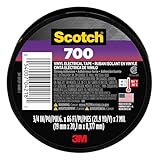
The other day, I was wrestling with some dodgy wiring in an old lamp. Flicking the breaker on and off, trying to figure out what sparked what, I ended up with a couple of exposed wire ends. My brain immediately went to the roll of black tape sitting on my workbench. But then I paused. Can I cap off wire with electrical tape? It feels like a question everyone’s asked themselves at some point, staring at a bare copper strand and a roll of sticky vinyl.
I’ve been messing with wires, both intentionally and accidentally, for longer than I care to admit. And let me tell you, I’ve seen some things. Some neat, some… less neat. So, let’s cut to the chase about that roll of tape.
So, Can I Cap Off Wire with Electrical Tape? The Blunt Truth
Alright, let’s get this out of the way: Can I cap off wire with electrical tape? Technically, yes, you can. You can wrap it around a bare wire end and, for a little while, it’ll stay put. It’s the cheap, readily available solution that whispers sweet nothings of ‘quick fix’ into your ear when you’re in a pinch. I’ve done it. You’ve probably seen it. But here’s the kicker, the part nobody really wants to hear when they’re in the middle of a DIY disaster: it’s usually a terrible idea for anything permanent or carrying any significant load.
Think about it. Electrical tape, the good stuff anyway, is made of vinyl. It’s designed to be an insulator, sure, but it’s also stretchy and can get gummy over time, especially when exposed to heat or sunlight. When you’re dealing with a live circuit, even a low-voltage one, you’re asking for trouble.
That tape can loosen, unravel, or just get compromised, leaving you with a potential short circuit or worse. I remember a situation where I’d used electrical tape to temporarily cap off a wire in an outdoor shed. A few months later, after a particularly hot summer and a bit of rain seeping in, I went back to that shed and found the tape had melted and sagged, exposing the wire and creating a rusty, corroded mess. Lesson learned the hard way: temporary doesn’t always stay temporary.
The common advice you’ll hear is that electrical tape is for minor insulation jobs on low-voltage wiring or for bundling wires. And that’s largely true. It’s great for tidying up that bundle of speaker wire behind your TV, or for a quick wrap on a frayed lamp cord if you’re not planning on it being a long-term solution. But for anything in your electrical panel, any junction box, or any application where the wire could be stressed, exposed to moisture, or generate significant heat, you need to step up your game. We’re talking about fire hazards, people. It’s not just about keeping the lights on; it’s about keeping your house from becoming a bonfire.
So, while the answer to ‘can I cap off wire with electrical tape’ is a technical ‘yes’, the practical, responsible answer is almost always ‘no, not if you want it to be safe and reliable.’ You’re better off spending a few extra bucks on the right connectors. It’s like trying to fix a leaky pipe with chewing gum; it might hold for a minute, but eventually, it’s going to fail, and the mess will be way worse than if you’d just bought a proper coupling in the first place.
What Electrical Tape should Be Used for (and What It Isn’t)
Look, I’m not saying electrical tape is useless. Far from it. It’s just that most people vastly overestimate its capabilities and underestimate the risks of using it for the wrong job. The primary role of good quality electrical tape, like Scotch Super 35 or 3M Temflex, is to provide a layer of insulation and abrasion resistance in specific, low-stress environments. Think about it: that tape is designed to stretch and conform, creating a snug fit without being too rigid. This is brilliant for wrapping around the connections of low-voltage accessories, like the wiring harness on your car’s stereo or the tiny wires in a model train setup.
It’s also fantastic for bundling. If you’ve got a spaghetti monster of cords behind your entertainment center, a few strategically placed wraps of electrical tape can make it look significantly tidier. It provides just enough grip to keep bundles together without crushing the wires. I’ve used it to secure wire looms on bikes and go-karts, keeping things neat and preventing chafing against frames. That’s where it shines: light-duty, visible applications where you need a bit of protection and organization.
Now, what it is not for? Anything involving significant voltage, heat, or outdoor exposure. Your main household wiring, the stuff in your walls, the connections at your outlets and switches – that’s a big fat NO for electrical tape. These are circuits that carry significant amperage, generate heat, and can be subject to vibrations or accidental tugs. Using electrical tape here is like trying to plug a bullet hole with a Band-Aid. It’s fundamentally inadequate for the job.
I once had a buddy who tried to ‘fix’ a loose connection at an outdoor security light with nothing but electrical tape. He figured it was just a bit of insulation. (See Also: Can I Use Electrical Tape To Connect Wires )
Within six months, the UV rays and moisture had degraded the tape, the connection was exposed, and the light started flickering like a disco ball on its last night. Replacing the entire wire run was a much bigger headache than if he’d just used a waterproof wire nut and some sealant from the get-go. The tape itself also leaves a sticky, gummy residue when it degrades, which is a nightmare to clean off.
So, when you’re asking, ‘can I cap off wire with electrical tape,’ really ask yourself: ‘Is this a job where failure means a minor inconvenience, or a potentially dangerous situation?’
When to Use What: Connectors Beat Tape Every Time
The real answer to the question ‘can I cap off wire with electrical tape’ is that you should almost never. Why? Because there are superior, safer, and frankly, easier ways to do the job. For any electrical connection that needs to be permanently or semi-permanently capped off, your go-to should be wire connectors. These aren’t fancy or expensive, but they are specifically designed for the job and meet safety standards that tape simply can’t touch.
Wire Nut Connectors
These are the classic, cone-shaped plastic things you see everywhere. They come in different sizes for different wire gauges. You strip the ends of the wires you want to join, hold them together, and twist the wire nut over them until it’s snug. The internal spring or threads grip the wires, creating a secure, insulated connection. They come in different colors, which helps with identification, but the real advantage is their reliability. They don’t degrade like tape can, they provide a solid mechanical connection, and they’re rated for specific voltage and temperature ranges. I’ve pulled apart connections I made years ago with wire nuts, and they’ve still been perfectly clean and secure.
Crimp Connectors
These are another excellent option, especially when you need a really solid connection or are dealing with vibrations. You slide a metal sleeve over the stripped wire ends, then use a special crimping tool to squeeze the sleeve, permanently joining the wires. They often come with heat-shrink tubing that you slide over the connection before crimping, and then you heat it up afterward, causing it to shrink and seal the connection. It’s a foolproof method for a super strong, waterproof connection. I’ve used these for trailer wiring and even some minor automotive repairs, and they’ve held up like a champ.
Wago Connectors
These are the modern marvels. They’re lever-actuated connectors that make joining wires incredibly simple and secure. You just strip the wire, flip open the lever, insert the wire, and close the lever. Click! It’s done. They’re reusable (you can flip the lever open to remove the wire), they have transparent housings so you can see the connection is solid, and they’re rated for pretty much everything you’d encounter in household wiring. They’re a bit pricier than wire nuts, but the time saved and the peace of mind are worth every penny. I’ve switched over to using Wagos for most of my junction box work around the house. They’re just so darn easy and reliable.
Comparison of Wire Connection Methods
| Method | Pros | Cons | Verdict |
|---|---|---|---|
| Electrical Tape | Cheap, readily available, conforms easily. | Degrades with heat/UV, can loosen, not a secure mechanical connection, poor for high current/heat. | Only for very temporary, low-voltage, non-important bundling. Never for capping off exposed ends. |
| Wire Nuts | Inexpensive, widely available, easy to use for basic splices. | Can loosen if not tightened properly, not ideal for vibration or outdoor use without additional sealing. | Good general-purpose connector for indoor, non-vibrating applications. |
| Crimp Connectors | Very secure mechanical connection, good for vibration resistance, can be made waterproof with heat shrink. | Requires a special crimping tool, permanent connection (harder to undo). | Excellent for high-stress, vibration-prone, or outdoor environments. |
| Wago Connectors | Extremely easy and fast to use, secure lever-lock, reusable, visible connection, compact. | Higher initial cost per connector compared to wire nuts. | The modern standard for most indoor junction box and outlet wiring. Highly recommended. |
The takeaway here is simple: if you’re asking ‘can I cap off wire with electrical tape,’ the answer should almost always be a resounding ‘NO’ in favor of a proper connector. The cost of a few wire nuts or Wago connectors is minuscule compared to the potential cost of a fire or electrical shock.
The Dangers of Improper Wire Termination
Let’s talk about why this question even comes up so much. It’s usually born out of necessity or a desire for a quick fix. You’ve got a loose wire, maybe something fell out of a connector, and you’re miles from a hardware store or the right tools. Electrical tape is right there. It feels like a logical, albeit temporary, solution. But the danger is that ‘temporary’ often becomes ‘permanent’ because we forget about it, or we don’t want to admit we need to do it right. This is where things get hairy.
Improper wire termination, whether it’s using tape when you shouldn’t or just a shoddy connection with the right components, leads to a cascade of potential problems. First and foremost is the risk of fire.
Exposed wires can arc, meaning electricity jumps across the gap, creating intense heat and sparks. This is particularly dangerous in wall cavities filled with insulation or near flammable materials like wood or dust. I had a friend whose old toaster oven started sparking from a frayed cord. He’d wrapped it with electrical tape ages ago as a quick fix. (See Also: Can Electrica Tape Catch On Fire )
The sparks eventually ignited some dust bunnies that had accumulated underneath the appliance. Thankfully, he was home and put it out quickly, but it was a stark reminder of how quickly a minor issue can escalate.
Then there’s the risk of electric shock. If the insulation is compromised, and you touch the exposed conductor, you’re providing a path for electricity to flow through you. Even low-voltage shocks can be painful and disorienting, leading to falls or other accidents. Higher voltages can be fatal. Think about any appliance you plug into the wall; that’s 120 volts (in North America) or 230 volts (elsewhere) coursing through it. That’s enough to do serious damage. The tape might seem to be holding, but it’s not a guarantee. It can degrade, crack, or simply slip off under stress, leaving you vulnerable.
Beyond the immediate safety hazards, improper connections lead to poor performance. Loose connections create higher resistance, which means more heat is generated at the point of contact. This can cause your circuits to run inefficiently, leading to flickering lights, intermittent power to appliances, and even damage to the devices themselves. Over time, this heat can degrade the wires and surrounding materials, weakening the entire electrical system. So, when you’re weighing the convenience of electrical tape against a proper connector, remember that you’re not just choosing a method; you’re choosing between safety and potential disaster.
Real-World Scenarios: When Tape might Be Okay (use with Extreme Caution)
Okay, I’ve hammered home why electrical tape is generally a bad idea for capping off wires. But to be fair, and because I’ve been there, there are a few edge cases where it’s not the absolute worst idea if you understand the limitations and treat it as a temporary measure. These are situations where the voltage is extremely low, the wires are not under tension, and there’s no significant heat or moisture involved. And even then, I’d still prefer a proper connector.
Consider the wiring inside a small, battery-powered toy. We’re talking about a few volts here, nowhere near enough to cause a serious shock. If a wire inside comes loose from its terminal, wrapping it with a bit of good quality electrical tape might keep it in place until you can get a tiny crimp connector or a dab of solder. The key is that the current is minimal, and the risk is very low.
I remember fixing a remote-controlled car for my nephew once, and one of the tiny motor wires had slipped off. I didn’t have the right size of heat-shrink tubing on hand, so I used a small piece of electrical tape. It held perfectly fine for that low-voltage application, and the car still works years later.
Another scenario could be tidying up a bundle of low-voltage speaker wires or network cables. If a single wire starts to fray at the end, you could use a short wrap of electrical tape to prevent further unraveling. Again, this isn’t capping off an exposed end of a live circuit; it’s more about preventing damage to the insulation itself. It’s for organization and light protection on conductors that aren’t carrying significant power.
Here’s a story that still makes me wince: I was working on a project involving a string of LED lights for a garden path. They were low-voltage, powered by a transformer. One of the connections between two LED segments came loose. In my haste, I grabbed the electrical tape.
It worked, temporarily. But then a few months later, after a heavy rain, I noticed one of the lights was out.
Sure enough, the tape had gotten soaked, lost its adhesion, and the connection was corroded. I ended up having to replace the entire run of lights because the corrosion had spread. (See Also: Can I Substitute Duct Tape For Electrical Tape )
The $5 worth of proper waterproof connectors would have saved me a lot of hassle and the cost of new lights. So, even in low-voltage situations, moisture and time are the enemies of electrical tape’s effectiveness.
The general rule of thumb I try to live by is this: if the wire is connected to anything that plugs into a wall socket, or anything that could potentially cause a fire if it shorts, electrical tape is not the answer for capping off an exposed end. Use it for bundling, for temporary insulation on non-important low-voltage runs, or for its intended purpose of providing a stretchable insulating layer on protected wiring. But when in doubt, always go for a proper connector designed for the job. It’s a small investment for a huge gain in safety and reliability.
A Few Practical Tips for Working with Wires
Alright, so we’ve established that electrical tape isn’t the magic bullet for capping off wires. But since you’re likely going to be working with wires at some point, here are a few practical tips I’ve picked up over the years that go beyond just the tape itself. These are the things that make the job easier, safer, and less likely to end in frustration.
- Always Turn Off the Power: This sounds obvious, but you’d be amazed how many people skip this step. Find the breaker that controls the circuit you’re working on and flip it off. Double-check with a non-contact voltage tester to be absolutely sure the power is dead before you touch any wires. This is a must. I once got a nasty jolt because I thought I’d turned off the right breaker. Turns out, the labels on my panel were wildly inaccurate. Lesson learned: test, test, and test again.
- Use the Right Tools: Don’t try to strip wires with your teeth or a butter knife. Get a decent wire stripper. They’re not expensive, and they make the job clean and easy, preventing nicks in the conductor that can weaken the wire. For crimping, use a proper crimping tool, not pliers. A good pair of wire cutters is also indispensable.
- Strip Only What You Need: When you’re preparing wires for connectors, strip back just enough insulation to make a good connection. Too much exposed wire can lead to accidental shorts or make it difficult to get a secure fit in the connector. Usually, the connector itself will have markings indicating the required strip length.
- Understand Wire Gauges and Types: Not all wires are the same. They have different gauges (thickness) and are rated for different amperage and voltage. Using a wire that’s too thin for the load can cause it to overheat and melt. Make sure you know what you’re dealing with and use materials that are appropriate for the application. A quick look at the insulation printing often tells you the gauge and type.
- Consider the Environment: Where is the connection located? Is it indoors, outdoors, in a damp basement, or exposed to sunlight? This will dictate the type of connector and any additional sealing you might need. For outdoor or damp locations, use waterproof connectors and sealants.
- Bundle with Care: If you are using electrical tape for bundling wires, apply it firmly but don’t cinch it down so tight that you deform the wires or their insulation. Over-tightening can actually damage the conductors over time.
These tips aren’t about rocket science; they’re just good, solid practices that will make your electrical work safer and more effective. They’re the kind of advice you’d get from someone who’s been in the trenches and learned the hard way. They’ll help you avoid the pitfalls that often lead people to ask if they can get away with using electrical tape when they really shouldn’t.
Frequently Asked Questions About Electrical Tape
Can Electrical Tape Be Used as a Permanent Fix for Wires?
No, electrical tape is generally not recommended for permanent fixes on wires. It’s designed for temporary insulation and protection in low-stress environments. Over time, it can degrade due to heat, UV exposure, and physical stress, leading to a loss of adhesion and insulating properties. Permanent fixes require proper connectors designed for the specific application.
Is It Safe to Use Electrical Tape on High-Voltage Wires?
Absolutely not. Electrical tape is typically rated for lower voltages and is not designed to withstand the electrical stresses, heat, and potential arcing associated with high-voltage applications. Using it on high-voltage wires is extremely dangerous and poses a significant fire and shock hazard.
What Is the Best Alternative to Electrical Tape for Capping Off Wires?
The best alternatives are proper wire connectors such as wire nuts, Wago connectors, or crimp connectors with heat shrink tubing. These provide secure mechanical and electrical connections that are far more reliable and safer than electrical tape for capping off wire ends.
How Long Does Electrical Tape Typically Last?
The lifespan of electrical tape varies greatly depending on the quality of the tape, the environmental conditions it’s exposed to (heat, sunlight, moisture), and the stress it’s under. In ideal conditions, good quality tape might last a few years, but it’s prone to drying out, cracking, or becoming gummy and losing its adhesive properties relatively quickly, especially in less-than-ideal environments.
Can I Use Electrical Tape to Repair Frayed Wire Insulation?
While you can wrap frayed insulation with electrical tape for a very temporary solution, it’s not ideal. The tape may not adhere well to the frayed surface, and it doesn’t restore the structural integrity of the insulation. It’s best to use proper repair methods like heat-shrink tubing or a more solid connector if the insulation damage is significant, especially on wires carrying any real power.
Conclusion
So, the long and short of it is this: can I cap off wire with electrical tape? Technically, yes. But should you? Almost always, no. I’ve seen too many situations where a ‘quick fix’ with tape turned into a bigger, more dangerous problem down the line. It’s the electrical equivalent of using a chewing gum patch on a burst pipe.
My advice? Spend the extra couple of bucks on proper connectors. Whether it’s wire nuts, Wago connectors, or crimp sleeves, they are designed for the job and will provide a safe, reliable connection that won’t let you down. Your future self, and potentially your home, will thank you for it.
If you’re unsure about any electrical work, especially involving mains voltage, don’t guess. Call a qualified electrician. It’s cheaper than a fire extinguisher or a hospital visit.